


The dispute over ethanol blending in petrol intensified in Karnataka after Chief Minister D.K. Shivakumar said the state was treating complaints about high ethanol levels and vehicle problems seriously, while the Opposition questioned whether the state had the laboratory capacity to establish the exact proportion in fuel samples.
Shivakumar said the state government had received complaints that petrol containing around 31.5% ethanol was affecting vehicle performance. The complaints included reduced mileage, vehicles failing to cover the expected distance and engines stopping while vehicles were in motion. He said the issue had created concern among motorists and that fuel quality and public safety could not be compromised for the sake of lower-cost ethanol.
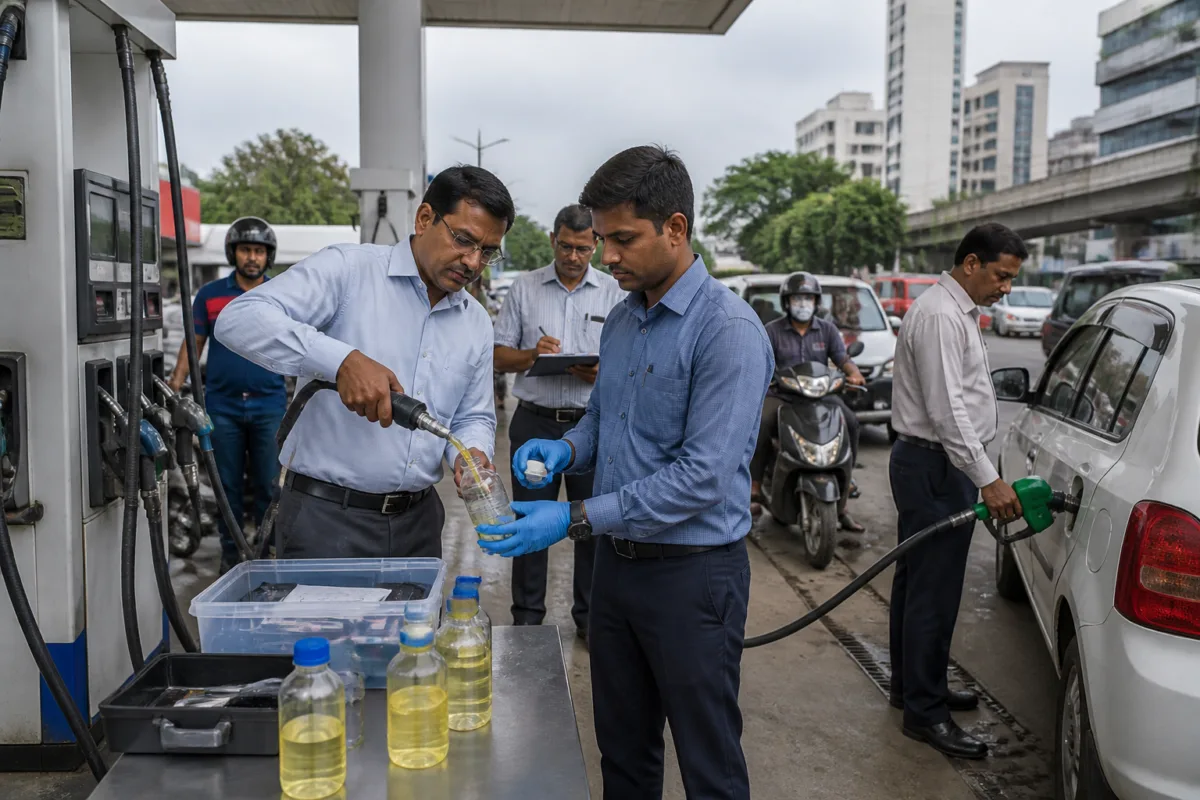
According to the Chief Minister, petrol samples were collected from 67 locations across Karnataka for examination. The state also examined the stages at which ethanol was blended and distributed, rather than limiting checks to petrol pumps. Officials collected documents relating to where and how the blending was carried out, and the information was sent to the Union government, he said.
Shivakumar said the Union government could not avoid responsibility for the issue and indicated that the concerned minister would provide information on the inspection report and further action on November 9. He also called on BJP and Janata Dal (Secular) leaders, including Opposition leader R. Ashoka, to respond to the concerns raised by motorists.
Ashoka disputed the state government’s ability to confirm the ethanol percentage in petrol. He said Karnataka did not have an advanced laboratory capable of testing petrol-ethanol blends and therefore could not establish accurately how much ethanol had been added. He demanded that the government disclose where the samples were collected and release the relevant records, while also raising the possibility that blending could have occurred at petrol pumps.
Ashoka said ethanol blending was part of a central policy intended to reduce the burden of petrol purchases and save foreign exchange. He argued that the policy was based on scientific considerations and that allegations should not be made without examining the testing process and evidence behind the state’s claims.
Karnataka Industries Minister M.B. Patil blamed what he described as mistakes by the Union government for the current controversy. He alleged that the Centre had encouraged ethanol production without ensuring that sufficient quantities would be purchased, and questioned what producers would do with unsold ethanol. Patil also criticised the shifting references to E10, E20 and E30 blending levels.
The issue has begun to draw attention beyond Karnataka. Kerala’s Food and Consumer Affairs Minister Anoop Jacob directed officials to collect petrol samples from 20 locations across the state from November 9. The Kerala government has also directed that action be taken quickly against petrol pumps found selling fuel with more than 20% ethanol, according to government sources cited in the report.
The Kerala action follows claims that testing in Karnataka found petrol containing more than 31.2% ethanol and that the use of E20 petrol was causing vehicle-related problems. These figures and the alleged connection between the blend level and vehicle failures remain part of the ongoing dispute.
Union Minister of State for Petroleum Suresh Gopi said state governments were free to test ethanol levels in petrol and that the Centre would cooperate with such examinations. He defended the ethanol-blending policy as scientifically grounded and urged governments not to turn the matter into a political controversy. Further action in Karnataka is expected after the state’s inspection report and the concerned minister’s response.

