


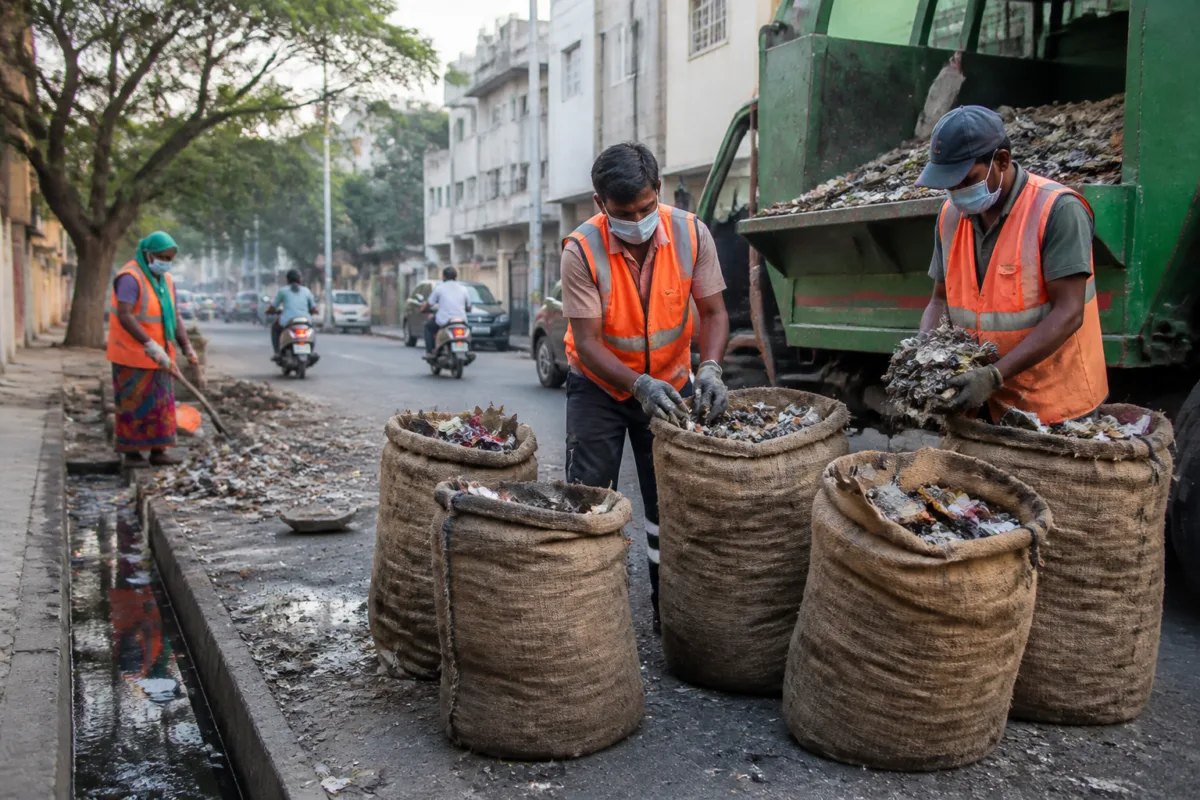
Chennai’s firecracker waste will be collected separately this Diwali under a Greater Chennai Corporation (GCC) operation involving 600 sanitation workers and 350 vehicles, with residents asked not to mix the waste with household garbage or leave it on roads and stormwater drains.
The civic body has instructed residents to hand over burnt crackers and related waste directly to sanitation workers. The collected material will be transported to an authorised hazardous waste disposal facility rather than being processed with biodegradable or non-biodegradable municipal waste.
GCC Commissioner G S Sameeran urged residents not to place firecracker waste in bins, dump it on public roads or dispose of it through stormwater drains. Residents have also been asked not to pile up firecrackers or firecracker waste and set it on fire.
The separate collection system is being organised because firecracker residues can contain chemicals such as sulphur and potassium nitrate, along with metal compounds including barium and copper. When mixed with regular waste, these materials can create additional risks during collection, handling and disposal, according to the civic body’s warning.
For the operation, GCC has distributed 30,000 jute bags, each with a capacity of 50kg, to sanitation workers. The bags will be used to collect and move firecracker waste separately from the city’s regular waste stream.
The scale of the operation is significantly higher than last year’s collection. GCC collected more than 200 tonnes of firecracker waste over three days last year, including burnt residues, paper, ash, cardboard and other materials. This year, the corporation expects the volume to reach around 600 tonnes.
The expected increase will place additional demands on collection, transport and disposal arrangements. It also makes segregation at source important, since waste workers must identify and handle firecracker remnants separately from everyday municipal waste.
GCC plans to conduct mass cleaning operations after Diwali as well. These will include night-time road sweeping, mechanical sweeping and deployment of sanitation workers to address accumulated waste, dust and pollution-related concerns across the city.
Environmental activists said the collection process would remain difficult if residents do not cooperate with segregation. Geo Damin of the NGO Poovulagin Nanbargal said sanitation workers were already exposed to infections and hazardous items, and that collecting firecracker waste added another challenge.
Damin also said sweeping should be carried out uniformly across Chennai rather than being concentrated on prominent roads. The concern places the festival cleanup within a wider municipal challenge: ensuring that waste collection and street-cleaning systems cover residential areas as well as highly visible public corridors.
The civic body’s immediate plan is to collect firecracker waste through sanitation workers and dedicated vehicles, send it for authorised hazardous disposal, and complete post-Diwali cleaning through manual and mechanical sweeping operations.

