


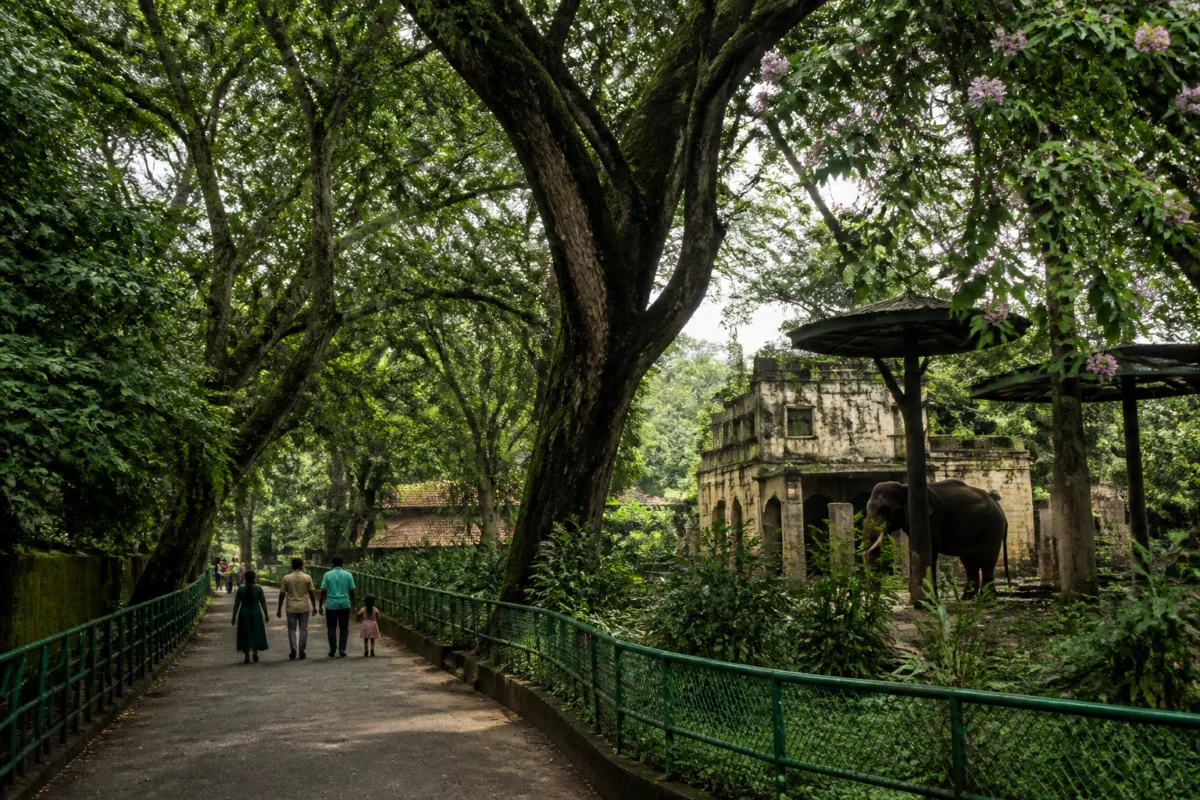
The debate over Thiruvananthapuram Zoo relocation is not only about where animals will be housed. It is also about whether a city recognises a mature ecological space as infrastructure, or treats it as land that can be moved when administrative priorities change. Members of Tree Walk, a city-based collective of nature lovers, have urged greater public awareness about the potential risks of relocating the zoo, arguing that the site has evolved over more than 150 years into an urban ecosystem with value extending far beyond its animal collection.
The concerns reported by Times of India – Thiruvananthapuram place the zoo within a larger question facing Indian cities: how should planning decisions account for ecological systems that cannot be recreated quickly, or transferred intact from one location to another? Tree Walk members said the zoo’s trees, insects, flowering species, heat- and drought-tolerant vegetation and regenerative capacity form an interconnected system. Their argument is that assessing the site only through the lens of its animals would miss the ecological functions performed by the entire landscape.
That distinction matters because urban biodiversity is often distributed through spaces that were not originally designed as climate or ecological infrastructure. A zoo, institutional campus, old garden or wooded public property may have been created for one purpose, but over decades it can accumulate canopy, soil systems, pollinator habitat and local ecological relationships. The source report describes Thiruvananthapuram Zoo as a space whose culture is closely embedded in the city and whose ecological value has developed over a period of more than 150 years. Those characteristics make the question of relocation materially different from shifting a standalone facility from one plot to another.
Tree Walk member Radha Gopalan said the organisation was seeking an evidence-based dialogue on the proposal. She referred to documents titled Trees of Thiruvananthapuram Museum and Zoo, by Namitha L and Gangaprasad A, and Emerald Isle. According to the report, these documents identify several endangered trees within the zoo. Gopalan also said many of the trees were flowering species that support pollination and provide habitat for insects. The insects, in turn, contribute to what she described as the ecosystem’s metabolic activity.
The supplied report does not establish the government’s detailed relocation plan, the proposed destination, the project timeline, the financial model or the administrative authority responsible for the decision. It also does not provide an official response to Tree Walk’s concerns. These gaps are important. They mean the public debate, as currently reported, is centred on the ecological risks identified by the collective rather than on a published comparative assessment of the existing site and any proposed alternative.
That missing comparison is central to the planning question. If relocation is considered, the relevant assessment cannot be limited to whether a new site can accommodate animal enclosures. It would also need to examine the age and condition of existing trees, the continuity of habitat, pollinator relationships, soil and water conditions, shade patterns, heat exposure and the time required for a replacement landscape to mature. The source material does not say that such an assessment has been completed. It does, however, show why Tree Walk believes the site should be valued as an interconnected ecological system.
The group’s argument also challenges a familiar administrative tendency: to treat trees as individual obstructions rather than as parts of a functioning landscape. Shanti S, a founding member of Tree Walk, said concerns about trees were often viewed as protests and that resistance to such issues was now being seen as “a kind of violence”. She also said authorities had earlier sought public opinion before cutting trees, but that this practice was no longer being followed.
These comments point to a procedural issue as much as an environmental one. Public consultation is not simply a method for managing opposition after a decision has been shaped. In a site with a long history and complex ecological relationships, early disclosure and evidence-sharing can determine whether residents are able to understand the full consequences of a proposal. Without access to the underlying plan, the public is left to debate the headline question of relocation without being able to examine the assumptions behind it.
Tree Walk has prepared a document and submitted it to the government, according to the report. Volunteers discussed the need to build an informed resistance, educate the public, involve more young people and sensitise politicians to the risks of relocating the zoo and tampering with the space. Their approach, as described, combines advocacy with an attempt to place documentary evidence at the centre of the discussion.
The use of the word “ecosystem” changes the terms of the debate. A conventional project appraisal may identify land requirements, construction costs, transport access and operational needs. Those factors may be necessary, but they do not by themselves measure the value of a mature urban landscape. The Tree Walk position is that the zoo should be evaluated as a system in which trees, insects, animals and people are connected. The report says Gopalan described the site as a “crucible” from which ecological benefits could spread to other parts of the city.
That claim should be understood as an ecological proposition rather than as an established quantified benefit. The supplied material does not provide measurements of the zoo’s canopy, species count, temperature reduction, carbon storage, pollinator population or water-management function. It therefore cannot establish the precise scale of the site’s contribution to Thiruvananthapuram. But the absence of those figures also identifies what a serious public assessment would need to document before a decision is made.
A credible assessment would begin by defining what is being valued. The source report identifies endangered trees, flowering trees, insect habitat, drought-tolerant species and trees capable of aiding regeneration. It also describes the zoo’s cultural connection with the city. These are different categories of value and should not be collapsed into a single claim about green cover. Ecological rarity, habitat function, resilience to heat and drought, public memory and institutional history each raise distinct questions about what relocation could preserve, what it could damage and what would take decades to recreate.
The policy landscape remains unclear from the available material because the report does not reproduce a government notification, feasibility study or formal project document. That makes the government’s response and the contents of the submitted Tree Walk document important next steps in the public record. A decision involving a site with endangered trees and a long-established ecosystem would be more intelligible if authorities publish the proposal, the reasons for relocation, the ecological baseline and the alternatives considered.
The issue also exposes the limits of treating urban nature as a compensable asset. If trees are removed, a future plantation programme may replace a number of trunks, but numerical replacement alone would not demonstrate that the original habitat has been restored. The report does not say that any such replacement plan exists. It does show why Tree Walk is concerned that the ecological value of the entire space may be overlooked if attention remains focused on the animals or on the physical act of shifting zoo operations.
Thiruvananthapuram’s zoo therefore represents a test of how the city understands its older public landscapes. The site’s reported 150-year evolution means that its present character is the result of accumulated growth rather than a single recent intervention. That history does not automatically settle the relocation question, nor does it make every existing arrangement beyond review. It does mean that any change should account for the ecological and cultural assets that have accumulated on the site over time.
The evidence currently available confirms that Tree Walk has raised a documented, ecosystem-focused objection and submitted a document to the government. It does not establish the government’s final decision, the details of the relocation proposal or whether an independent ecological assessment has been undertaken. Those are the facts that deserve monitoring next. Until they are made public, the central urban planning question remains unresolved: whether Thiruvananthapuram’s zoo will be assessed merely as a facility that can be moved, or as a mature ecological system whose value is inseparable from the place where it has developed.

