


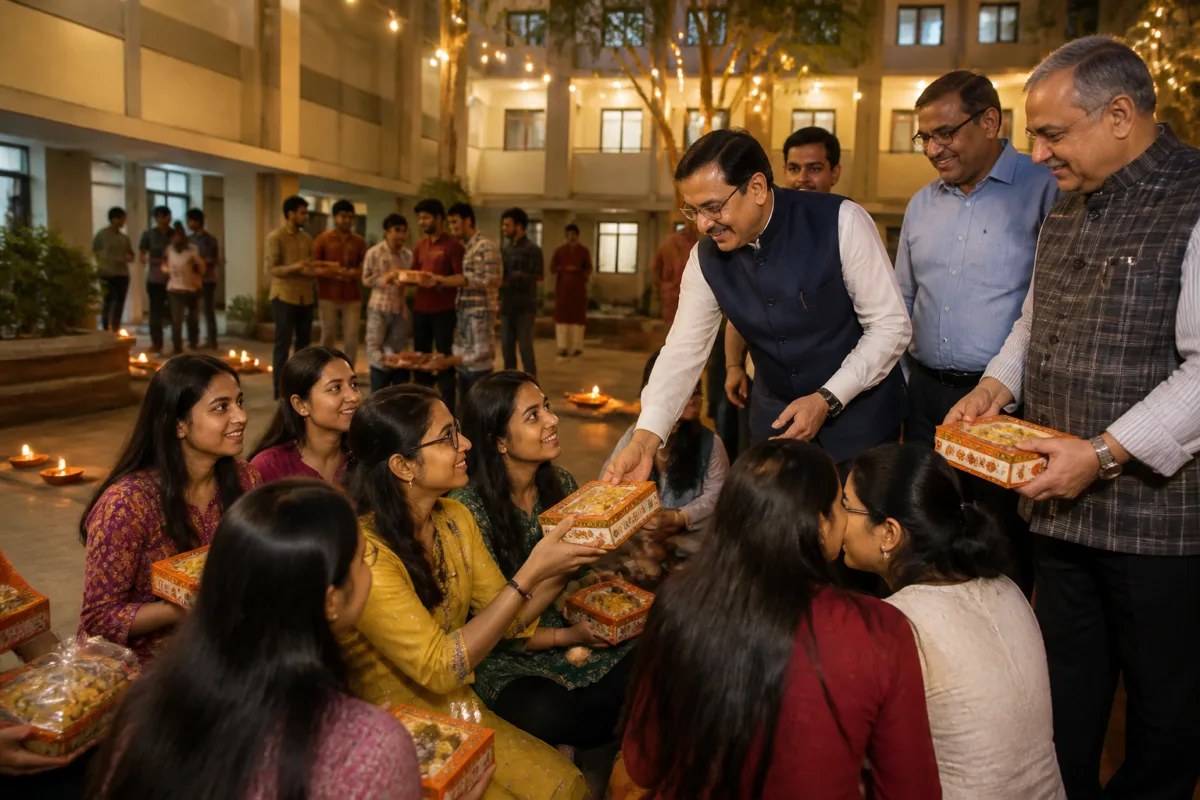
Savitribai Phule Pune University organised a Diwali faral distribution programme for around 600 students staying in its boys’ and girls’ hostels who were unable to travel home for the festival, bringing student welfare and residential campus life into focus on November 7.
The initiative was jointly organised by the university’s Board of Student Development and Student Hostel Department. Traditional Diwali snacks were distributed to students living away from their families, with the programme intended to help them participate in the festival despite remaining on campus during the holidays.
Several students from different parts of India come to Pune to pursue higher education at the university. According to the report, some students could not return home because of various circumstances. The university said the programme was organised with their emotional well-being, happiness and overall development in mind, alongside their academic progress.
Vice-Chancellor Dr Suresh Gosavi, Pro-Vice-Chancellor Dr Parag Kalkar and Registrar Dr Prafulla Pawar distributed the festive snacks and interacted with the students. Gosavi also extended Diwali greetings to the students during the programme.
The event was attended by Senate member Dr Rajendra Ghode, Hostel Warden Dr Geeta Shinde, In-charge Director of the Board of Student Development Dr Savita Kulkarni and In-charge Director of the National Service Scheme Dr Ganesh Bhame.
The programme reflects the role of university hostels as more than accommodation for students. For those who remain on campus during major holidays, residential facilities become the setting for daily support, social interaction and community life. The university described the initiative as an effort to make students feel part of a larger family and reinforce the idea of the campus as a home away from home.
All 600 students staying in the two hostels who could not visit their homes for Diwali benefited from the initiative, according to the report. The programme combined the distribution of festive food with direct interaction between senior university officials and residents.
The university’s Board of Student Development and Student Hostel Department organised the programme at the boys’ and girls’ hostels, with participation from senior administrators and student development officials. No further details about changes to hostel operations or additional welfare measures were provided in the supplied report.

