


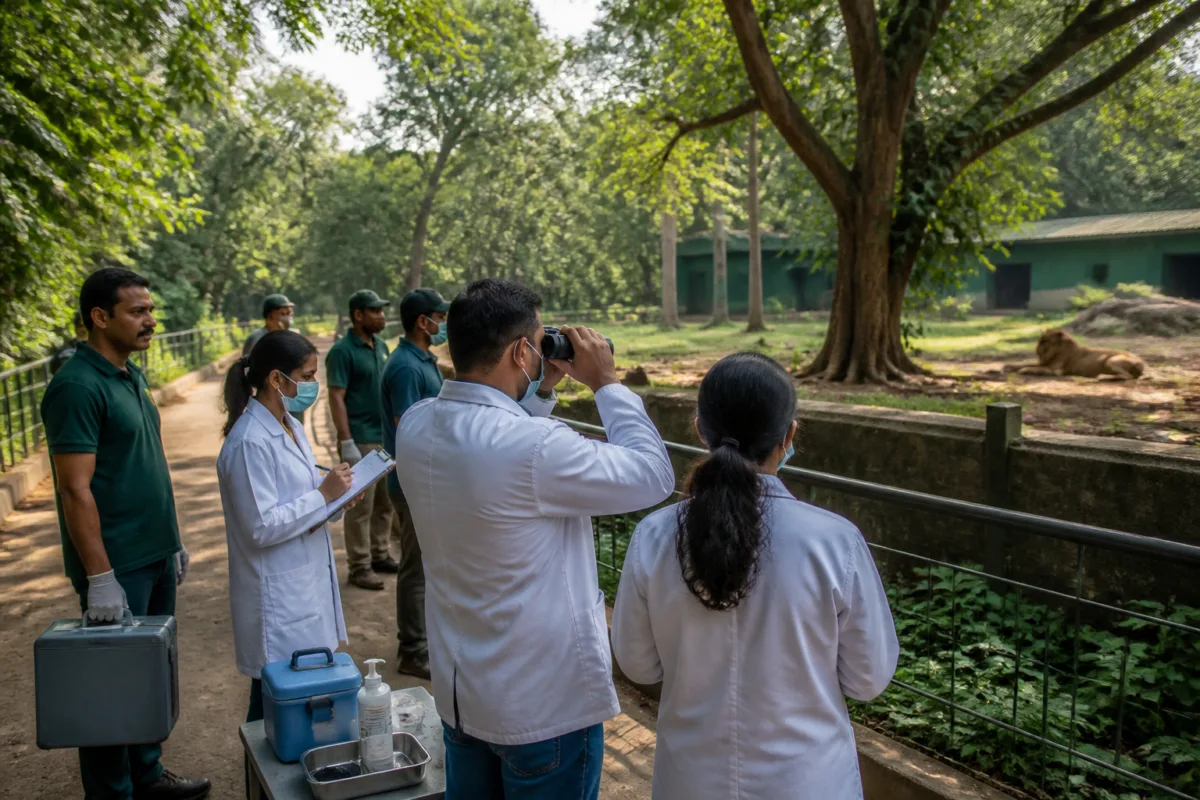
Pune’s Rajiv Gandhi Zoological Park workers are being placed at the centre of a new surveillance initiative designed to detect infections that could spread from animals to humans before they become wider public-health threats.
The project, titled ‘Establishing a One Health Sentinel Surveillance System in High Human-Animal-Interaction Settings among Selected Zoos in India’, is being implemented under the National One Health Mission. It will track infections among zoo animals, assess occupational health risks among workers and look for early warning signs of pathogens crossing species barriers.
The initiative is a collaboration between the Indian Council of Medical Research’s National Institute of Virology in Pune, the National Institute for One Health in Nagpur, Bharati Vidyapeeth and the Pune zoo. It covers people whose routine duties bring them into close contact with animals and their environments, including zoo workers, animal keepers and veterinary staff.
The surveillance system is expected to involve information from activities such as handling wildlife, cleaning animal enclosures and collecting clinical samples. These tasks can expose workers to animal waste, bodily fluids and potentially infected animals, making them an important source of information for identifying occupational risks and unusual infections.
According to the report, the system will generate data on infections among animals while monitoring possible risks to people working in close contact with them. This places the zoo not only in the role of caring for captive wildlife but also as a site for early disease detection within an urban environment where animals, workers, visitors and surrounding communities interact.
Zoonotic diseases are infections that can pass from animals to humans. The Centre has identified anthrax, rabies, Nipah, leptospirosis, mpox and Zika among the priority threats requiring surveillance. The initiative’s stated purpose is to identify warning signs at an early stage rather than wait for infections to spread beyond the immediate animal or occupational setting.
For Pune, the programme brings disease surveillance into a high-contact public institution. The Rajiv Gandhi Zoological Park receives visitors while its staff work continuously in animal enclosures, veterinary areas and other operational spaces. The supplied report does not specify the number of workers covered, the duration of the surveillance programme, the testing schedule or the reporting protocol that will apply when a suspected infection is identified.
The project reflects the One Health approach, which treats human health, animal health and environmental conditions as connected rather than as separate administrative concerns. In practical terms, information collected from animals and workers can help institutions assess whether a disease risk is limited to a particular enclosure or occupational activity, or requires a broader response.
The Pune collaboration also links local zoo operations with national disease-surveillance institutions. ICMR-NIV and the National Institute for One Health are participating alongside the zoo and Bharati Vidyapeeth, creating a framework that combines field-level observation, veterinary work and laboratory or research expertise.
The next steps will involve implementing the sentinel surveillance system at the selected zoo and monitoring infections among animals and exposed staff. Further operational details, including the diseases tested for, the frequency of sampling and the mechanism for communicating findings, were not provided in the report.

