


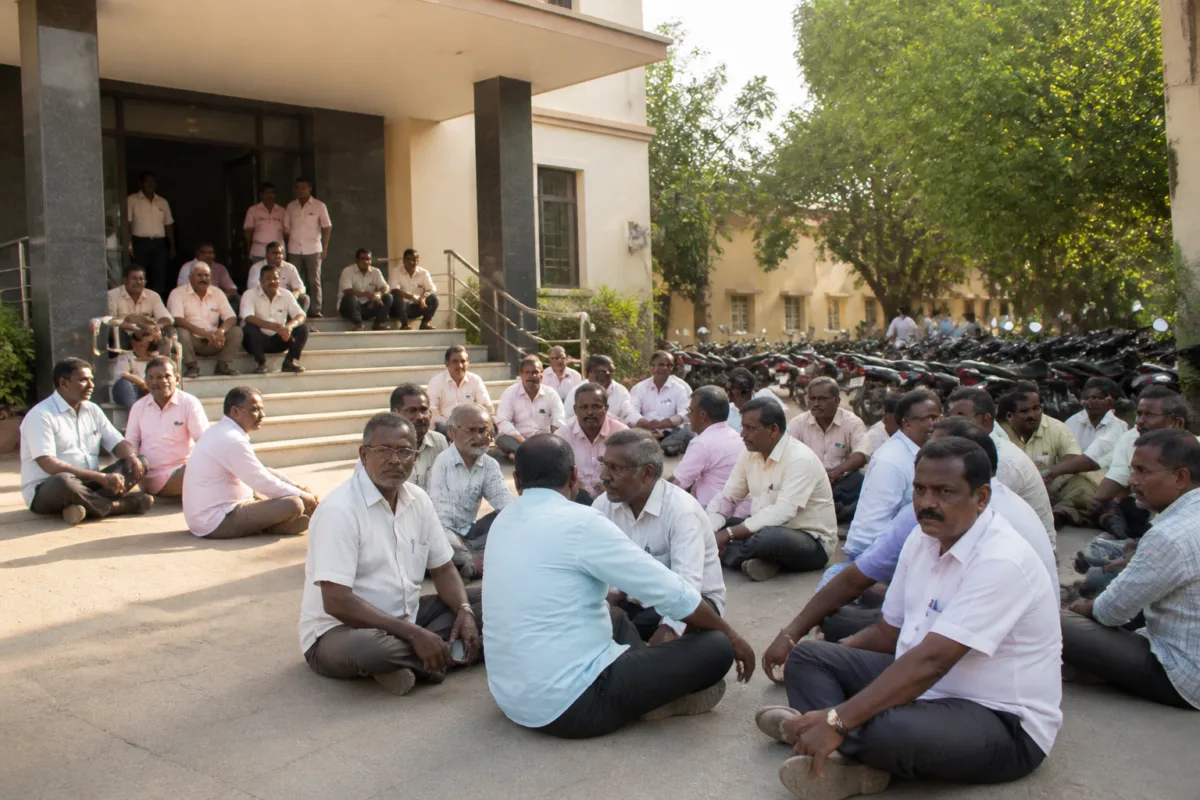
More than 500 members of the Tamil Nadu Deed Writers’ Association staged a waiting protest outside the Namakkal Integrated District Registrar’s Office on November 6, demanding that the state not implement the Star 3.0 online registration system in its current form. The association said errors and missing survey details on the registration department’s TNReginet website were preventing property buyers from completing deed registrations.
The protest was led by district president Anbalagan, while deputy secretary Nagendran was present. Participants came from across Namakkal district and gathered outside the registrar’s office to press for changes to the system. The association’s complaint centres on the impact of the online process on newly created residential plots, apartment transactions and documents linked to bank loans.
According to the association, Star 2.0 was introduced in February 2018 as part of the registration department’s modernisation programme. Star 3.0 was subsequently developed as an upgraded system and became fully operational on August 17. The newer platform introduced online registration facilities for first-sale deeds involving new apartment projects and approved layouts, as well as documents connected with bank loans.
The association said that after Star 3.0 was introduced, survey numbers for newly developed house plots in several parts of Tamil Nadu were not appearing on the department’s TNReginet website. When a property’s relevant details are unavailable on the registration portal, buyers may be unable to proceed with the registration process, the association said. The report did not include a response from the registration department to these claims.
The dispute also highlights the operational dependence created by a largely online property-registration process. The association said the system was intended to support paperless registration and reduce the need for applicants to appear in person. However, it claimed that registrations had accumulated for about 10 days because home deeds could not be completed through the new process.
The reported delays affect more than the immediate parties to a property transaction. Buyers waiting to register documents may face uncertainty over when their purchases can be formally recorded, while deed writers and others whose work depends on registration activity have reported a loss of livelihood. The association said the earlier system allowed deeds to be registered more easily, quickly and securely.
The protest places the implementation of Star 3.0 under pressure at a time when property registration is being shifted towards digital verification and online processing. The association’s immediate demand is that the system should not be implemented until the reported portal and registration problems are addressed. The report did not specify whether the registration department announced a corrective measure or a timetable following the protest.

