


Delhi’s air quality remained in the very poor category for a fourth consecutive day, with the city recording an average Air Quality Index of 369 on Thursday and forecasts warning that pollution could reach the severe category from Friday to Sunday before Diwali.
According to the Central Pollution Control Board, Delhi’s average AQI at 4 pm on Thursday was 369, compared with 377 on Wednesday, 350 on Tuesday and 324 on Monday. Of the capital’s 59 active monitoring stations, 18 recorded air quality in the severe category.
Jahangirpuri recorded the highest AQI among the monitored locations at 456. The reading falls within the severe category under the national air quality index, indicating a sharp deterioration in conditions in one of the capital’s densely populated and industrially exposed areas.
The Air Quality Early Warning System forecast that Delhi’s air could remain in the severe category from Friday through Sunday. The system also indicated that pollution levels could remain between severe and very poor over the following six days, although the forecast remains dependent on weather and emission conditions.
The Ministry of Earth Sciences’ Decision Support System estimated that stubble burning accounted for 15.6 per cent of Delhi’s PM2.5 pollution on Thursday. Its forecast put the contribution at 19.2 per cent on Friday before projecting a decline to 1.5 per cent on Saturday.
The same assessment indicated that vehicular emissions could become a larger contributor over the weekend. Their estimated share was 17.9 per cent on Thursday and could rise to 21.1 per cent by Saturday. The figures show how the relative contribution of pollution sources can change over a short period as wind direction and atmospheric conditions shift.
Sunil Dahiya, founder and chief analyst at EnviroCatalysts, said a western disturbance could weaken north-westerly winds and cause them to shift towards easterly winds around Diwali. This could reduce the speed at which smoke from Punjab and Haryana reaches Delhi, he said.
Dahiya also warned that slower winds and increasing morning haze could trap emissions from vehicles, industries, waste burning and firecrackers in the city’s atmosphere. The combination of local emissions and limited dispersion can worsen ground-level pollution even when the estimated contribution from crop-residue burning declines.
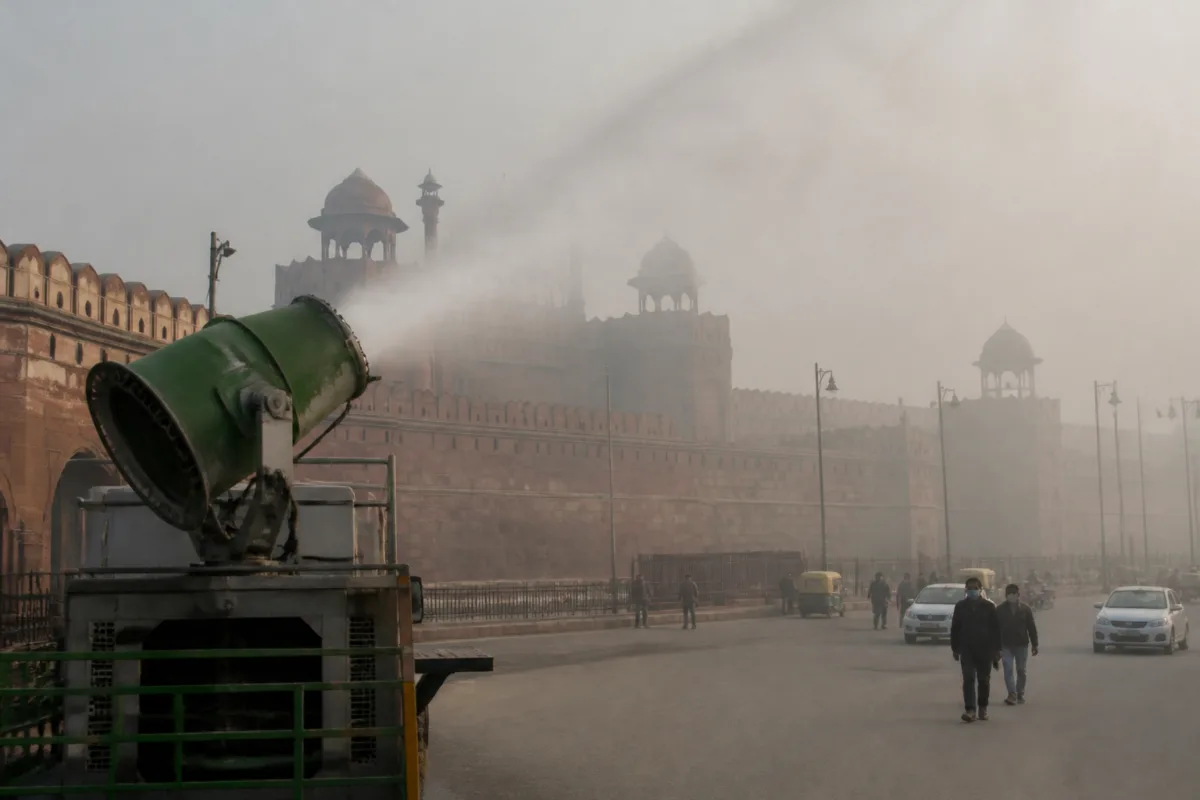
The latest readings come as authorities have also used anti-smog guns near the Red Fort to spray water as part of efforts to reduce airborne dust. The available report does not specify the expected duration or citywide impact of the measure. The Air Quality Early Warning System’s next forecasts for Friday through Sunday will indicate whether Delhi moves into or remains within the severe pollution category.

