


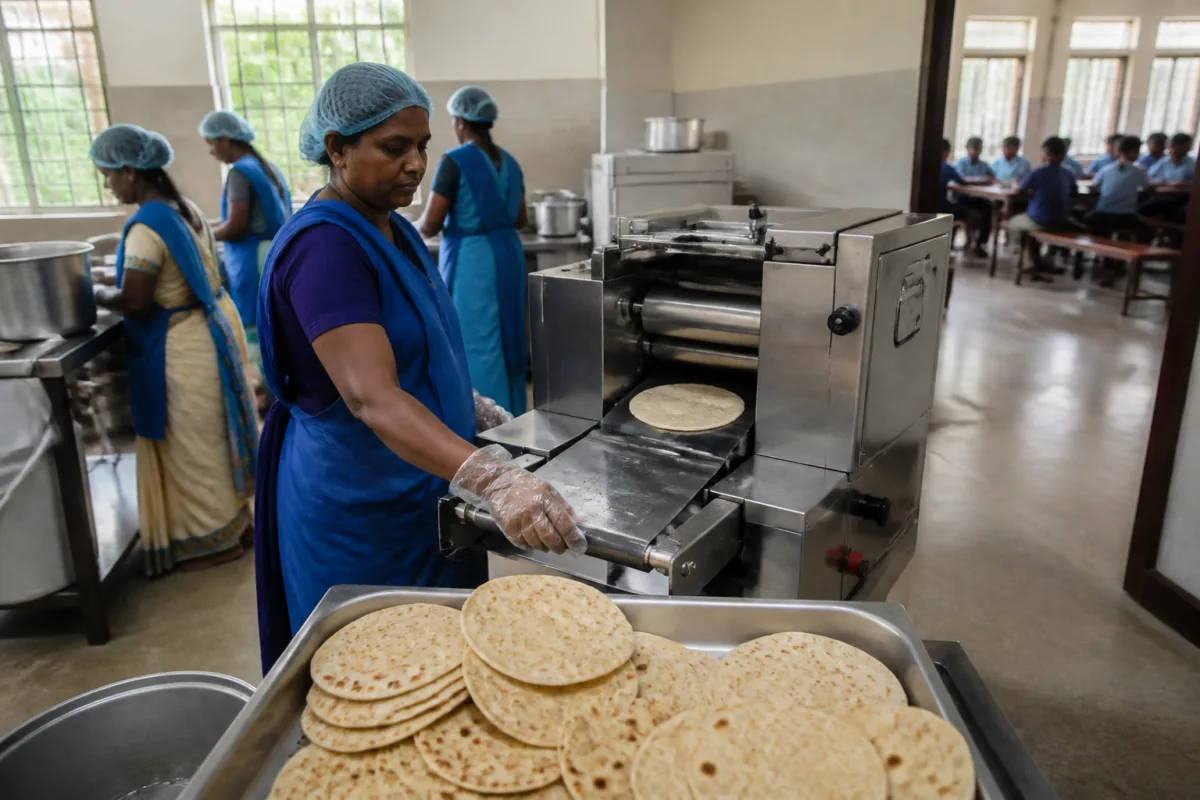
East Singhbhum district administration has provided roti-making machines to 15 residential schools in Jamshedpur under District Mineral Foundation Trust (DMFT) funding, with officials saying the equipment will improve meals and reduce the workload of kitchen staff.
Deputy commissioner Rajiv Ranjan inaugurated a machine at Kasturba Gandhi Balika Vidyalaya (KGBV) in Sundernagar on Wednesday. The machines are being supplied to KGBVs, Jharkhand Balika Residential Schools (JBAVs) and Netaji Subhas Chandra Bose Residential Schools (NSCBAVs) across the district.
According to officials, the intervention followed visits by Ranjan to the residential schools, where he observed the difficulties faced by kitchen staff in preparing rotis in sufficient quantities. The schools accommodate between about 100 and 350 students each, making the preparation of large volumes of food a daily operational challenge.
Officials said rotis were not being included regularly in students’ meals because staff found it difficult to prepare them in the required quantities. They were generally served only on special occasions or when students fell ill. The new machines are intended to allow schools to prepare larger quantities in less time, enabling rotis to become a regular part of daily meals.
The district administration said the decision was taken to improve the quality and variety of food served at the institutions while easing the pressure on kitchen workers. The use of DMFT funds places the intervention within a public funding framework designed to support development in areas affected by mining-related activity.
“The district administration is committed to providing students at residential schools with a better academic environment, nutritious and quality food, and essential facilities in line with the chief minister’s directives,” Ranjan said during the inauguration.
The 15 schools serve residential students, meaning meal preparation is a continuous institutional responsibility rather than a limited school-hours service. The administration’s decision links the quality of student welfare to the capacity of school kitchens, where staffing and preparation time can affect what is served and how regularly it is provided.
The machines are now expected to support regular roti preparation at the participating schools. The administration has not provided details in the supplied report on the total cost of the equipment, the number of machines assigned to each school or the timeline for installation at all 15 institutions.

