


India Accelerates EV Revolution with 25,202 Public Charging Stations
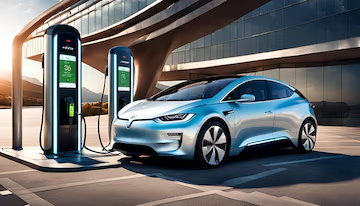
India has taken a significant leap in promoting electric vehicle (EV) adoption, with 25,202 public charging stations installed across the country as of December 2024, according to the government. This milestone reflects the nation’s commitment to sustainable mobility and reducing its carbon footprint.
Leading the charge, Karnataka boasts the highest number of public EV charging stations at 5,765, followed by Maharashtra with 3,728 and Uttar Pradesh with 1,989. Smaller states are also stepping up, with Chhattisgarh installing 271 charging stations, as per data from the Ministry of Power. The rapid installation of these charging stations has significantly improved convenience for EV users. Drivers now enjoy reduced “range anxiety,” a common concern about running out of charge during travel. With more stations available, long-distance travel is becoming increasingly feasible, making EVs a practical choice for both urban commuters and intercity travellers. To accelerate EV adoption and build a robust infrastructure, the Ministry of Heavy Industries (MHI) launched the PM Electric Drive Revolution in Innovative Vehicle Enhancement (PM E-DRIVE) scheme on 29 September 2024. With a dedicated budget of ₹10,900 crore for two years, ₹2,000 crore is earmarked for setting up public EV charging stations.
The Ministry of Power has also released the “Guidelines for Installation and Operation of Electric Vehicle Charging Infrastructure-2024”, ensuring connected and interoperable charging networks. These guidelines address diverse needs based on vehicle types, usage patterns, and geographical factors, laying the groundwork for a seamless charging experience nationwide. As of December 2024, India has registered 28,55,015 electric two-wheelers and 2,57,169 electric four-wheelers, according to the Vahan portal. The availability of charging stations has directly impacted users, reducing operational costs and encouraging the transition from traditional vehicles to EVs. Drivers report lower energy expenses, improved convenience, and a greater sense of environmental contribution. Battery swapping is emerging as a key solution, especially for two- and three-wheelers. Leading automotive companies are heavily investing in this technology to make EVs more affordable and accessible. This innovation eliminates long charging wait times, making EVs a practical option for more users.
The transition to EVs offers profound benefits for India, tackling urban air pollution, reducing reliance on imported crude oil, and supporting the nation’s Paris Agreement commitments. Additionally, widespread EV adoption fosters job creation in manufacturing, infrastructure development, and related sectors. With the enhanced charging infrastructure, EV users across the country are finding it easier to integrate electric vehicles into their daily lives. From faster charging options to a growing network of stations in both urban and rural areas, these developments are reshaping the transportation landscape. India’s progress in this field signals a promising future for sustainable mobility and cleaner cities.
