


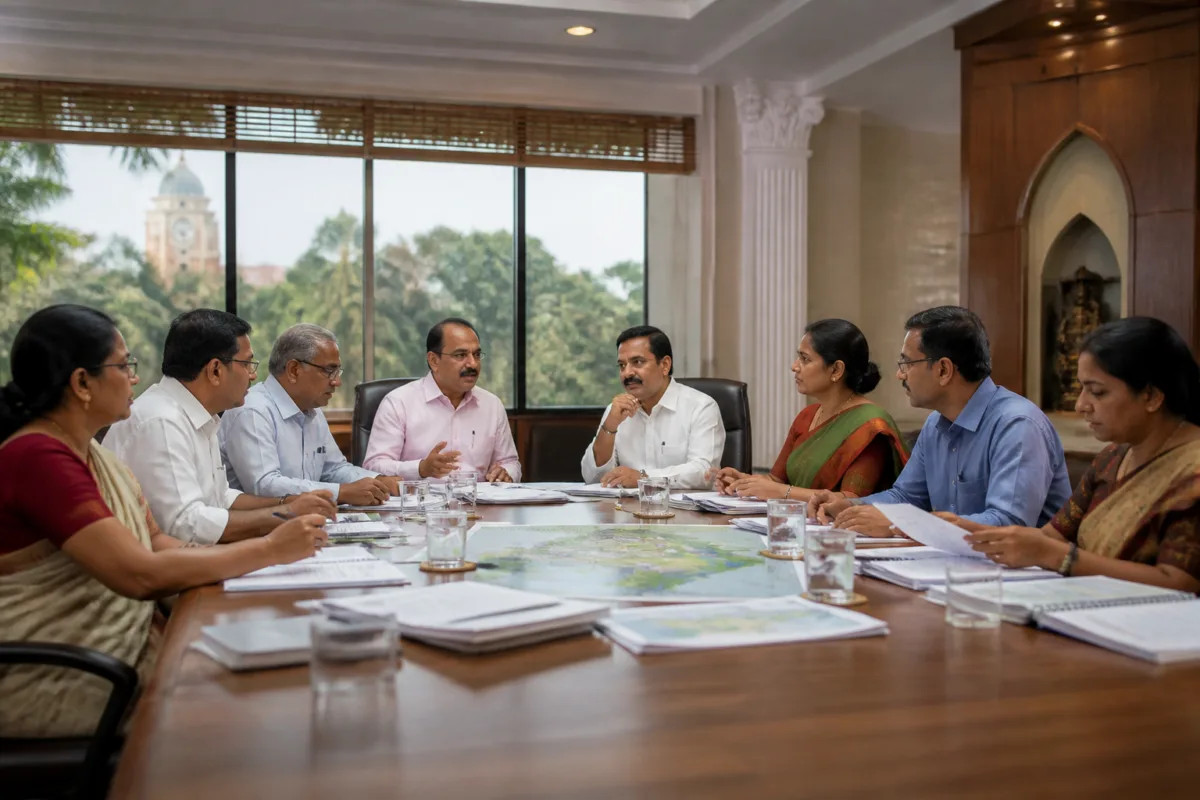
Kerala’s State Planning Board has gained four new members, including two women ministers, as the state government expands the body reconstituted after the United Democratic Front government came to power, according to the Times of India.
The new members are ministers K A Thulasi and Bindhu Krishna, public health expert Dr S S Lal, and C H Abdul Rahim, chairman of the Social Advancement Foundation of India in Kozhikode. They will join members already nominated to the board.
The appointments add cabinet-level representation to the state’s planning institution at a time when the composition of the board has drawn attention. Krishna had earlier written to the chief minister protesting the absence of women on the board and had sought the inclusion of women subject experts, the report said.
The government has now selected two women from the cabinet—Thulasi and Krishna—to join the board. The appointments address the absence of women in the board’s composition, although the selection differs from Krishna’s reported demand for women subject experts.
The State Planning Board is a key institutional forum for state planning and policy coordination. Its membership determines the mix of political, administrative and professional experience brought into discussions on Kerala’s development priorities. The latest appointments therefore expand the board’s representation beyond the members nominated earlier in the reconstitution process.
The four appointees bring different professional and public roles to the board. Thulasi and Krishna serve as ministers, while Lal has qualifications in medicine, public health and business administration. Abdul Rahim is a chartered accountant and heads the Social Advancement Foundation of India, based in Kozhikode.
The appointment of Lal adds public health expertise to the board’s composition. Abdul Rahim’s professional background is in accountancy, bringing financial and institutional experience to a body responsible for planning-related deliberations. The report did not provide details of the specific portfolios or committees that the new members will handle.
The move also places the question of representation within planning institutions alongside the board’s broader reconstitution. Krishna’s earlier intervention made the composition of the board an issue of public discussion, particularly over whether cabinet representation and subject expertise should be balanced in the appointment of members.
The latest appointments take effect as additions to the members already nominated after the change in government. Further details about the board’s working arrangements, the responsibilities assigned to the new members and its next planning priorities were not available in the report.

