


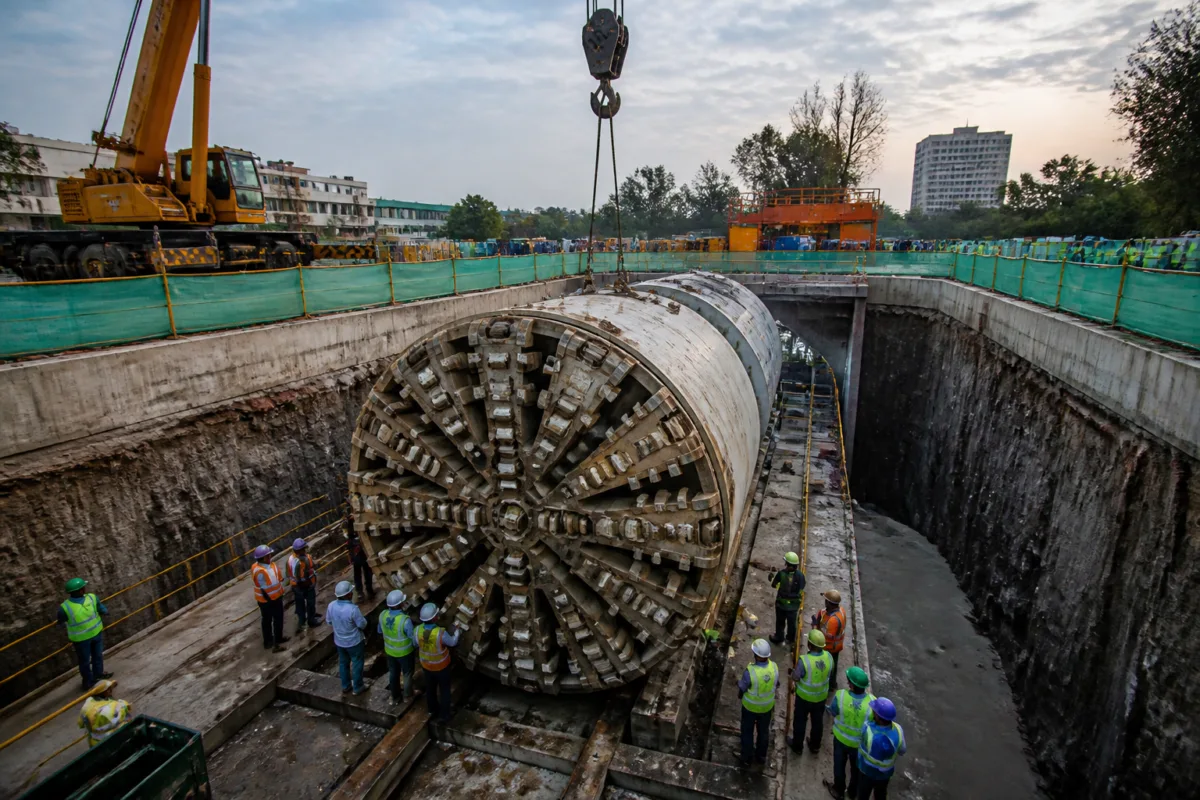
The Pune Metro extension from Swargate to Katraj is set to move into its tunnelling phase in January after the first of four tunnel boring machines required for the 5.46-kilometre underground project arrived in Pune, according to a report by Punekar News. The machine will be deployed after the launching shaft at Swargate is completed and made ready for assembly and underground operations.
The entire Swargate-Katraj stretch will run below ground, with tunnelling planned simultaneously from both ends. Two tunnel boring machines will work from Swargate and two from Katraj, with the four machines expected to meet at Padmavati. The arrangement is intended to allow excavation to proceed on multiple fronts along the extension.
MahaMetro has set a target of excavating approximately 10 metres of tunnel per day using each machine. The target takes into account the rocky geological conditions along the route and is based on experience gained during construction of the first phase of Pune Metro, the report said. The machines will operate at a depth of around 28 metres below ground level.
Preparatory work for underground construction is already underway. Excavation of the launching shaft at the Market Yard station has begun, while work on the Swargate shaft is required before the first TBM can be assembled and lowered underground. These shafts will be used to move the tunnelling machines, construction equipment and other material below the surface.
The extension will add Katraj to the Pune Metro network through stations planned at or serving Katraj, Market Yard and Padmavati. The underground alignment is expected to improve direct Metro access for residents in south Pune, where road traffic remains a significant part of daily travel. Commuters using the corridor will ultimately have an alternative to road-based journeys towards central Pune, subject to the project being completed and brought into service.
The 5.46-kilometre project also involves technically demanding construction below a built-up urban area. Tunnelling at approximately 28 metres underground is intended to allow the alignment to pass beneath existing roads and development, while the launching shafts provide the access points needed for construction. The project’s progress will therefore depend on the completion of these shafts, the assembly of the TBMs and the excavation rate achieved in the rocky strata.
According to the report, the first TBM is expected to begin excavation once the Swargate launching shaft is ready, with tunnelling targeted to start in January. The four machines are planned to continue excavation from Swargate and Katraj until the drives meet at Padmavati.

