


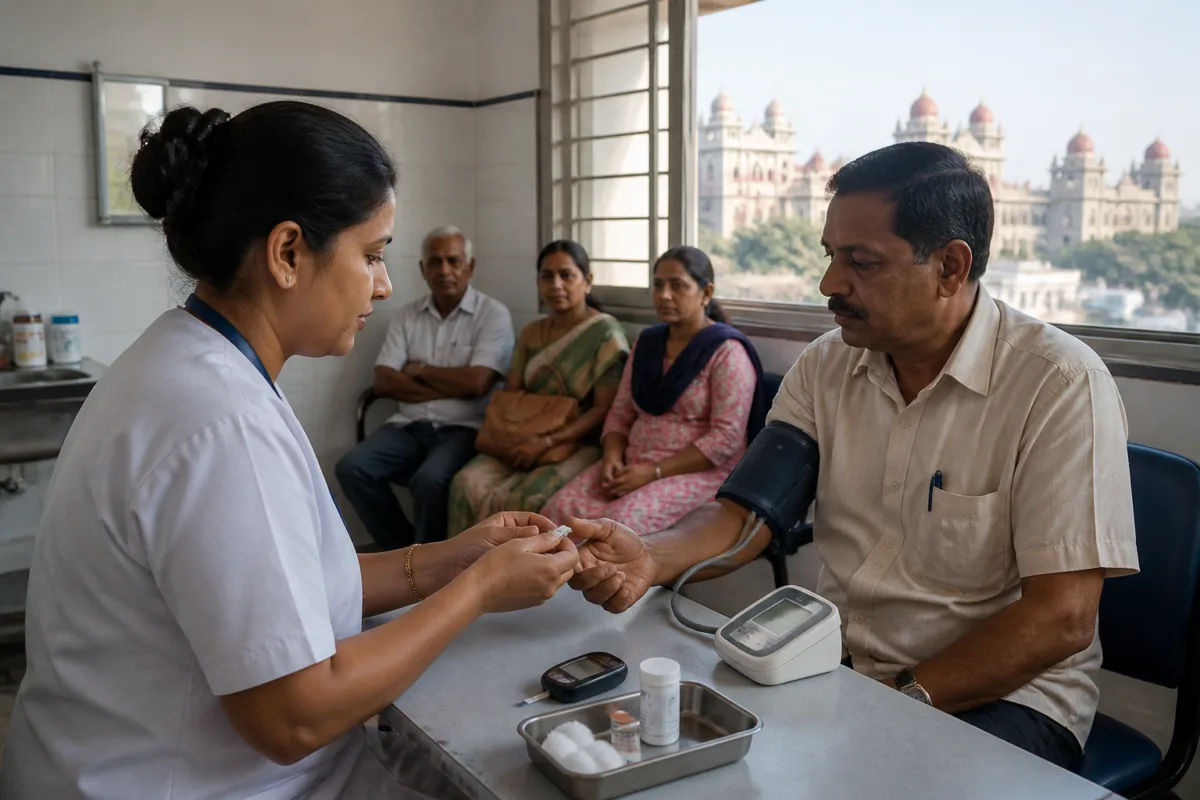
Mysuru’s latest NFHS-6 health data points to a widening burden of high blood glucose and elevated blood pressure among adults, even as reported tobacco and alcohol consumption declined. The contrast matters because it shows that urban health risks cannot be explained only through traditional risk factors: the district’s changing food habits, stress levels and patterns of everyday living are also entering the public-health equation.
The National Family Health Survey for 2023-24 recorded marked increases in several blood-sugar indicators among both women and men in Mysuru district. Among women, the proportion reporting high blood glucose rose from 5.2% in NFHS-5 to 8.1% in NFHS-6. The share with very high blood glucose increased from 7.1% to 13.5%.
A broader measure, covering women with high or very high blood glucose or taking medication to control it, rose from 13.8% to 23.9%. This measure is important because it captures not only newly detected or untreated conditions but also people already receiving treatment. The increase therefore indicates a larger population requiring sustained screening, medical supervision and access to medicines.
The movement among men was sharper in percentage terms. High blood glucose rose from 4.2% to 11%, while the proportion with very high levels increased from 8.2% to 17.9%. The share of men with high or very high blood glucose or taking medication more than doubled, from 14% to 30.7%.
Taken together, the figures suggest that the central urban-health challenge is no longer only whether people engage in visibly harmful habits. It is also whether cities and their health systems are equipped to identify and manage conditions that may develop gradually, remain undiagnosed for long periods and require continuing care once detected.
The findings do not establish a single cause for the increase. The report quotes Mysuru-based neurologist and stroke specialist Dr Shushrutha Gowda, who linked the trend to lifestyle changes, stress, processed-food consumption and possible post-Covid health changes. He also pointed to primary hypertension, obesity and highly processed foods as factors that may be contributing to the earlier onset of lifestyle-related diseases.
That explanation places the findings within a wider urban transition. As daily life becomes more dependent on processed or convenience food, and as stress becomes a routine feature of work and household schedules, the boundary between personal health behaviour and the built environment becomes less clear. Food access, work patterns, opportunities for physical activity and the availability of preventive care all shape how health risks accumulate.
However, the supplied NFHS-6 findings do not provide a breakdown by neighbourhood, income group, age, occupation or rural-urban location within Mysuru district. They also do not establish whether the increase reflects new cases, improved detection, changes in measurement, greater treatment uptake or a combination of these factors. Those limits are important: the data identifies a serious trend, but not its precise distribution or cause.
The blood-pressure results are more mixed than the blood-sugar numbers. Among women, mildly elevated blood pressure increased from 13.8% to 14.5%. Women with elevated blood pressure or taking medication to control it rose from 25.5% to 28.9%. Among men, mildly elevated blood pressure declined from 18.1% to 17.3%.
This difference between the sexes and between blood-glucose and blood-pressure indicators shows why a single headline about lifestyle disease can be misleading. Mysuru is not experiencing one uniform health pattern. The available figures point instead to different trends operating across conditions and population groups. Public-health responses will need to distinguish between screening, diagnosis, treatment and long-term control rather than relying on one broad indicator.
The tobacco and alcohol figures add another layer to the picture. The proportion of women consuming alcohol fell from 1.6% to 0.3%, while the share among men declined from 22.2% to 16.2%. The report therefore records a decline in two commonly monitored behaviours at the same time that blood-glucose indicators rose substantially.
That combination challenges a simple assumption that better health outcomes will automatically follow from lower alcohol and tobacco use. Those declines remain relevant, but the survey figures indicate that they are not sufficient to offset other factors associated with metabolic and cardiovascular risk. A city’s health profile can improve on one measure while deteriorating on another.
For municipal and district health administrators, the institutional question is how survey findings are converted into routine action. The report calls for greater public awareness and education initiatives promoting healthier lifestyles. Such efforts, however, need to be connected to services that residents can actually use: screening, diagnosis, treatment, follow-up and medication management.
The supplied report does not specify whether Mysuru has expanded screening capacity, how many public facilities provide regular testing, or whether district health authorities have announced a programme in response to the NFHS-6 findings. It also does not provide expenditure, staffing or facility-level data. These gaps prevent a complete assessment of whether the existing health system can absorb a larger caseload.
The distinction between detection and control is particularly significant in the figures covering people with high or very high blood glucose or those taking medication. A rise in that combined category may partly indicate that more people are being identified and treated. It may also indicate that more residents are living with a condition requiring ongoing care. Without additional survey or health-system information, the two explanations cannot be separated.
The data also raises a question about how urban health is measured. A district-level average can reveal the direction of change but may conceal unequal exposure. Residents with different incomes, occupations, access to fresh food, commuting patterns and healthcare options may experience the same city very differently. The supplied findings do not show those internal differences, but their absence is itself a reason for more granular public-health reporting.
Mysuru’s case therefore extends beyond a warning about individual lifestyle choices. It points to the need for a stronger connection between population surveys and the everyday institutions through which urban residents receive care. Health education can help residents understand risk, but awareness alone cannot resolve delayed diagnosis, treatment interruptions or the cost and convenience of long-term care. The NFHS-6 figures establish the scale of the concern more clearly than they establish the causes.
The evidence currently confirms three things. Blood-glucose indicators rose among both women and men between NFHS-5 and NFHS-6; some blood-pressure indicators increased among women while the male trend was mixed; and reported alcohol and tobacco use declined. What remains unclear is how the changes vary across Mysuru’s communities, how much is attributable to detection or treatment, and whether health services have been strengthened to respond.
The next important developments will be further district-level analysis of the survey, official responses from health authorities and evidence on screening and treatment capacity. Until that information is available, the NFHS-6 findings should be read as a clear signal of changing urban health needs rather than as a complete explanation of why those needs are growing.

