


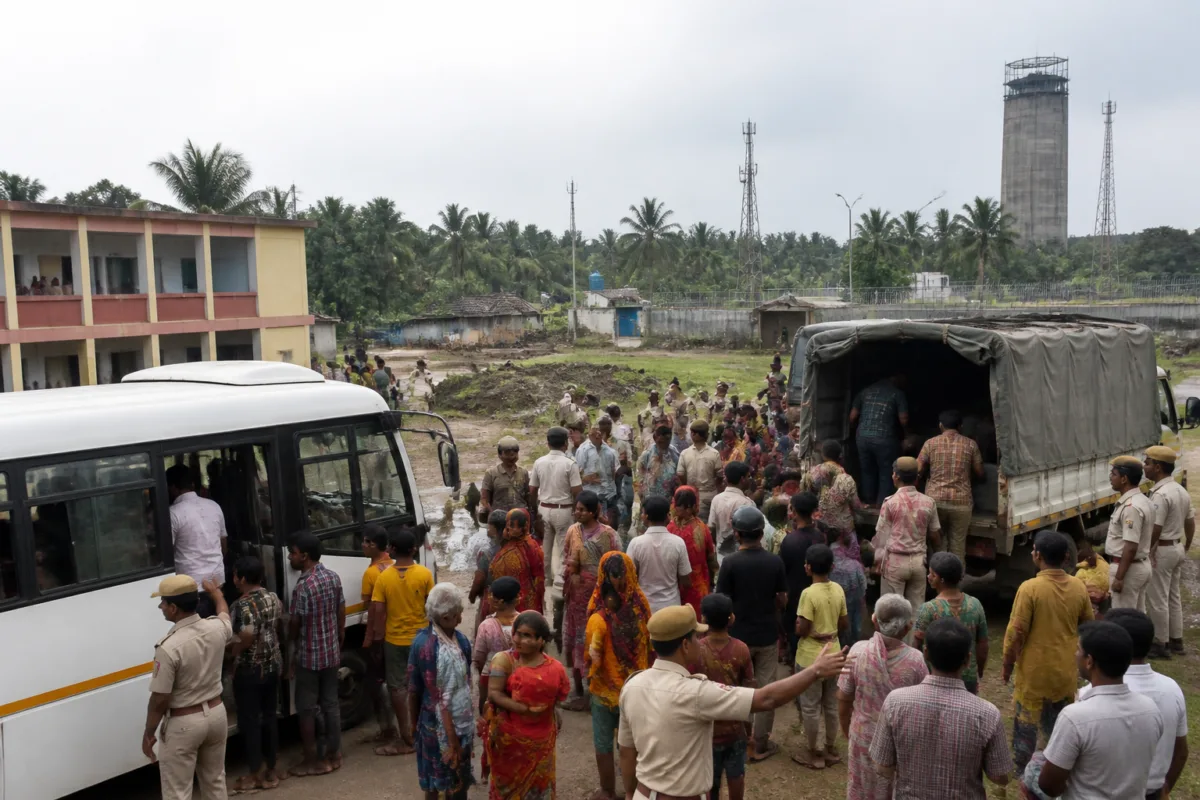
A total of 2,524 villagers from four settlements near the Integrated Test Range (ITR) at Chandipur in Odisha’s Balasore district were evacuated to temporary shelters on Tuesday as a precaution ahead of a DRDO missile test. The missile was successfully test-fired from Launch Complex-3 at 11.19 am, after which residents were allowed to return to their homes following clearance from defence authorities.
The evacuation covered villages located within a two-kilometre radius of the test site. The district administration coordinated with defence authorities and the police to move residents away from the operational area and reduce the risk to civilians during the test.
Four temporary shelters were used for the operation, including multipurpose cyclone shelters and school buildings. Officials arranged food, drinking water, medicines and other basic amenities at the facilities. Special vehicles transported villagers from their settlements to the shelters and later supported the return process.
The arrangements show how missile testing at a major defence facility requires coordination beyond the launch complex itself. Local administration officials were responsible for identifying residents in the precautionary zone, arranging transport and shelter, and deploying personnel to manage medical and emergency needs during the test window.
Block development officer (Sadar) Uttam Jena said six villages located between one and two kilometres from the test site had been identified for evacuation. The administration had initially expected between 2,500 and 2,600 people to be shifted and had planned six shelters for the exercise. Two multipurpose cyclone shelters were located at Jayadev Kasba and Khadupahi, while temporary facilities were arranged at other locations.
Medical teams and fire service personnel were deployed at the shelters to respond to emergencies. Breakfast, lunch and refreshments were provided to the evacuees during their stay. According to the report, the DRDO bore the expenses associated with the evacuation and provided financial assistance to affected residents towards their daily wages.
The incident also underlines the role of temporary public infrastructure in supporting high-security and high-risk operations. Cyclone shelters and school buildings, normally used for disaster response or public services, were brought into the evacuation plan to accommodate residents for the duration of the missile test.
The district administration said it had taken precautionary measures to prevent any untoward incident. Residents were permitted to return to their villages only after receiving clearance from the DRDO following the successful test-firing from Launch Complex-3.

