


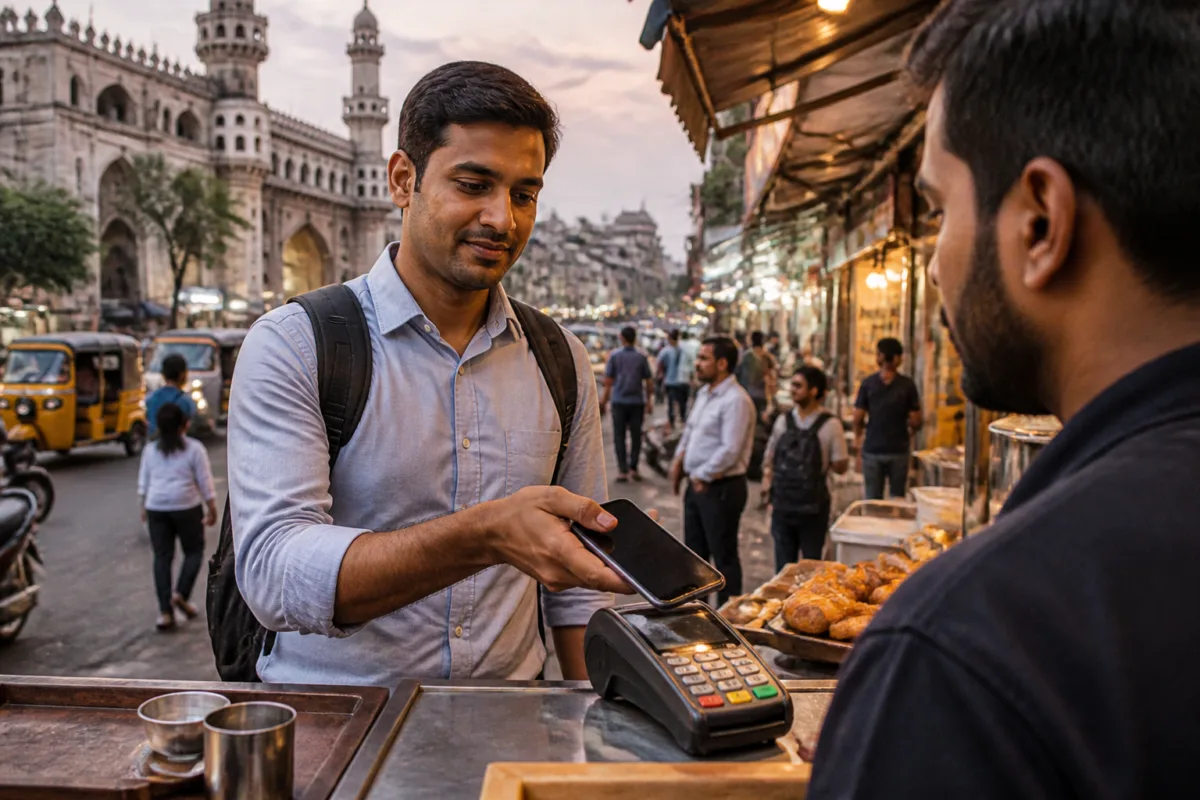
Hyderabad’s digital payments story is no longer only about whether residents use UPI. According to the How Urban India Pays 2026 report by Amazon Pay and Pahlé India Foundation, 76 per cent of spending in the city is already digital, indicating that electronic transactions have moved from being a convenience to becoming part of the routine urban consumer experience.
That shift matters because payments are an everyday interface between residents and the city around them. Dining, travel and routine purchases all depend on the speed and reliability of transactions. As digital payment use expands across these activities, the payment platform becomes more than a checkout tool: it increasingly shapes how consumers access services, respond to incentives and manage parts of their personal finances.
The report’s findings position Hyderabad as a digitally mature urban market. Its evidence is centred on consumer behaviour rather than infrastructure capacity or transaction volumes, but the pattern it describes is significant. A city in which most spending is digital has a different relationship with retailers, financial platforms and everyday commerce from one where digital payments remain occasional or restricted to specific types of purchases.
## Hyderabad digital payments move beyond basic convenience
The strongest signal in the report is the 76 per cent digital-spending figure. The supplied findings do not specify the methodology, sample size or categories included in this measure, so it should be read as a report metric rather than a complete account of all spending in the city. Even with that limitation, it establishes the central direction of travel: digital payment use is embedded in ordinary consumption.
The report particularly highlights Hyderabad’s salaried professionals. Compared with the national benchmark, salaried professionals in the city are 16 percentage points more likely to use UPI for eating out and travel. These categories are closely linked to the functioning of a large, mobile urban workforce. Payments for meals, mobility and leisure are frequent, time-sensitive and often made across a wide range of formal and informal establishments.
The finding does not establish that all Hyderabad residents behave in the same way. It identifies a specific consumer segment and compares its behaviour with a national benchmark. That distinction is important because digital adoption can vary according to income, occupation, access to smartphones and bank accounts, merchant acceptance and confidence in digital systems. The supplied report does not provide a city-wide breakdown of those factors.
Still, the pattern among salaried professionals reveals how payment behaviour is becoming connected to urban routines. UPI is not being used only for large or planned purchases. Its reported strength in eating out and travel suggests that it has become part of the small, repeated transactions through which residents move through the city and participate in its consumer economy.
## The next competition is for engagement, not adoption
For payment companies, Hyderabad’s reported maturity changes the nature of competition. In an early adoption market, platforms primarily need to persuade consumers and merchants to accept digital transactions. In a market where digital spending is already widespread, the contest shifts towards retention, frequency of use and the range of services attached to the payment experience.
The report’s finding on auto-saving features points in that direction. Hyderabad’s salaried professionals are 13 percentage points more likely than the national benchmark to use auto-saving features. This suggests that digital platforms may be serving two connected functions: enabling daily spending and helping users build recurring financial habits.
The evidence does not show how much money users save, how frequently they use auto-saving tools or whether these features lead to sustained financial improvement. It does, however, indicate a willingness among the identified consumer segment to use payment applications beyond the immediate act of transferring money. That is an important distinction for the evolution of digital finance in cities.
When a payment application also becomes a place for saving, rewards and other financial features, its role in household decision-making can become broader. The supplied material does not establish the full range of services used by Hyderabad residents, but it shows that the report views the city as a market ready for deeper digital engagement.
This creates a structural question about how urban consumers encounter financial products. If everyday payment tools increasingly present savings and rewards features, financial management may become integrated into routine purchasing behaviour. Whether that produces better outcomes for users cannot be concluded from the report alone. The available evidence only confirms that these features are becoming relevant to platform strategy and consumer choice.
## Cashback is reshaping platform loyalty
Hyderabad also stands out in the report for the role of rewards. It ranks as the top city nationally for cashback-driven app-switching, with 50 per cent of consumers identified in the report’s metric. The finding suggests that high digital adoption does not necessarily create strong loyalty to one payment application.
That distinction is central to understanding the city’s digital market. Consumers may be comfortable using digital payments while remaining willing to change platforms when the perceived value changes. Cashback therefore operates not simply as a promotional benefit but as a mechanism that can influence the distribution of activity among competing applications.
The supplied report does not identify which applications gained or lost users, the duration of the switching behaviour or whether cashback was the main reason for switching in every case. It also does not establish whether users maintain multiple applications at the same time. The 50 per cent figure should therefore be treated as a specific report indicator, not as a complete measure of consumer loyalty.
Even so, the result highlights a tension within digital payments. A mature user base may make transactions more routine, but it can also make consumers more discerning about the platform through which those transactions take place. Once basic functionality becomes common across services, rewards, convenience and the quality of the user experience can become more important differentiators.
For merchants, this may mean that the payment layer is increasingly linked to customer incentives. For users, it may mean that the apparent simplicity of a digital transaction sits within a wider competition among platforms for attention, repeat use and financial engagement. The report identifies the behaviour; it does not provide enough evidence to determine its wider effect on merchant costs or consumer spending.
## What the report reveals about Hyderabad’s urban economy
The significance of Hyderabad’s digital payments profile lies in the connection between payment behaviour and everyday urban life. The city’s reported patterns are not limited to online commerce or specialist financial services. They include eating out, travel, routine purchases, savings features and app selection. Together, these categories describe a consumer market in which digital systems are closely woven into ordinary activity.
This does not mean that physical commerce has disappeared or that digital access is evenly distributed. The supplied material makes neither claim. Nor does it provide evidence about cash use, exclusion, failed transactions, connectivity, merchant acceptance or differences between neighbourhoods. Those gaps limit what can be concluded about the inclusiveness of Hyderabad’s digital economy.
They also point to the questions that future reporting would need to examine. A city can have high digital payment adoption while still containing residents and businesses that depend on cash. It can have widespread UPI use while facing unequal access to reliable devices, banking services or digital literacy. The report’s consumer findings establish a strong adoption signal, but they do not resolve these wider urban questions.
The institutional role of payment platforms is also becoming more consequential. As applications compete through cashback, auto-saving and other features, they are influencing how consumers make choices within the city’s commercial system. The report frames this as an opportunity for deeper engagement. From an urban perspective, it is also a shift in the infrastructure of everyday exchange: the systems through which people pay are becoming connected to how they save, travel, eat and select services.
The available evidence confirms that Hyderabad is a high-adoption market in the report’s assessment, with digital spending reported at 76 per cent and especially strong indicators among salaried professionals. It also shows that the city’s consumers may be responsive to auto-saving tools and cashback incentives. What remains unclear is how representative these findings are across the full population, how they affect merchants and how durable the reported behaviours are. Those are the measures that will determine whether Hyderabad’s digital payments growth represents only platform success or a deeper transformation in how the city’s economy functions.

