


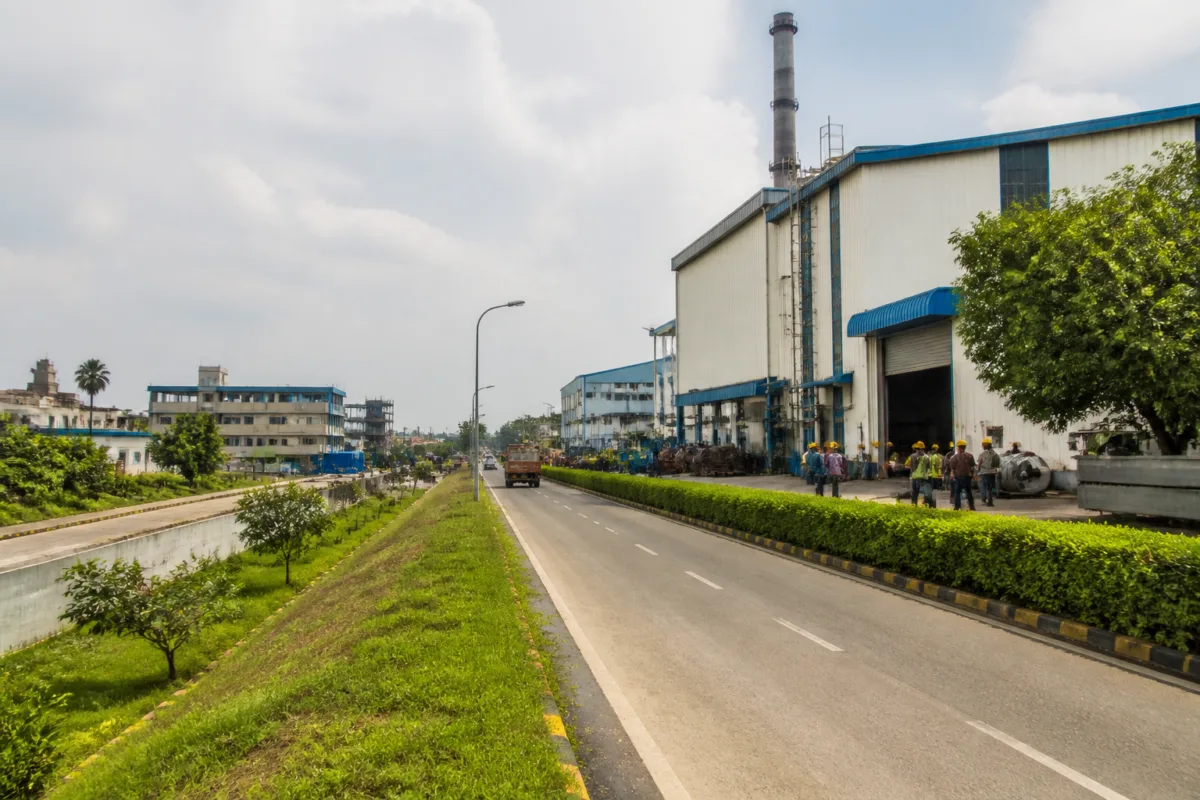
West Bengal industry leaders have called for faster project clearances, transparent land allocation, employment-linked incentives and stronger infrastructure ahead of the state government’s proposed new industrial policy, scheduled to be unveiled on November 5. The policy is expected to set out a strategy to attract investment, accelerate industrialisation and create jobs.
Industry representatives have sought measures including interest subsidies, reimbursement of state goods and services tax, support for employees’ provident fund contributions, easier access to industrial land, reliable power supply and time-bound approvals. Their demands cover manufacturing, agro-processing, food processing, jewellery, natural gas and startups, with several business leaders linking industrial growth to wider requirements for warehouses, logistics hubs, housing and commercial infrastructure.
Purti Realty managing director Mahesh Agarwal said the proposed incentives could encourage fresh investments, strengthen manufacturing and generate employment. He said industrial expansion would also create demand for industrial parks, warehouses, logistics facilities and supporting commercial infrastructure, making integrated industrial ecosystems necessary.
Suraj Agarwal, co-chairman of the agriculture committee of the Merchants’ Chamber of Commerce, called for a stronger focus on agro-based industries, food processing, cold storage and modern supply chains. He pointed to West Bengal’s production of rice, potatoes, fruits, vegetables, fisheries and horticulture products, and said closer links between farmers and industry could improve farm incomes and create rural employment. “Agriculture should become one of the key drivers of Bengal’s industrial growth and a gateway to global food markets,” he said.
The state’s traditional jewellery sector also featured among the industry demands. Ashok Bengani, president of the Ankurhati Gems & Jewellery Manufacturers’ Welfare Association, said better infrastructure, market access, financial security and fair remuneration would be needed to revive jewellery manufacturing and encourage skilled artisans who had moved to other states to return.
Sugam managing director Suhel Saraf said investors were seeking predictability through a single-window mechanism, a transparent land framework and incentives tied to job creation. Ambuja Neotia Group chairman Harshvardhan Neotia similarly called for quicker decisions, simpler procedures, time-bound clearances, easier access to industrial land, dependable infrastructure and industry-linked skill development.
Energy and food processing were identified as separate areas requiring policy support. Great Eastern Energy Corporation vice-chairman and managing director Prashant Modi said natural gas should be recognised as an enabler of industrial growth. He noted that natural gas accounts for around 6 per cent of India’s energy consumption, against a national target of 15 per cent by 2030, and pointed to coal-bed methane resources in the Raniganj coalfields and prospective shale gas reserves in West Bengal. He called for time-bound clearances and self-certification-based approvals.
Keventer Group chairman and managing director Mayank Jalan said food processing and fast-moving consumer goods could help position Bengal as a food-processing hub for eastern and northeastern India. He sought transparent land allotment, reliable and affordable electricity for cold-chain infrastructure, plug-and-play facilities in food parks and time-bound single-window approvals. He said around 40 per cent of electricity consumption in the sector goes towards cold-chain operations, making a tariff waiver or subsidy important for the industry.
Ajay Jain, chairman of IIM Calcutta Innovation Park, called for stronger links between startups and established companies through partnerships, pilot projects and procurement arrangements. He also sought support for technology commercialisation and market access beyond the incubation stage. The new policy is scheduled for unveiling on November 5.

