


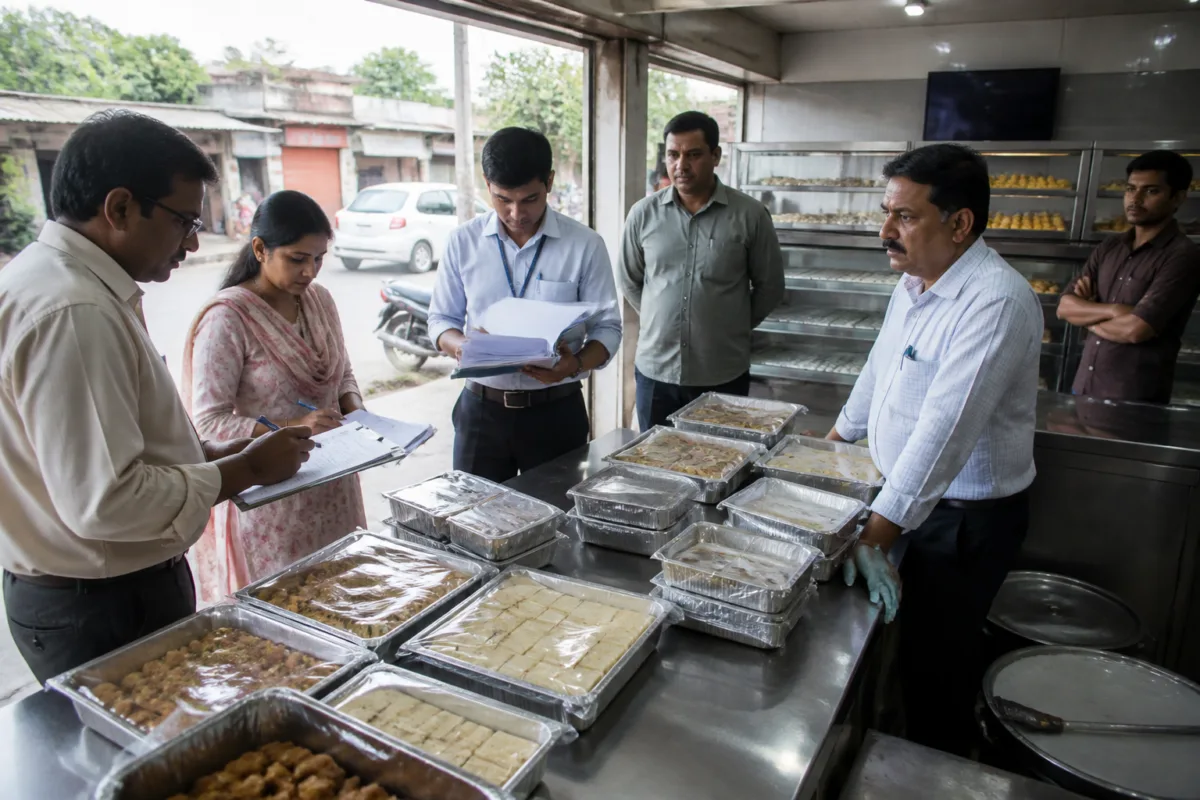
The Pune FDA destroyed 303 kg of barfi worth approximately Rs 1.21 lakh at a sweets shop near Alandi after officials found suspected quality concerns, room-temperature storage, missing labels and no purchase invoices during an inspection on November 2.
The action took place at R. Bikaner Mithai in Mauli Complex on the Alandi-Markal Road in Dhanore village, Khed taluka, Pune district. The inspection was conducted as part of the ‘Safe Food, Safe Maharashtra’ campaign being implemented under the leadership of Maharashtra Food Safety Commissioner Tukaram Mundhe.
According to the Food and Drug Administration, Pune, officials found 303 kg of barfi and a loose sample of kalakand at the establishment. The barfi stock was suspected to be of substandard quality. Officials also found that the sweets had been kept at room temperature and were not accompanied by mandatory labels or purchase invoices.
The seized barfi was destroyed at the premises because of the perishable nature of the product. The FDA valued the destroyed stock at approximately Rs 1,21,200. The action removes the identified stock from sale, while the inspection findings also point to documentation and storage requirements that food businesses are expected to follow.
A sample of kalakand collected during the inspection has been sent for testing and analysis. The source report does not provide the laboratory result or state whether further action will be taken against the establishment after the analysis is completed.
The inspection was carried out by Food Safety Officer H. R. Marewar under the guidance of Regional Assistant Commissioner S. N. Chatte and Joint Commissioner (Food) S. Karkale. The FDA has appealed to food business operators to store food products properly, comply with mandatory labelling requirements and maintain purchase invoices and other relevant records.
The inspection comes as Maharashtra’s food regulator conducts enforcement activity under the Safe Food, Safe Maharashtra campaign. For consumers, the case highlights the role of storage conditions, product labelling and traceable purchase records in the regulation of perishable sweets sold through local retail outlets. The next reported development is the test result for the kalakand sample.

