


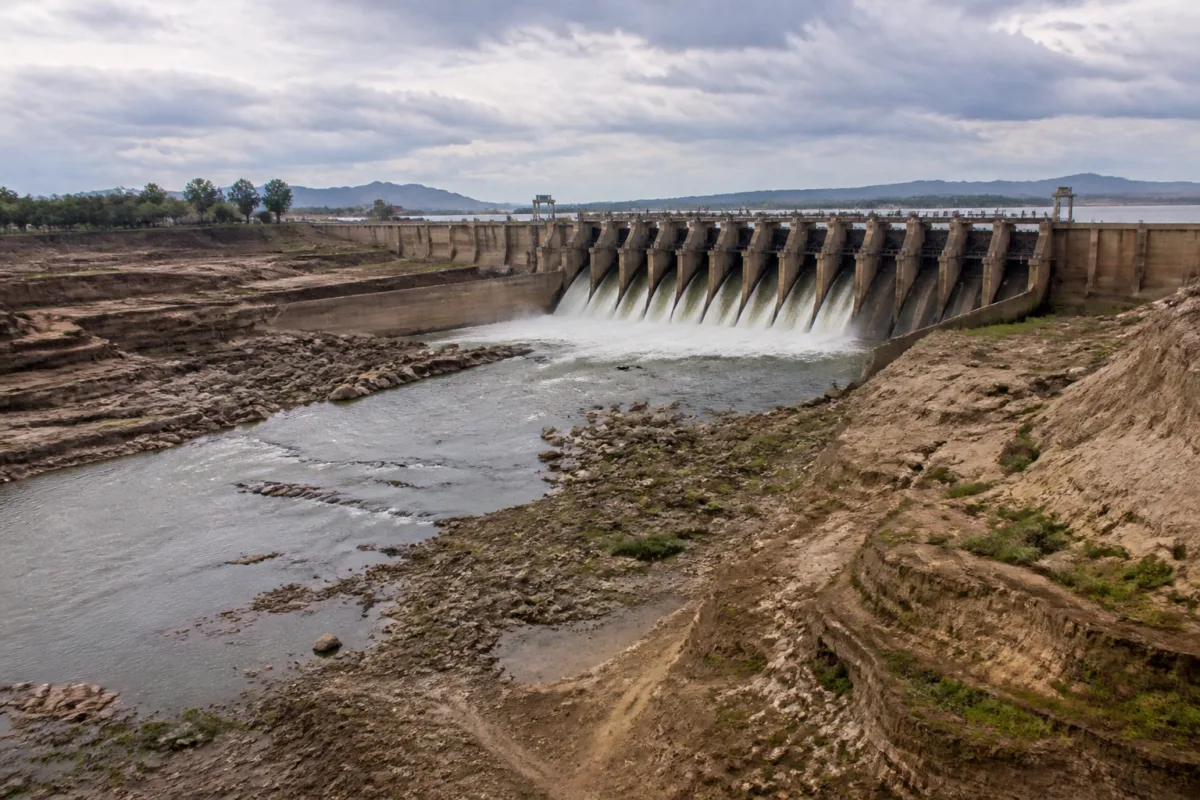
The KRS dam water level has fallen to 100.93 feet after the reservoir in Mandya district increased its outflow to 7,947 cusecs, even as inflows dropped to 453 cusecs. The decline follows the Cauvery Water Regulation Committee’s instruction last week to release 3,000 cusecs of water daily to Tamil Nadu.
The Krishna Raja Sagara reservoir has been releasing more water than the stated requirement for the past three days, according to a report by Prajavani. The reservoir’s storage stood at 23.55 TMC feet on Tuesday morning, equivalent to 48% of its total capacity.
KRS can store water up to 124.80 feet, with a total capacity of 49.45 TMC feet. The reservoir had received additional inflows after good rainfall in Kodagu last week, but the increased release has since pushed the water level down again. This year, the reservoir has not reached full capacity and its level rose only to around 110 feet because of lower rainfall and reduced inflows.
The current storage is substantially below the level recorded on the same day last year, when KRS was full. Despite the reduced availability, water continues to be released regularly for drinking-water requirements and lake filling in the Bengaluru, Mysuru and Mandya regions.
The pressure is also visible in other reservoirs in the Cauvery basin. Kabini reservoir in Mysuru district is receiving 584 cusecs but releasing 2,000 cusecs. Its water level was reported at 2,273.03 feet, with storage of 13.22 TMC feet, or 68% of its available capacity. Last year on the same day, Kabini was nearly full.
The Hemavati reservoir was receiving 845 cusecs and releasing 300 cusecs, with 18 TMC feet stored, representing 48% of capacity. Harangi reservoir was receiving 674 cusecs and releasing 200 cusecs, while its storage stood at 5.59 TMC feet, or 66% of capacity. The reported figures indicate that reservoir operations are being managed amid lower inflows and continuing downstream release requirements.

