


Amravati district has launched a multi-department drought-preparedness drive after receiving only 56% of its average monsoon rainfall, with drinking water, groundwater recharge, fodder and power supply placed at the centre of the response.
District guardian minister Chandrashekhar Bawankule directed the administration to remain alert to drought conditions expected to intensify in the coming months because of the impact of El Niño. He issued the instructions while chairing a review meeting attended by senior elected representatives and district officials.
The district administration has completed its crop-loss assessment and submitted a proposal seeking Rs 734 crore in compensation for affected farmers, according to the report. Farmers are being provided 12-hour power supply for Rabi cultivation, while awareness campaigns will discourage the cultivation of water-intensive crops.
Bawankule also reviewed the condition of groundwater and reservoirs. Officials said groundwater levels had fallen sharply and major reservoirs were holding only about half their capacity. Available water stocks will therefore be allocated with drinking water requirements receiving the highest priority.
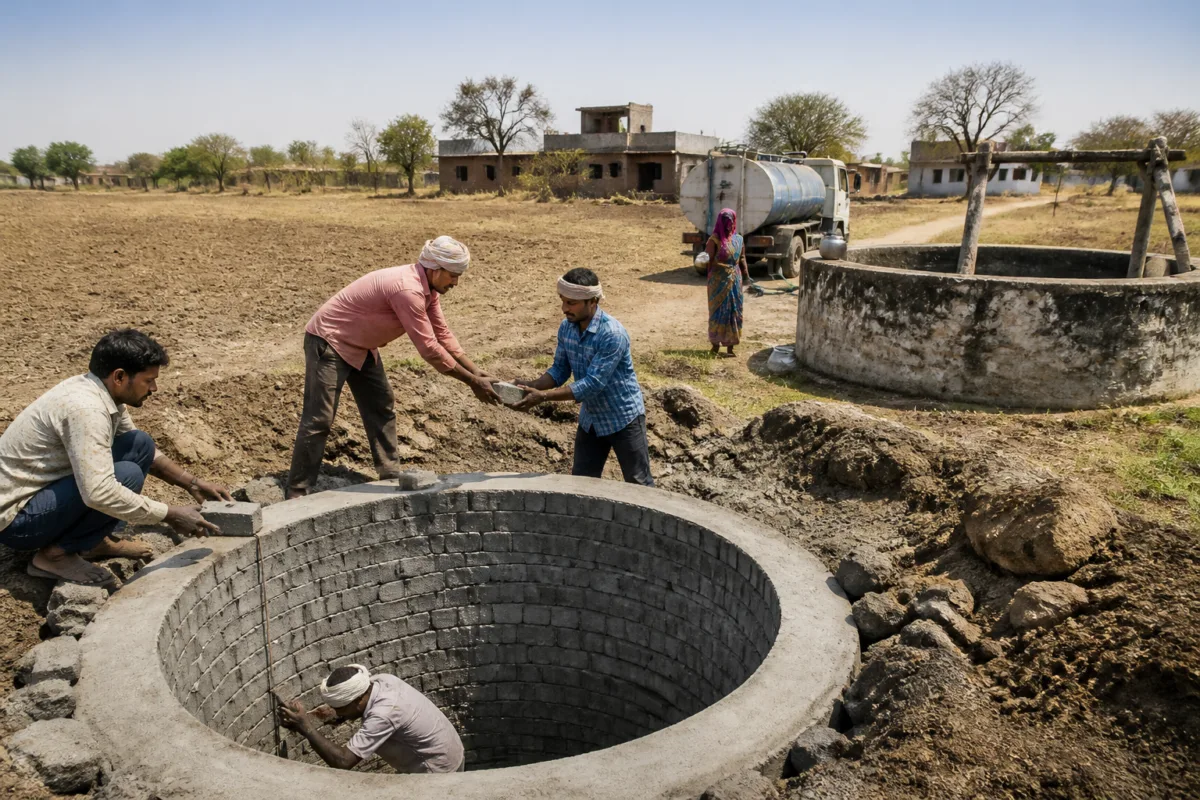
In Morshi taluka, where borewell water levels have declined significantly, permission for new borewells will not be granted. The administration will seek expert assistance to revive defunct borewells. Officials have also been asked to repair and maintain both functional and non-functional public wells before the summer season so they can be used during emergencies.
The district has launched a District Connect App to coordinate drought-management work across 11 departments and provide real-time information to field agencies. Bawankule directed officials to organise a workshop for departments and prepare village-level drought mitigation plans. The administration was also asked to study and replicate successful measures adopted in Dharashiv district.
Fodder availability was another focus of the review. Officials said stocks sufficient for around 100 days were available. To prepare for future shortages, fodder cultivation has begun on 20 hectares of grazing land. Bawankule directed officials to prevent fodder from being transported outside the district and to form a committee to recommend regulatory measures. Brick-making units that use crop residue have been instructed to reserve 50% of their stock.
The groundwater recharge programme includes 1,700 recharge shafts proposed by the Groundwater Survey Department, 1,800 water conservation works under the Viksit Bharat employment and livelihood programme, and 42,000 Jaltara pits. These works are intended to improve local water retention and recharge before the next period of high demand.
To protect electricity supply, Rs 20 crore has been allocated from the District Planning Fund. Bawankule instructed the chief engineer of MSEDCL to hold monthly meetings with public representatives and proposed appointing and training a Gram Vidyut Vyavasthapak in every village.
Officials were also directed to complete water-supply schemes that are at least 75% finished, provide them with the required power connections and commission them without delay. The minister asked taluka-level coordination committees led by MLAs to hold regular reviews, prepare village development plans focused on water conservation, plug leakages in tap-water schemes and promote judicious water use. The next stage of the response will involve implementing these village-level measures and completing pending water-supply works ahead of the summer season.

