


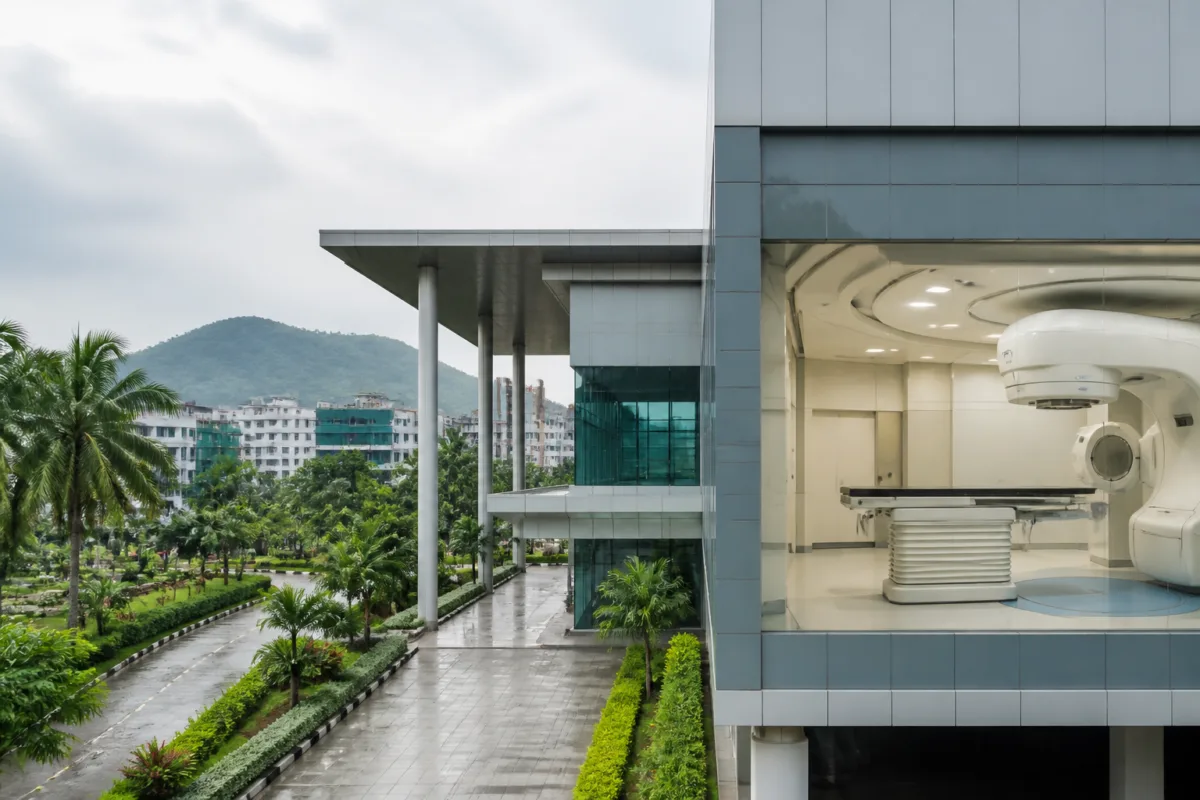
Assam’s agreement with Belgium-based Ion Beam Applications (IBA) to install a proton beam therapy machine in Guwahati is more than a technology acquisition. It is an attempt to build a specialised cancer-care platform in the Northeast while preparing the state’s healthcare system for technologies that are still moving from research and clinical feasibility towards wider use.
The immediate development is the planned installation of a proton beam therapy machine in Guwahati. At the agreement-signing ceremony, Assam Chief Minister Himanta Biswa Sarma said the state was preparing for next-generation cancer-care technologies, including Flash radiotherapy and multi-ion carbon therapy, as they become clinically available. IBA is exploring those technologies for Assam alongside the proton therapy project.
The supplied account does not provide the machine’s installation date, capital cost, operating model, treatment capacity or the institution that will host it. Those details will determine how quickly the agreement becomes usable public infrastructure. For patients, the distinction between a signed agreement and a functioning treatment service is significant: the first establishes intent and institutional cooperation, while the second requires equipment installation, commissioning, trained staff, clinical protocols and patient access systems.
What makes the Guwahati project notable is the way the state and IBA are positioning it. The proposed proton beam machine is not being presented only as a standalone clinical asset. It could also become the platform on which more advanced forms of radiotherapy are integrated as they reach clinical readiness. That places the project at the intersection of present healthcare delivery and future technology development.
Proton beam therapy uses charged particles to deliver radiation to a tumour. IBA says its DynamicARC technology is designed to deliver precise proton therapy while the treatment gantry rotates. Its ConformalFLASH system combines proton therapy with ultra-high-dose-rate irradiation. The difference is important institutionally: a conventional equipment purchase can be assessed primarily through procurement and commissioning, while a platform intended to accommodate emerging systems must also remain connected to research, clinical trials and technology upgrades.
IBA CEO and vice-chairman Olivier Legrain said the company was developing two Flash radiotherapy technologies, DynamicARC and ConformalFLASH. According to his statement to The Times of India, DynamicARC could be closer to clinical availability in approximately three years. The timeline for ConformalFLASH remains dependent on ongoing research and clinical trials, although he described it as short-term.
Those timelines also establish the limits of what Assam can claim today. The proton beam therapy machine is linked to the agreement signed with IBA. Flash radiotherapy is still described in terms of future clinical availability and ongoing research. Multi-ion carbon therapy is likewise part of IBA’s development agenda rather than a confirmed treatment service already available in Guwahati.
IBA said the first patient was treated with Flash radiotherapy under its C-FLASH-01 clinical feasibility study at Penn Medicine in the United States. The company is developing DynamicARC and ConformalFLASH, while also working with Normandy Hadrontherapy in Caen, France, on multi-ion technology intended to treat some radioresistant cancers. These details show that Assam’s proposed expansion is connected to an international technology-development network, but they do not establish that every technology under discussion has completed clinical validation or is ready for routine use.
The strongest near-term argument for the project is capacity. Dr Siddharth Laskar of Tata Memorial Centre, Mumbai, said Flash radiotherapy could reduce treatment-room occupancy and increase patient throughput, allowing more people to use existing infrastructure. That observation shifts the discussion away from novelty and towards the practical constraint faced by specialised cancer services: how many patients can be treated with available rooms, machines, clinical teams and operating hours.
A machine’s public value therefore cannot be assessed only by its technical specifications. It will also depend on how it is integrated into the wider cancer-care system. A high-end treatment unit needs referral pathways, diagnostic capability, radiation oncology expertise, treatment planning, maintenance and follow-up care. The supplied announcement does not specify how Assam plans to organise these functions, who will operate the equipment or how patients will be selected and referred.
That institutional design will be especially important because proton beam therapy is a specialised form of treatment rather than a replacement for all cancer-care infrastructure. The agreement may add a new layer of capability, but it does not remove the need for diagnosis, surgery, chemotherapy, conventional radiotherapy, rehabilitation and long-term follow-up. Its impact will depend on whether it is connected to those services rather than developed as an isolated technology centre.
The project also raises a question about access. IBA India director Rakesh Pathak said the company was committed to bringing advanced cancer-treatment technologies to India in collaboration with governments and healthcare providers, with the objective of making breakthroughs available when they are clinically ready. That statement places collaboration at the centre of delivery, but the agreement’s public details do not yet clarify the financing structure, patient charges, eligibility rules or the role of public insurance and state support.
For a state healthcare system, those questions are not secondary. The location of a specialised machine can reduce the need for some patients to travel outside the region, but only if the service is financially and operationally accessible. Without information on pricing, referral arrangements and treatment capacity, it is not yet possible to determine how broadly the planned facility will serve patients across Assam or the wider Northeast.
The proposed Guwahati facility also illustrates the administrative challenge of adopting rapidly advancing medical infrastructure. Government agreements can create a framework for land, procurement, institutional coordination and service delivery. Technology companies contribute equipment, technical knowledge and development partnerships. Hospitals and clinical institutions must then convert those inputs into safe, routine patient care. Each part has a different responsibility, and delays in any one of them can postpone the public benefit of the project.
The announcement’s language around clinical availability is therefore central. DynamicARC is described as potentially being about three years from clinical availability, while ConformalFLASH remains subject to research and clinical trials. That means the state’s immediate implementation priority is the proton beam therapy machine, while its longer-term ambition is to ensure that the facility can accommodate systems whose clinical status is still evolving.
This creates both an opportunity and a governance requirement. Building for future technology can prevent infrastructure from becoming obsolete soon after commissioning. It can also create uncertainty if future systems do not progress on the expected timeline or require different technical, regulatory and staffing arrangements. The supplied material confirms the ambition, but not the contractual safeguards, upgrade provisions or decision-making process that will govern those possibilities.
For citizens, the most tangible measure of success will be whether the project changes the geography and capacity of cancer treatment. The agreement is significant because it places Guwahati at the centre of a proposed next-generation cancer-care facility and connects Assam to an international technology partner. Its final impact, however, will be established only through implementation: installation, commissioning, clinical readiness, staffing, operating capacity and access.
The evidence currently confirms a signed agreement for a proton beam therapy machine, IBA’s exploration of Flash radiotherapy and multi-ion carbon therapy for Assam, and a stated interest in preparing the state’s healthcare system for emerging technologies. It does not yet establish the project’s cost, opening date, treatment volume or patient-access model. The next developments to monitor are the installation timeline, the host institution, the service framework and whether the emerging technologies move from research and clinical trials into routine clinical availability.

