


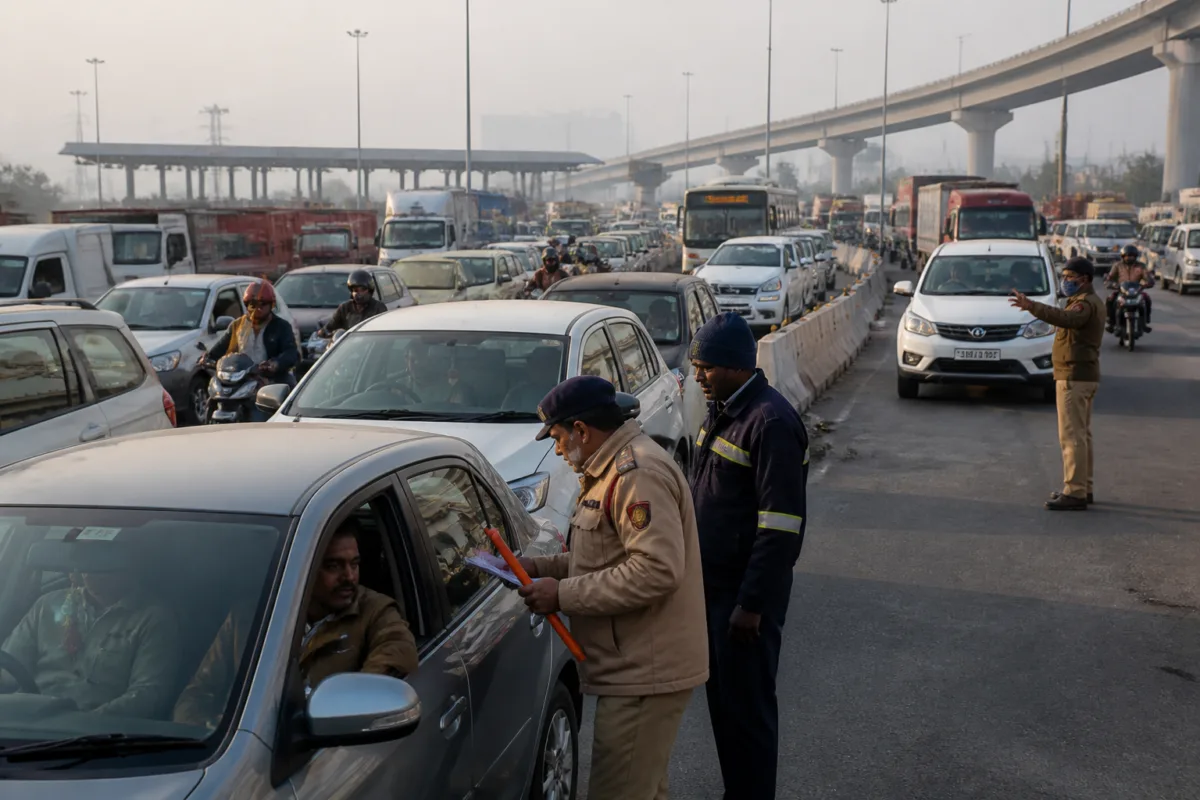
Delhi’s intensified BS-VI vehicle checks at interstate borders caused major traffic snarls on Monday, with commuters reporting hours-long delays as enforcement teams stopped vehicles entering the capital from Haryana and Uttar Pradesh.
Heavy congestion was reported at the Delhi-Gurugram, Delhi-Noida, Delhi-Ghaziabad, Delhi-Sonipat and Delhi-Najafgarh borders. The Delhi-Gurugram border saw particularly severe disruption, with traffic on NH-48 backing up for several kilometres near the Sirhaul toll plaza. The congestion affected both the main carriageway and adjoining service roads.
Traffic movement was also disrupted near Noida and Ghaziabad, where vehicles were stopped for checks. At the Aya Nagar border, Delhi Traffic Police and Transport Department teams intensified enforcement and turned back vehicles that did not meet the prescribed BS-VI emission standards. Fines were also issued for violations and incomplete vehicle documentation, according to senior Delhi Traffic Police officers cited by Millennium Post.
The restrictions came into force on November 1 as part of Delhi’s winter pollution-control measures. Under the arrangement, petrol and diesel vehicles registered outside Delhi that do not comply with BS-VI emission standards are barred from entering the national capital. Electric and CNG vehicles, along with vehicles meeting BS-VI standards, are exempt.
The enforcement operation is being carried out jointly by the Delhi Environment Department, Transport Department and traffic police. Checks have been intensified at several entry points, including Rajokri on NH-48, the DND Flyway, Ghazipur, Singhu, Tikri and Badarpur. These borders are among the capital’s busiest gateways for daily commuters, freight movement and regional travel.
The Northern Range Traffic Police said in a statement that special enforcement teams had been deployed at various Delhi border points to ensure implementation of the prescribed restrictions. The statement did not provide details on the number of vehicles checked, vehicles turned back or penalties issued.
The border checks place Delhi’s pollution-control policy directly on the region’s road network, where enforcement activity can affect traffic beyond the city’s administrative limits. Commuters travelling between Delhi and neighbouring urban centres faced delays as vehicles were examined before being allowed to proceed.
The restrictions are intended to reduce vehicular emissions during the winter months, when pollution levels in the national capital typically rise. Enforcement teams are continuing checks at the designated border points under the winter pollution-control arrangement.

