


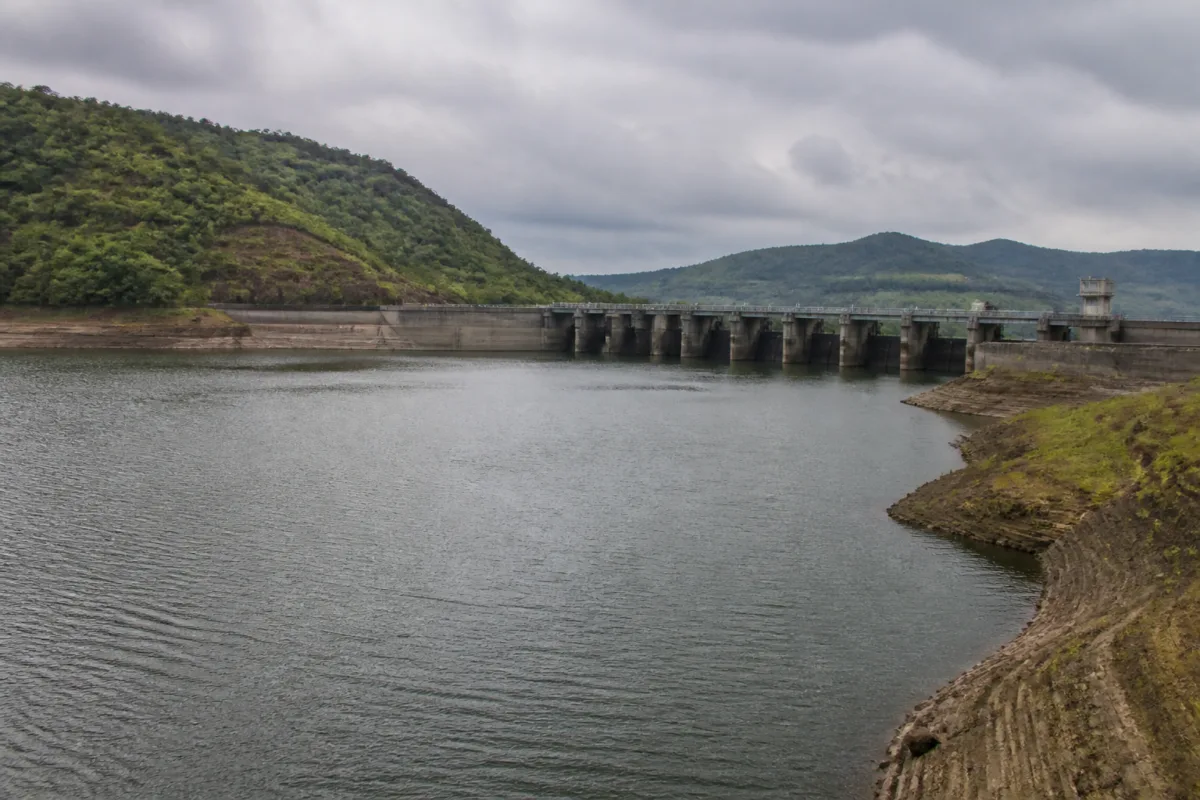
Pune’s four main water-supply dams held 23.51 thousand million cubic feet (TMC) of water as of 6 am on November 2, equivalent to 80.65% of their combined capacity, according to the latest dam data reported by Punekar News. The stock was lower than the 28.40 TMC, or 97.41%, recorded on the same date last year.
The four reservoirs supplying Pune are Khadakwasla, Panshet, Warasgaon and Temghar. Together, they have an approximate storage capacity of 29.15 TMC. The reported year-on-year difference means the dams held 4.89 TMC less water than on the corresponding date in 2025.
Warasgaon had the highest storage among the four reservoirs at 10.98 TMC, representing 85.63% of its capacity. Panshet held 8.27 TMC, or 77.67%, while Temghar recorded 3.14 TMC, equivalent to 84.63%. Khadakwasla had the lowest percentage storage at 56.82%, with 1.12 TMC of water.
Rainfall was recorded across all four catchments in the 24 hours ending at 6 am on November 2. Panshet received 13 millimetres, followed by Warasgaon with 11 mm, Khadakwasla with 8 mm and Temghar with 5 mm, according to the data cited in the report.
Despite the rainfall, no inflow into the four dams was recorded at the time of reporting. Water releases through the listed outlets were also recorded as zero, except for releases associated with hydropower generation. The figures therefore provide a snapshot of the reservoirs’ stored stock rather than indicating an active increase in available water at that time.
Khadakwasla Dam has released a cumulative 19.05 TMC through its spillway so far, the reported data stated. Spillway releases occur when reservoir levels and operating conditions require water to be discharged, although the supplied report did not provide details of the dates or individual release episodes.
The four-dam system is central to Pune’s water-supply planning because the reservoirs collectively serve as the principal storage source identified in the report for the city. A lower stock level than the previous year makes the reservoir position an important operational indicator for agencies monitoring supply, rainfall and inflows, although the supplied data does not state whether any change to Pune’s distribution schedule or water-use policy has been announced.
The latest figures also show that storage is uneven across the system. Warasgaon and Temghar were above 84% of their respective capacities, while Panshet was below 78% and Khadakwasla was below 57%. The source report did not provide individual dam capacities beyond the storage percentages and volumes, or specify the expected duration of supply based on the current combined stock.
The next reported update on storage, rainfall, inflows and releases will indicate whether the four-dam system records further replenishment or continues to hold below last year’s level. No additional administrative decision or supply-related announcement was included in the supplied report.

