


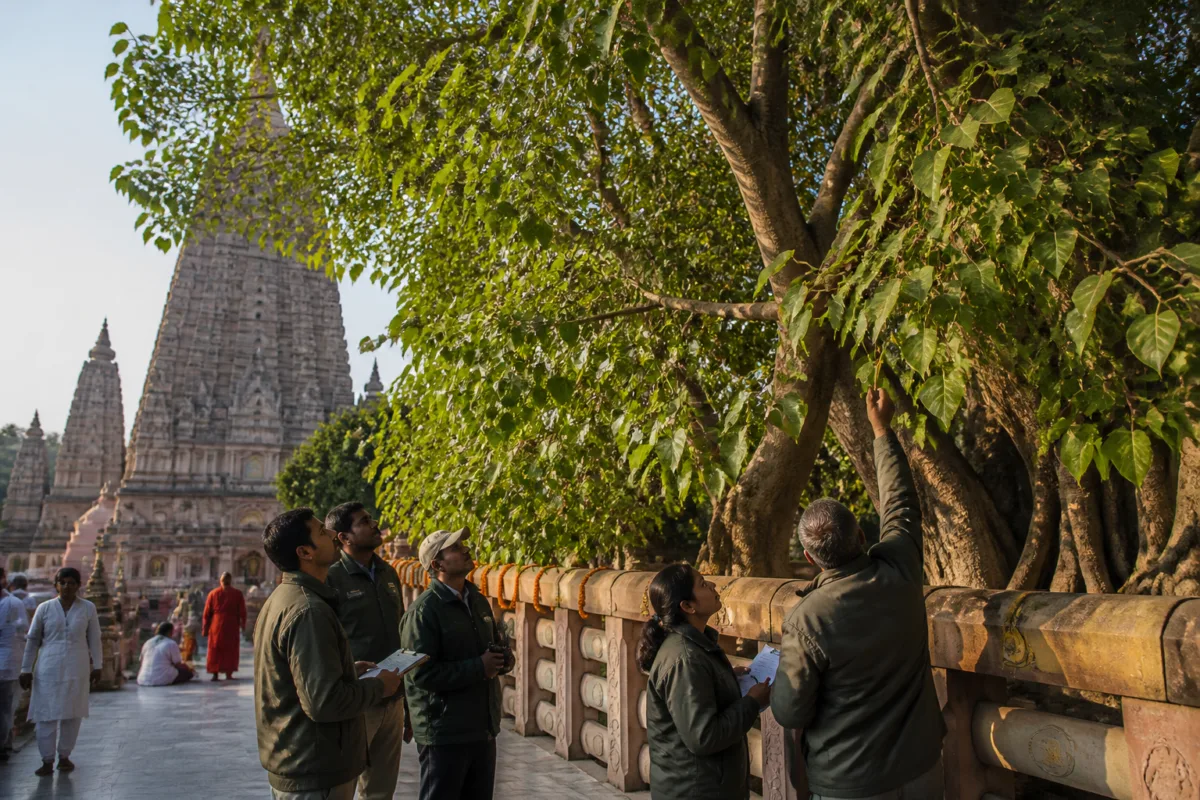
The Bodh Gaya Bodhi tree has been found to be in excellent health after a routine inspection by scientists from the Forest Research Institute (FRI), Dehradun, with minor preventive maintenance recommended ahead of the winter pilgrimage season.
FRI scientists Santan Barthwal and Shailesh Pandey assessed the sacred tree on the Mahabodhi Mahavihara campus on Monday. Barthwal said the inspection found no signs of infection or disease on the tree’s leaves and that there were no major health concerns.
The scientists nevertheless recommended limited upkeep to support the tree’s continued well-being. The measures include pruning dead branches and applying an organic insecticide spray as part of routine preventive care. The recommendations are maintenance steps rather than a response to an identified disease or infection, according to the inspection findings reported by the Times of India.
Mahavihara chief monk Bhikkhu Chalinda and caretaker monk Bhikkhu Deenanand were present during the assessment. Their presence reflects the role of the Mahabodhi Mahavihara’s local management in the day-to-day monitoring and care of the tree, which is both a religious symbol and a living ecological asset within the temple campus.
The Bodhgaya Temple Management Committee (BTMC) carries out regular monitoring, maintenance and long-term conservation under a memorandum of understanding signed with FRI Dehradun. The arrangement places the tree’s ecological stability within a continuing institutional framework rather than relying only on occasional inspections.
The conservation responsibility is particularly significant because the Bodhi tree is central to the identity and functioning of the Mahabodhi Mahavihara campus. According to Buddhist tradition, Prince Siddhartha attained enlightenment while meditating under the tree more than 2,600 years ago. The site attracts visitors and devotees from around the world, making the condition of the tree relevant to religious activity, heritage management and the operation of the wider pilgrimage destination.
The latest inspection also comes before the period identified by the BTMC as likely to bring a large influx of devotees. The committee’s winter 2026-27 spiritual calendar includes the annual World Peace Puja ceremonies under the sacred tree. The expected increase in visitors will place the temple campus in a period of heightened activity, while the FRI assessment provides an updated account of the tree’s condition before those ceremonies.
For the immediate maintenance cycle, the next steps are the pruning of dead branches and the application of the recommended organic insecticide spray. Regular monitoring under the BTMC-FRI arrangement is expected to continue as part of the long-term conservation of the tree.

