


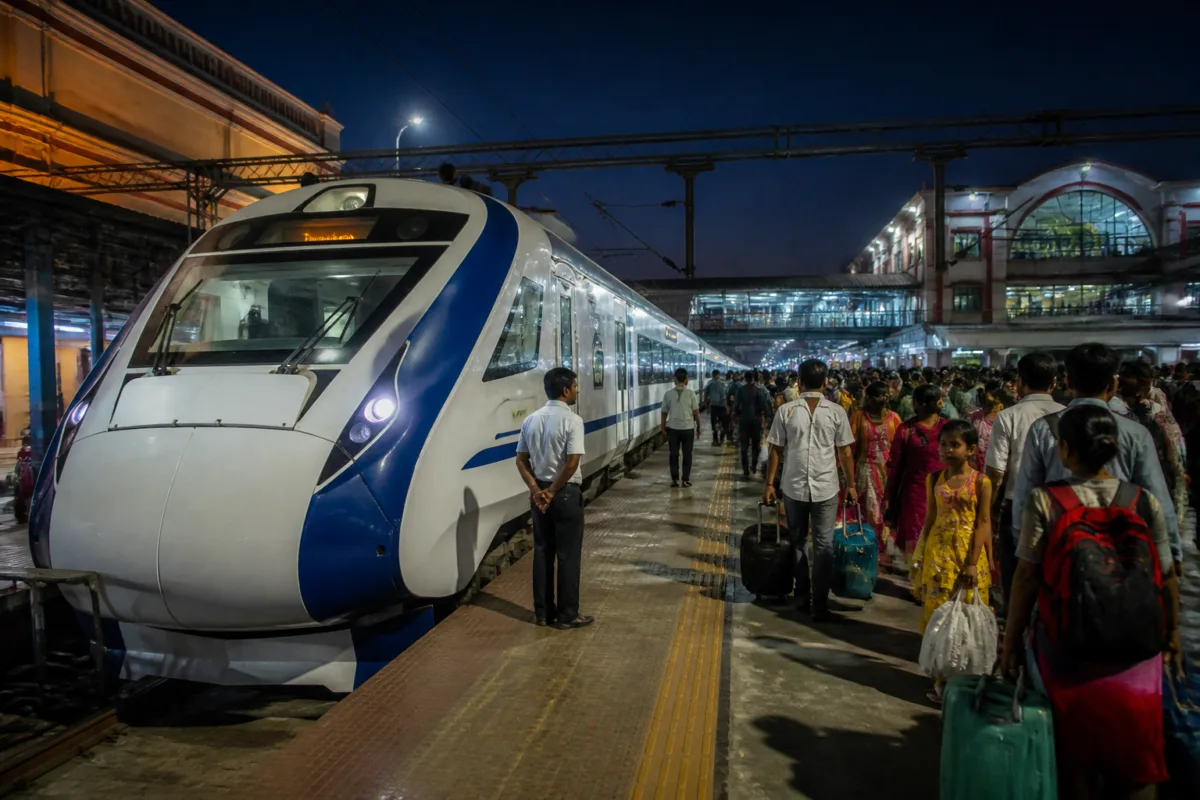
The Delhi–Varanasi Vande Bharat sleeper train saw its seats booked rapidly for the Diwali-to-Chhath travel period after bookings opened on the IRCTC website, highlighting strong demand for overnight rail connectivity between the national capital and eastern Uttar Pradesh.
The service was flagged off from Varanasi on Saturday by Railway Minister Ashwini Vaishnaw and Uttar Pradesh Chief Minister Yogi Adityanath. Passenger journeys on the train are scheduled to begin on Monday, according to the report. Online reservations opened at 8 am on Sunday, and seats up to November 7 were booked within minutes.
By late morning, passengers travelling for the Chhath period had also reserved seats. The report said that tickets up to November 15 were booked within about two hours of the opening of reservations. In several classes, even waitlisted tickets were no longer available for the festival travel window.
The remaining reported availability includes November 8, the day of Diwali, and November 15, after the Chhath festival period. The sharp booking response has made the train an important addition to the seasonal travel network, when demand for rail services between Delhi and cities in Uttar Pradesh and Bihar rises significantly.
The train will depart from New Delhi at 9:40 pm and reach Varanasi at 7:10 am the next morning. The 760-kilometre journey is scheduled to take approximately nine hours and 30 minutes, with an average speed of about 80 kilometres per hour.
On the return journey, the train will leave Varanasi at 8:50 pm and arrive at New Delhi at 6:10 am the following day. The return trip is listed as taking nine hours and 20 minutes, with an average speed of 81.42 kilometres per hour.
According to fare information on the IRCTC website, the Delhi–Varanasi journey will cost Rs 1,915 in third AC, Rs 2,470 in second AC and Rs 3,030 in first AC. The sleeper train includes third AC, second AC and first AC coaches.
Around 500 seats in third AC, 145 seats in second AC and 16 seats in first AC have been placed in the general booking quota, while some seats will be kept under reserved quotas, the report said. The available accommodation and fare structure give passengers multiple air-conditioned options on the overnight route.
The train’s introduction adds a sleeper service to a corridor already served by daytime rail connections. Its late-evening departure and morning arrival are designed around overnight travel, allowing passengers to complete the 760-kilometre journey without using a daytime travel slot. The railway’s next operational milestone will be the start of passenger service on Monday.

