


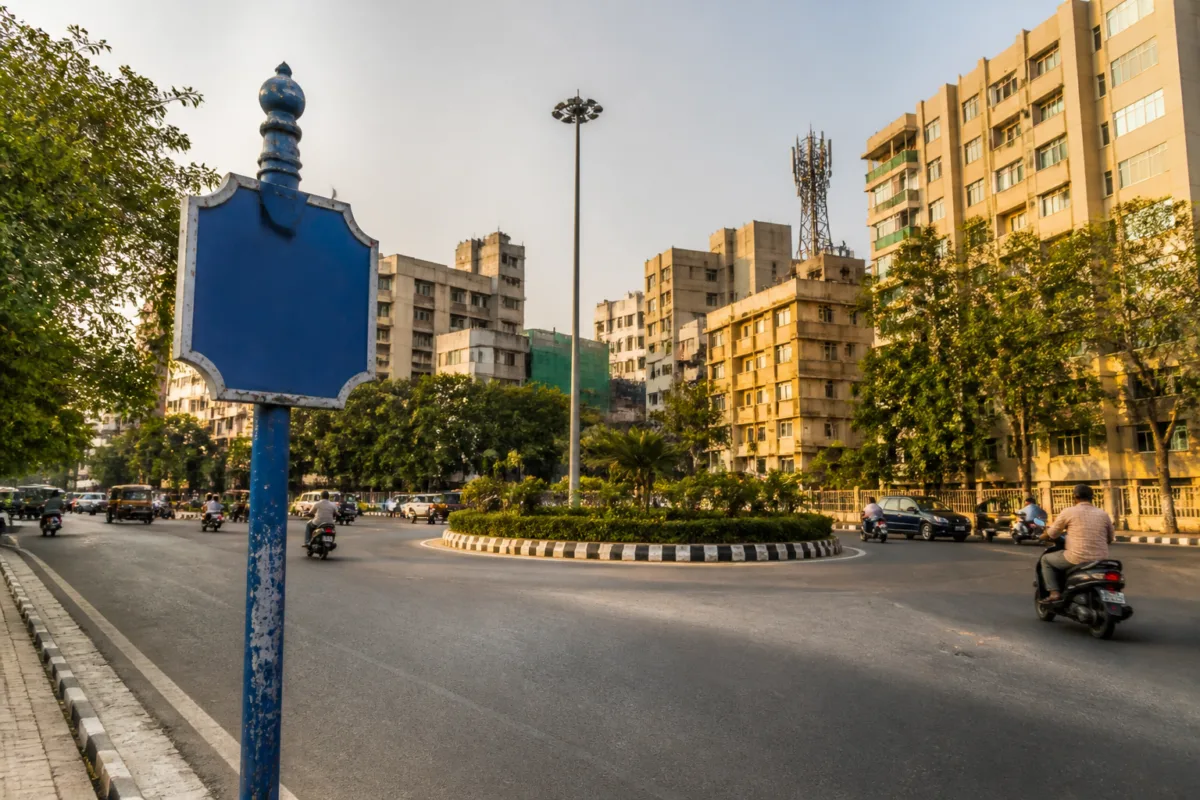
Ahmedabad’s latest road-naming controversy has exposed a basic governance question: who should qualify for permanent public recognition, and what rules should the municipal corporation apply before attaching a person’s name to a road or circle? A report by Nav Gujarat Samay says political recommendations have influenced naming decisions, including cases involving individuals whose contribution to the city or wider society is disputed. The report also records an on-the-record acknowledgement from Town Planning Committee chairman Bhagyash Patel that a clear policy is necessary.
The controversy is not only about names on signboards. Road and circle names are part of the city’s administrative system, public memory and political landscape. They help residents identify locations, guide emergency and municipal services, appear in property and business addresses, and preserve a public account of who is considered worthy of recognition. When the criteria for naming are unclear, a civic decision can become vulnerable to political pressure, social bargaining and competing claims over representation.
According to the report, sources in the Ahmedabad Municipal Corporation’s Estate and Town Development Officer department said political recommendations are needed for naming public roads and circles. The same sources reportedly acknowledged that names have sometimes been attached to roads even when the individuals had not undertaken work benefiting the city or all sections of society. These claims are attributed to unnamed municipal sources and are not presented in the supplied material alongside a published civic resolution, naming register or formal policy document.
That limitation matters. The available report establishes that a controversy exists and that the need for a policy has been acknowledged by the chair of the Town Planning Committee. It does not provide a complete list of disputed roads, the number of naming proposals considered by the corporation, the votes recorded on individual resolutions, or the text of existing municipal rules. Without those documents, it is not possible to determine how widespread the alleged practice is or whether particular naming decisions breached a formal provision.
The institutional issue, however, is clear. A municipal corporation requires a transparent route for decisions that affect public assets and civic identity. If the process depends primarily on political recommendation, residents may have little way to understand why one person is selected over another, what evidence of contribution is considered, or whether objections can be filed before a proposal is approved. The absence of a clearly communicated framework can also make legitimate commemorations appear similar to cases of political patronage.
The report describes an earlier convention in which roads were named after saints, industrialists known for creating employment, freedom fighters and other widely recognised figures. That description points to an older understanding of civic commemoration: public recognition was expected to be linked to a contribution considered significant beyond one neighbourhood or one political group. The report argues that more recent cases have generated criticism because names may be used to satisfy a particular community or influential political constituency.
This distinction between community representation and individual merit is central to the debate. Cities are not socially neutral spaces. Naming can recognise groups and histories that have been ignored, especially when public memory has been dominated by a narrow set of figures. But recognition becomes difficult to defend when the process is not supported by stated criteria. A policy can allow representation while still requiring evidence, public disclosure and a consistent decision-making route.
The report also raises the question of whether the name of a former corporator should automatically be considered suitable for a public road or circle. It quotes an unnamed influential municipal BJP corporator recalling a case in which another corporator sought to name a road after his father. The request was reportedly challenged with a question about the father’s contribution to the area, city or society, after which the proposal did not proceed. This account is not independently documented in the supplied material, but it illustrates the kind of informal negotiation that can arise when formal eligibility standards are not visible.
Holding elected office and making an exceptional contribution to the city are not necessarily the same thing. A corporator’s public service may be meaningful to residents, but office alone cannot establish a universal standard for commemoration. If the same criterion were applied consistently, the corporation would need to explain whether elected representatives qualify because of their tenure, a specific public work, a lifetime contribution or a separate form of recognition. Without that distinction, naming decisions can blur institutional service with personal memorialisation.
The Town Planning Committee’s role makes the issue particularly important. The committee is positioned within the municipal planning structure, while the Estate and Town Development Officer department is reported to handle relevant administrative matters. The supplied material does not set out the precise division of responsibility between committees, departments and the general body. That missing information is itself significant: residents should be able to identify which authority initiates a naming proposal, which body scrutinises it, who approves it and whether the decision is recorded in a publicly accessible document.
A clear policy would not need to reduce naming to a purely technical exercise. It could define the types of contribution that may qualify, specify how much time should pass after a person’s death, prevent naming during a person’s active political tenure, and require evidence of city-wide or socially significant work where that is the stated standard. It could also distinguish between a small local lane, a major arterial road, a public square and a strategic junction. The supplied report does not say whether Ahmedabad currently follows any such criteria, so these questions remain open rather than established deficiencies.
The administrative value of consistency is equally important. Road names are used by postal services, emergency responders, utility providers, transport agencies, property owners and digital mapping systems. Frequent changes or inconsistent naming can create operational and financial burdens, although the supplied material does not quantify such effects in Ahmedabad. A process that publishes the proposed name, the reason for selection, the supporting record and the approving resolution would make the decision easier to verify and reduce confusion for public agencies and residents.
The report’s timing also shows how civic naming controversies can become larger than the individual proposal that triggers them. Once a road or circle has been named, the decision is difficult to reverse without creating another dispute. A post-approval challenge may involve signage, maps, addresses, records and public sentiment. This makes scrutiny before approval more important than symbolic ceremonies after approval. The report criticises the holding of large naming programmes to please specific communities or politically influential groups, but it does not provide details of particular events or their costs.
For Ahmedabad, the immediate question is therefore not simply whether a particular individual deserves a road or circle. It is whether the Ahmedabad Municipal Corporation can demonstrate that its naming process is predictable, documented and open to public scrutiny. The statement from Bhagyash Patel that a specific policy is necessary suggests that the issue has reached the level of institutional acknowledgement. It does not, however, establish whether a new policy has been drafted, approved or scheduled for implementation.
The evidence currently available confirms a dispute over the standards used for civic naming and records a call for clearer rules from the Town Planning Committee chair. It does not establish the full scale of political influence, identify all disputed names or show the contents of the corporation’s existing procedures. The next developments to monitor are any formal policy proposal, committee or general-body resolution, publication of eligibility criteria, and disclosure of the administrative record behind future road and circle naming decisions. Those steps will determine whether the controversy produces a more accountable civic process or remains an unresolved debate over public recognition.

