


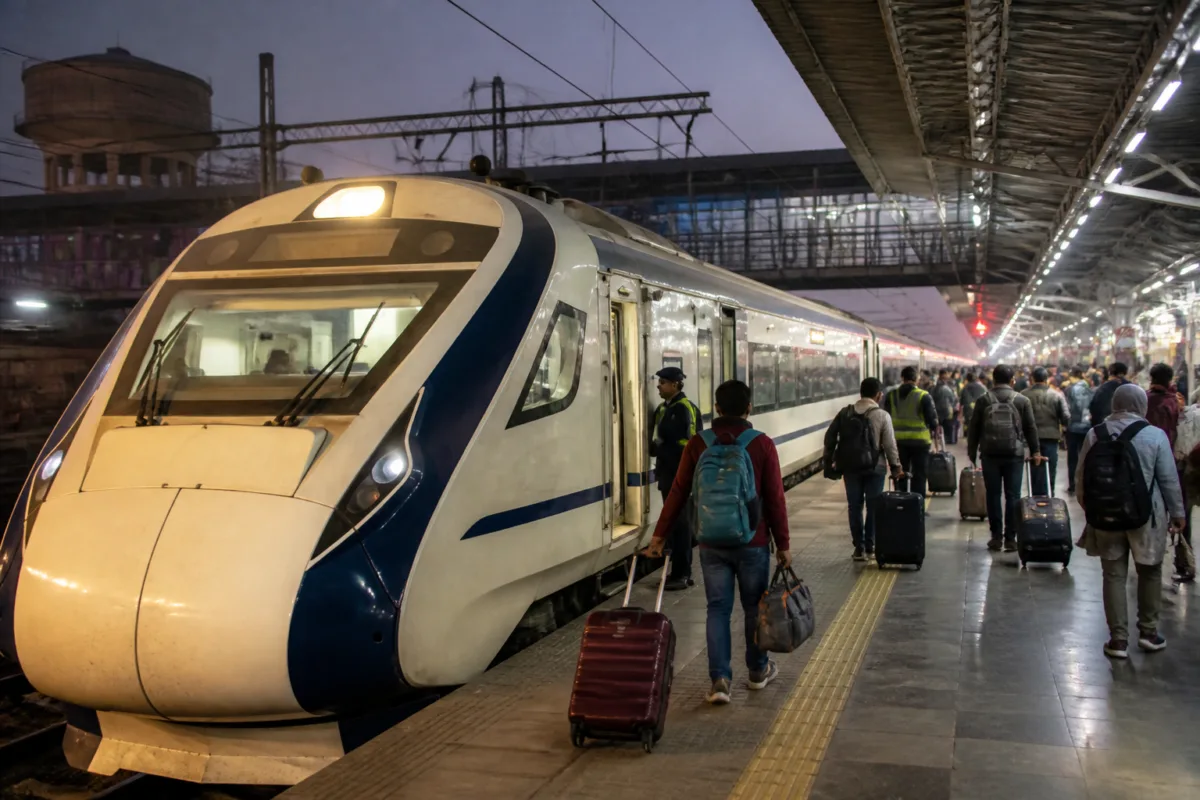
The Delhi-Varanasi Vande Bharat sleeper train began operations on October 31, adding an overnight rail service between the national capital and Kashi through Prayagraj and Kanpur. Prime Minister Narendra Modi described the launch as a historic step, saying the service would save travel time and improve the journey experience for passengers.
The train is the second Vande Bharat sleeper service in India, according to the report published by Jagran. It is equipped with modern passenger facilities and advanced safety systems. The service is expected to support travel by pilgrims, tourists, students, young people and business travellers using the Delhi-Varanasi corridor.
The train from Varanasi to New Delhi is listed as Train No. 27421. It departs from Varanasi Junction at 8:50 pm and reaches New Delhi at 6:10 am the following morning. The service will operate six days a week, excluding Fridays, according to the published schedule.
The return service from New Delhi is scheduled to depart at 9:40 pm and run towards Varanasi. Jagran’s report lists two different arrival times for the return journey—7:10 am and 6:45 am—so passengers should verify the applicable timing through the official railway booking and timetable systems before travelling.
The listed stops are Prayagraj Junction, Kanpur Central, Aligarh Junction and Ghaziabad Junction, besides the originating and terminating stations. The route links two major religious and cultural centres while also serving important urban and regional travel markets across Uttar Pradesh and the National Capital Region.
Modi said the service would make travel easier for people visiting the Kashi Vishwanath temple and the Sangam in Prayagraj. In a post on X cited by Jagran, he said the train would connect faith with opportunity and tradition with modernity, while highlighting its contemporary facilities and safety systems.
The launch also expands the role of overnight premium rail services on a corridor that carries a mix of daily passengers, pilgrims, tourists and commercial travellers. Unlike a daytime intercity service, a sleeper train is designed to combine long-distance travel with overnight accommodation, potentially reducing the need for a separate hotel stay for some passengers.
Bookings for the service opened on October 27, four days before operations began. The next operational step for passengers is to confirm the applicable return schedule and seat availability through Indian Railways’ official booking channels, particularly because the published report contains conflicting arrival times for the New Delhi-to-Varanasi journey.

