


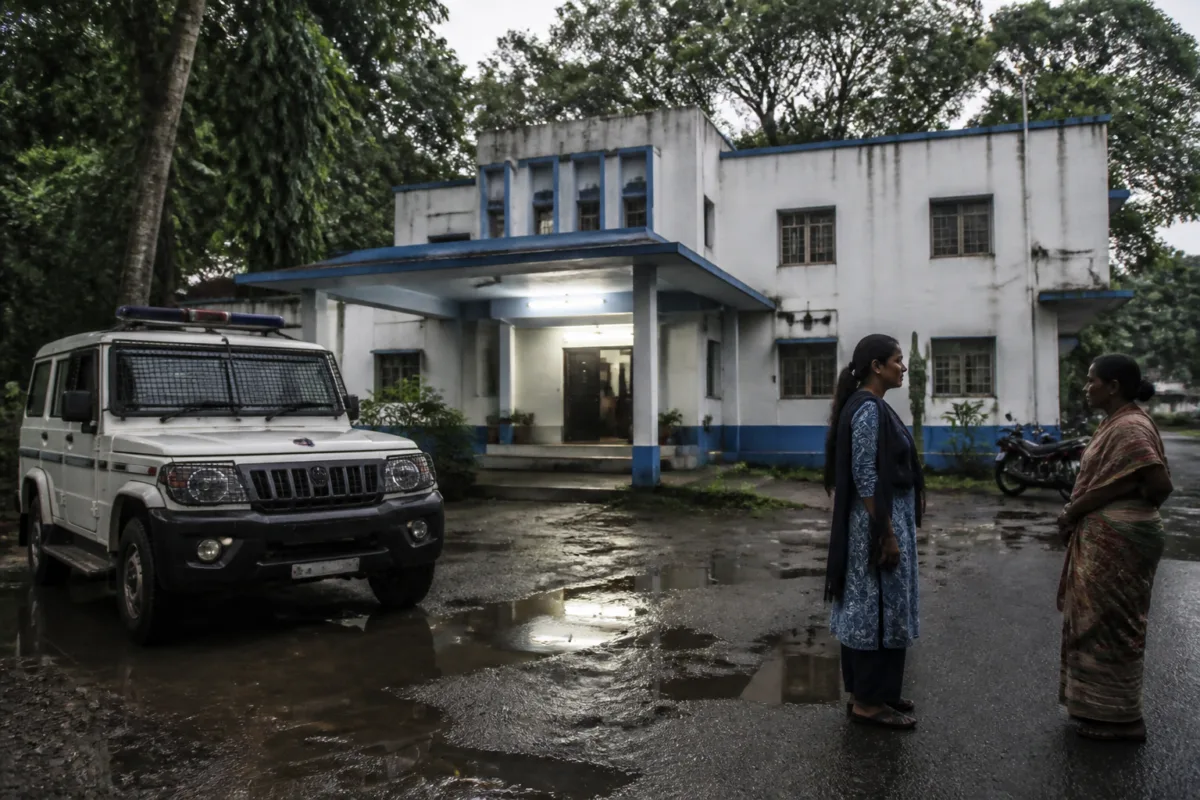
A POCSO case in South 24-Parganas has drawn attention to a gap between the formal safeguards available to child survivors and the pace at which those safeguards appear to have operated on the ground. A 10-year-old girl was allegedly sexually assaulted at her home in a village in the district on October 13. Her mother filed a complaint at Basanti police station on October 16, the complaint was converted into an FIR, and a medical examination conducted the following day pointed to sexual assault. More than a fortnight later, the police had not arrested anyone, according to a report by Telegraph India.
The case is not only about the alleged offence. It also raises questions about what happens after a complaint is registered: how quickly the police act, when a child is brought before the Child Welfare Committee, how threats to the family are handled and whether statutory coordination works during periods when courts and public institutions are operating under holiday schedules.
The FIR, as quoted in the report, alleges that a 65-year-old man entered the family’s home and sexually assaulted the girl while her parents were absent. Two other accused persons, both women, allegedly tried to prevent the parents from lodging a police complaint. The report says the main accused has been charged under provisions relating to aggravated penetrative sexual assault under the Protection of Children from Sexual Offences Act, 2012, along with relevant sections of the Bharatiya Nyaya Sanhita.
Those allegations remain matters for investigation and judicial determination. The available account establishes that a complaint was filed, an FIR was registered and a medical examination took place. It does not establish why no arrest had been made by the time of publication, beyond an explanation attributed to a Baruipur police district officer that courts were closed for Durga Puja and that this could have contributed to the delay.
That explanation points to a wider administrative question. Police investigations and child-protection responses do not operate only through courts. The report states that senior officers said the local police or the Special Juvenile Police Unit must report a POCSO matter to the Child Welfare Committee within 24 hours of receiving information about the alleged offence. It also states that CWC production usually takes place within 48 hours of the medical examination in a POCSO case.
The girl was produced before the South 24-Parganas Child Welfare Committee in Baruipur on the Friday before the report was published. The timing, as described, is significant because it suggests a delay between the medical examination and the child-protection body’s involvement. The report does not provide the police’s full account of that interval, nor does it state whether the CWC had been notified earlier but production occurred later. Those details would be necessary to determine precisely where the process broke down.
The institutional design is clear even when the implementation record is not. The police are the first point of contact for registering the case and initiating the investigation. The Special Juvenile Police Unit has a specific role in matters involving children. The Child Welfare Committee is intended to address the child’s care, protection and welfare needs. Medical services provide evidence and treatment, while the courts oversee the legal process. A delay at any point can affect the safety of the child and family, the preservation of evidence and confidence in the justice system.
The report also describes a protection problem beyond the alleged assault. An NGO representative, Kakali Das of Goranbose Gram Bikas Kendra, said that people associated with the accused were threatening the girl’s parents. The organisation is assisting the family and works with marginalised women, including survivors of trafficking, acid attacks and sexual assault. The police response to those alleged threats is not detailed in the supplied report, leaving unclear whether a formal protection assessment, preventive action or separate case has been initiated.
For a family dependent on insecure income, navigating these institutions can be particularly difficult. The girl’s father is described as a daily labourer and her mother as a homemaker. The family’s economic circumstances do not determine the merits of the case, but they can shape the practical ability to travel to police stations, hospitals, child-protection offices and courts, obtain legal assistance and resist pressure to withdraw or delay a complaint.
This is where the case connects to the functioning of the wider urban and district system. South 24-Parganas includes dense settlements, rural villages and areas connected administratively and economically to the Kolkata metropolitan region. Access to justice is therefore not simply a question of whether a law exists in the statute book. It also depends on the physical and administrative links between a household, a police station, a hospital, a CWC and a court. The report does not provide travel distances, staffing levels or district-wide data, so it cannot establish whether this case reflects a broader statistical pattern. It does show how several institutions must coordinate around one child within a short period.
The Durga Puja holiday period adds another layer to the account. A Baruipur police district officer cited the closure of courts as a possible reason for delay. Court functioning can affect remand proceedings and other judicial steps, but the report also records procedures that are expected to be triggered by information reaching the police and by the medical examination. The available evidence therefore does not support treating court holidays as a complete explanation for every delay in the case. It instead highlights the need to distinguish between steps requiring a court and steps that remain the responsibility of police, medical and child-welfare authorities.
The case also follows a recent incident that had already placed the Baruipur area under public scrutiny. In the first week of July, the rape and murder of a girl in Baruipur reportedly triggered widespread outrage. One accused died in police custody after allegedly attempting to flee and opening fire at police officers, according to the police account cited by the report. That earlier case forms part of the local context, but it does not by itself establish a connection with the present matter. Its relevance lies in showing that child safety and institutional response in the area are already subjects of intense public concern.
The most important evidence in the present case is procedural rather than rhetorical: the dates of the alleged incident, complaint, FIR, medical examination and CWC production; the sections invoked in the FIR; the absence of an arrest by the time of publication; and the allegation of threats against the parents. Together, these details allow the case to be examined without assuming guilt or assigning responsibility beyond what the supplied material supports.
What remains unresolved is equally important. The report does not say whether the accused has been questioned, whether investigators have recorded statements from the child and witnesses, whether forensic evidence has been collected, whether the alleged threats have resulted in additional charges or protection measures, or why the arrest had not occurred. It also does not include a detailed response from the accused or the accused’s legal representatives. The CWC member contacted by the newspaper declined comment, citing the sensitivity of the matter.
The larger policy issue is whether safeguards for children are treated as a linked system or as separate administrative tasks. A complaint can be registered without the child receiving timely protection. A medical examination can take place without prompt CWC intervention. An FIR can contain serious charges while the family remains exposed to alleged intimidation. Each institution may complete part of its role, yet the child’s experience can still be one of delay and uncertainty.
The supplied report cannot determine whether that is what happened in this case, and the allegations must be tested through investigation and due process. It does, however, identify the points at which accountability can be examined: the time taken to register the complaint, the response after the medical examination, communication with the CWC, action on alleged threats and the investigation into the accused. The next meaningful developments will be the police account of the delay, any arrest or other investigative action, the CWC’s intervention and the protection provided to the girl and her parents.

