


The Maharashtra government’s approval of a Rs 65-crore first phase for the Baramati airfield is an important infrastructure intervention, but the project also makes clear that runway repairs and a new air traffic control tower will not by themselves create a fully controlled or safer aerodrome. The upgrade follows a fatal crash, subsequent trainee-aircraft incidents and an official assessment that identified deficiencies in the airfield’s physical and operational systems.
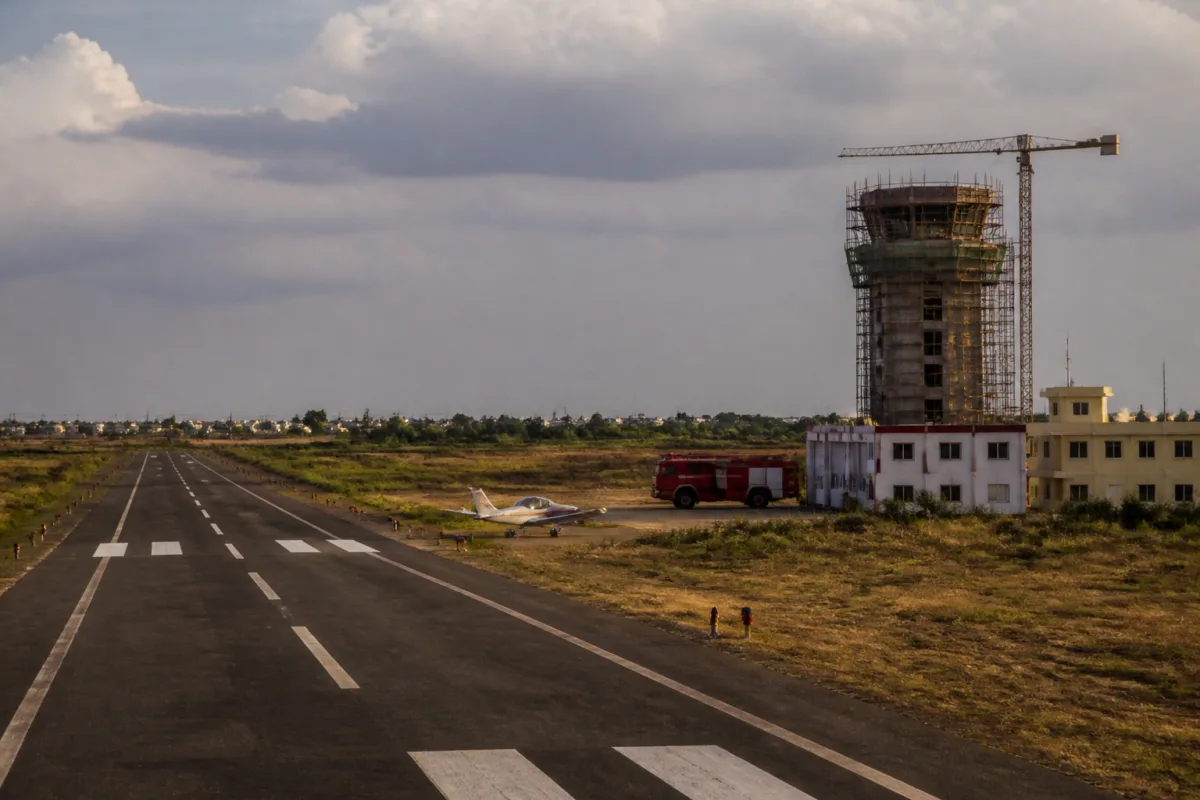
The approved works include recarpeting the existing runway, constructing a runway safety area, grading the surrounding area, building a compound wall and an ATC tower. The first phase will also provide a prefabricated technical block, fire station, emergency room and CCTV surveillance systems. Deepak Kapoor, Vice-Chairman and Managing Director of the Maharashtra Airport Development Corporation, said the government had approved the phase and that bids for appointing a consultant would be invited immediately.
That sequence matters because the approval is not simply a real estate or construction project. An airfield functions through a chain of linked systems: the runway surface and markings, emergency response, weather information, navigation, communications, airspace procedures, trained personnel and regulatory oversight. Weakness in any one of these can limit the value of the others. A new control tower may improve the physical infrastructure, but it cannot perform its safety function without authorised staff, approved procedures, communication systems and the regulatory permissions required for operations.
The need for the work became more evident after the January 28, 2026, Learjet 45 crash at Baramati, which killed then Maharashtra deputy chief minister Ajit Pawar and four others. A preliminary report by the Aircraft Accident Investigation Bureau highlighted several shortcomings at the airfield. It noted the absence of a meteorological facility and navigational aids beyond wind socks at the uncontrolled airfield. The inspection also pointed to the poor condition of the runway.
The runway’s maintenance history illustrates the infrastructure gap. Its last carpeting was carried out in March 2016. The absence of subsequent recarpeting had contributed to faded runway markings and loose gravel on the surface, according to the report cited in the supplied coverage. These are basic physical conditions, but they have operational consequences: pilots depend on visible markings and a predictable runway surface during take-off, landing and ground movement.
The crash was followed by two accidents involving trainee aircraft in May and August 2026. In the latest incident, a trainee aircraft operated by Carver Aviation Academy skidded off the runway while taxiing on August 9. The incidents have placed the airfield’s infrastructure in the same frame as its growing role in flight training, although the available material does not establish a causal link between any individual accident and a specific deficiency.
Baramati is one of 15 domestic unlicensed airports in Maharashtra listed by MADC. The airfield is owned by the Maharashtra Industrial Development Corporation and has a single asphalt runway measuring 7,710 feet, or 2,350 metres. Established in the 1990s, it has primarily served a limited number of charter flights. The airfield’s manager, Shivaji Taware, said it handles around six to seven charter flights each month, most involving politicians.
Its institutional history also helps explain why the current phase is significant. In 2009, the airfield and four similar facilities in Maharashtra were leased to step-down subsidiaries of Reliance Infrastructure for development. MIDC took back possession in 2025, citing a lack of development and flight operations. Baramati now also houses two flight training organisations: Academy of Carver Aviation Private Limited and Redbird Flight Training Academy. The facility therefore sits between limited charter use, state-led airport development and flight-training activity.
The approved construction package addresses several visible gaps. Runway recarpeting can restore the surface and markings; a runway safety area can improve the physical margin around the runway; and a fire station and emergency room can strengthen the immediate response system. CCTV and a technical block can support monitoring and operations. However, the infrastructure list does not, by itself, establish the operational standards that will apply once the work is complete.
Aviation expert and analyst Dhairyashil Vandekar said an ATC tower alone would not transform the uncontrolled airfield into a controlled aerodrome. He identified the need for appropriately qualified and authorised personnel, approved operating procedures, reliable communication facilities, suitable airspace arrangements and regulatory approvals. This distinction is central to understanding the project: construction is a necessary stage, but not the same as commissioning a functioning control system.
Vandekar also pointed to additional systems that may need to be examined, including Precision Approach Path Indicator systems, runway and approach lighting, other visual aids for safe night operations and an Automatic Weather Observing System. He said their adoption would remain subject to applicable regulatory requirements. The preliminary assessment’s observation that Baramati lacks a meteorological facility makes weather information a particularly relevant part of the broader safety question.
The question of operating conditions is equally important. Vandekar stressed adherence to prescribed meteorological minima, particularly for flights conducted under Visual Flight Rules. He also called for a Detailed Project Report to examine the technical and operational feasibility of introducing Instrument Flight Rules operations at Baramati. The supplied material does not establish that IFR operations have been approved or that they will be introduced; it identifies them as an issue requiring examination.
Responsibility is distributed across multiple institutions. MIDC owns the airfield, MADC is involved in its development, the Maharashtra government has approved the first-phase expenditure, and the Directorate General of Civil Aviation has a role in determining applicable aerodrome licensing, registration or other authorisation requirements. The two flight training organisations operating from the site add another layer of oversight. Vandekar said the state government and MADC should work closely with DGCA and that regulatory surveillance and safety oversight of the flight training organisations must also be strengthened.
This institutional division means that the Rs 65-crore approval should be read as the beginning of a modernisation process rather than its conclusion. The project can improve the airfield’s physical condition, but the final safety outcome will depend on how the works are designed, supervised and integrated with operating procedures and regulatory compliance. The appointment of a consultant is therefore an important next milestone because it should shape the technical scope and execution pathway, although the available material does not provide a completion date.
Baramati’s case reflects a wider challenge in smaller aviation facilities: infrastructure created for limited or specialised use can acquire new operational demands without receiving a corresponding upgrade in systems, staffing and oversight. Here, a single runway serves an airfield used for charter flights and flight training, while its ownership, development and regulatory responsibilities involve different public and private actors. The figures available are modest—six to seven charter flights a month—but safety requirements do not disappear because traffic volumes are lower.
The evidence currently confirms three things: the state has approved a first-phase physical upgrade; the airfield has documented infrastructure shortcomings; and aviation specialists consider the planned works insufficient on their own to establish a fully controlled operation. What remains to be established is the detailed project scope, the applicable regulatory approvals, the staffing and communications arrangements for any ATC system, and the operational standards that will govern the airfield after construction. The immediate next step is MADC’s appointment of a consultant, with bids scheduled to be invited after the approval.

