


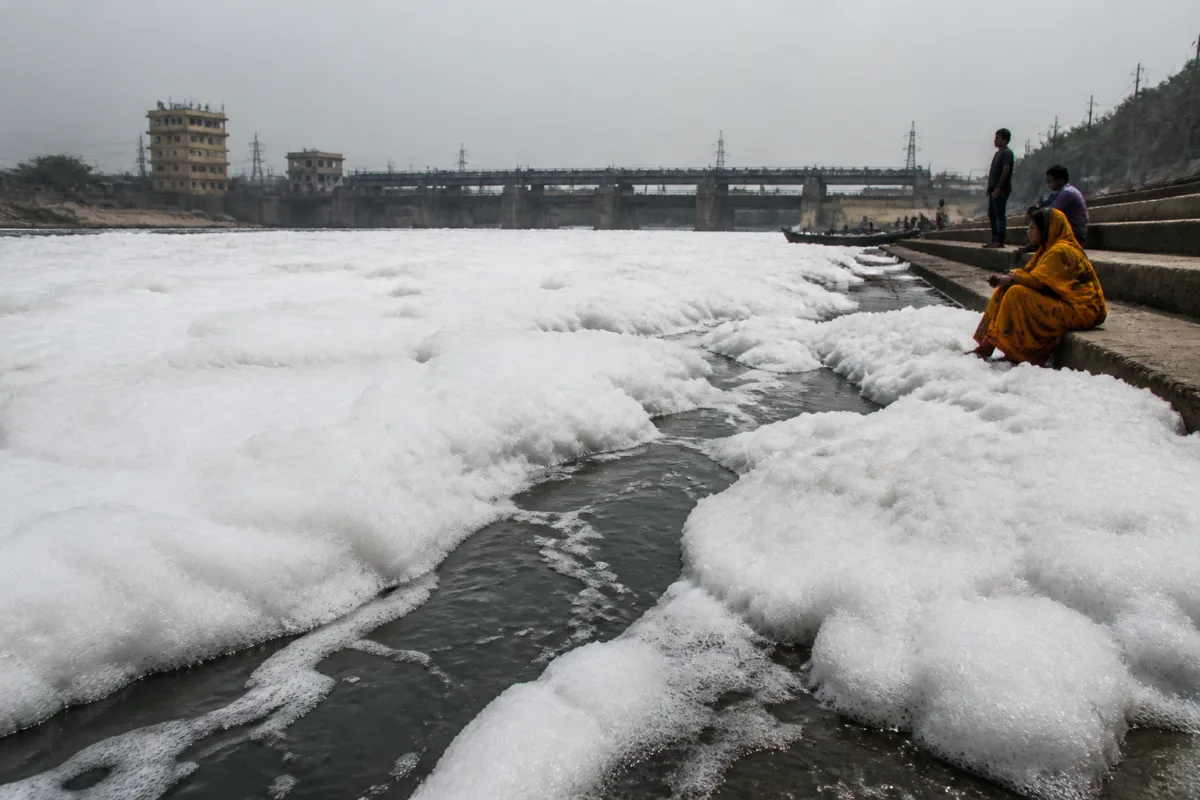
Toxic foam was seen floating on the Yamuna at Delhi’s Kalindi Kunj a day after BJP MP Manoj Tiwari took a dip in the river and claimed that half of its Delhi stretch had been cleaned, raising fresh concerns about water safety ahead of Chhath Puja.
Visuals from the Kalindi Kunj area showed a thick layer of foam covering the river near the banks on Friday morning. The foam makes the water unfit for bathing and ritual use, including the offerings and prayer ceremonies associated with Chhath Puja.
Tiwari, the BJP’s North-East Delhi MP, had taken a bath and performed aachman, or ritualistic sipping of water, in the Yamuna near Sonia Vihar on Thursday. He said the work completed under the BJP-led Delhi government had made it possible for people to celebrate Chhath Puja in the river again.
“How can we not appreciate the work that has been done here?” Tiwari said, according to the report. He cited the presence of migratory birds and claimed that half the Yamuna had been cleaned in the one-and-a-half years since the BJP came to power. He added that the remaining work would be completed over the next three years.
Union minister Kiren Rijiju backed Tiwari’s claim and suggested that the two leaders could hold a swimming competition in the river. The statements followed Union Home Minister Amit Shah’s launch of 43 projects worth Rs 8,941 crore aimed at cleaning the Yamuna. Shah has set a target of cleaning Delhi’s stretch of the river by May 2029.
The latest visuals have triggered a political dispute over which parts of the river have improved and which remain heavily polluted. AAP Delhi president Saurabh Bharadwaj said the 26-km stretch between Palla and Wazirabad had historically been relatively cleaner. He identified the stretch between Wazirabad and Okhla as the main pollution zone and challenged Tiwari and Delhi Water Minister Parvesh Verma to drink water at the Kalindi Kunj ghat near the Okhla barrage.
The Yamuna runs for approximately 52 km through Delhi. The 22-km stretch between Wazirabad and Okhla is considered heavily polluted and has been the focus of several restoration efforts. According to Verma, the upstream section between Palla and Wazirabad has been cleaned, while work is continuing between Wazirabad and Kalindi Kunj.
Verma has previously said that a complete cleanup would take around two-and-a-half to three years, stressing that the government had not claimed the entire river was already clean. The immediate question for devotees remains whether the affected sections will be made safe for Chhath rituals as the cleanup programme continues toward its 2029 target.

