


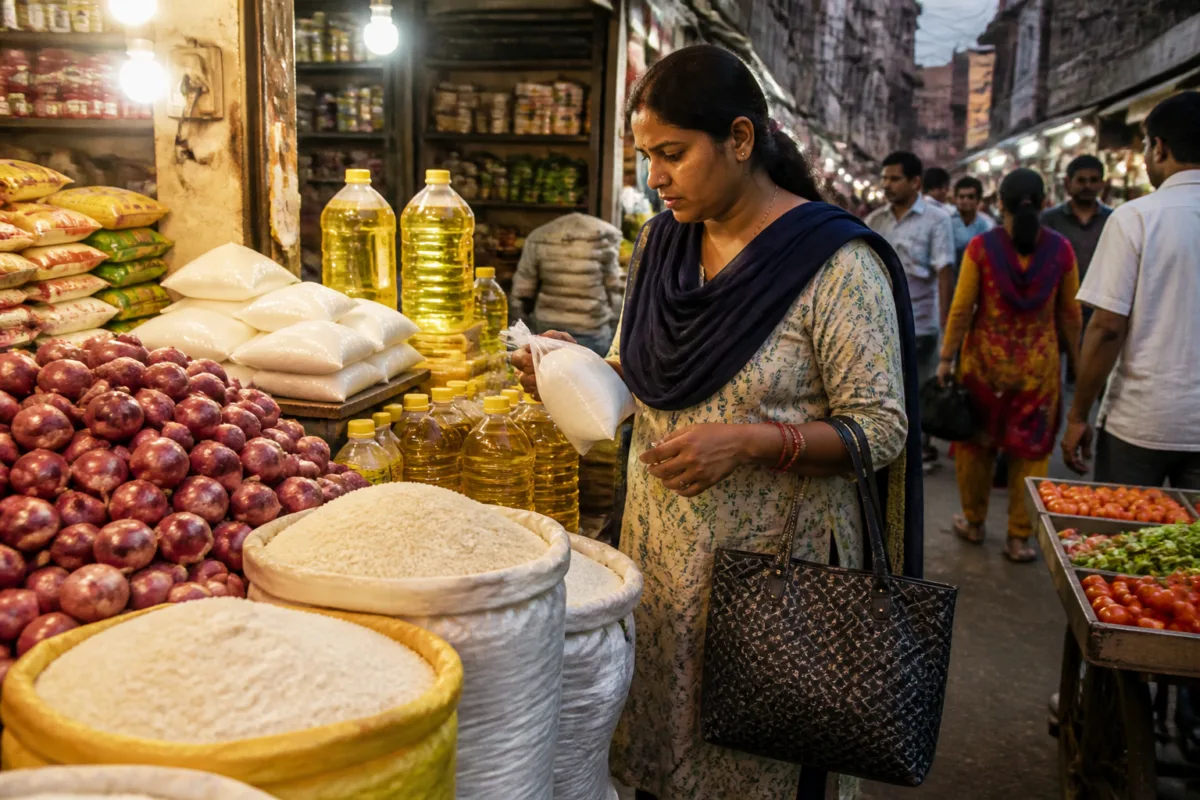
India’s September 2026 inflation data points to a growing pressure on household budgets, with food prices rising faster in rural areas than in urban centres. The increase was led by everyday staples such as onions, sugar, edible oils and rice, turning a national inflation figure into a direct affordability problem for households that buy these products frequently.
According to the October Monthly Economic Review cited by Aaj Tak Business, India’s retail inflation, measured by the Consumer Price Index, rose to 5.54% in September 2026. That was 71 basis points higher than the previous month. Consumer food inflation climbed to 7.74%, making food the most immediate channel through which the wider inflation increase reached households.
The rural-urban gap is particularly important. Rural retail inflation stood at 6.08% in September, compared with 4.88% in urban areas. Food inflation was also higher in rural areas, at 8.06%, against 7.18% in urban centres. The figures indicate that households outside cities faced a heavier increase in the cost of food, even as urban consumers continued to experience significant price pressure.
This divide is not simply a difference in headline inflation. It reflects how essential-goods prices interact with household income, consumption patterns and access to supply networks. The review said the impact was more visible in rural areas because food items account for a greater share of consumption there. As a result, the same rise in the price of a staple can absorb a larger part of a rural household’s available budget.
Onions recorded the sharpest increase among the items highlighted in the review. Their prices rose 108% year on year in September, effectively more than doubling. Sugar prices increased 30%, while jaggery became 23% more expensive. Refined oil prices rose 15%, groundnut oil increased 14% and rice prices went up 8%.
These are not occasional or discretionary purchases. Onions, cooking oil, rice and sugar are part of regular household consumption, which makes their price movement more visible than that of products bought less frequently. When several such items rise together, households can face a substantial increase in weekly and monthly expenditure even if the overall inflation rate appears moderate in comparison with individual food categories.
The onion increase was linked to supply-side pressures. Stocks from the previous rabi onion crop were declining, while the arrival of the new kharif crop was delayed by about a month. This created a period in which available supplies were under pressure before the next crop could reach markets in sufficient quantities.
The pattern illustrates a recurring vulnerability in food markets: a short gap between harvest cycles can produce a sharp retail price response when stocks are limited. The impact is felt not only at the farm gate. It moves through wholesale markets, transport networks, storage systems and retail outlets before reaching consumers. The supplied review does not provide a breakdown of the price increase at each stage, but its explanation identifies the timing of arrivals and the availability of stocks as central factors.
Sugar prices were affected by a different combination of pressures. The review attributed the increase to lower sugarcane production, heavier rainfall and the spread of red rot disease, which affected the crop. It also pointed to higher demand ahead of the festival season and tighter global sugar supply as factors that could add to price pressure.
The sugar example shows how domestic food inflation can be shaped by both agricultural conditions and demand cycles. Production losses or crop disease can reduce availability, while seasonal consumption can increase demand at the same time. International supply conditions add another layer, particularly when a commodity is linked to global markets and domestic prices respond to changes beyond India’s immediate control.
Rice prices rose 8%, with the review linking the increase partly to growing international demand for Indian rice. This creates a tension between export opportunities and domestic affordability. The source material does not establish how much of the price increase was caused by exports or identify any specific policy response. It does, however, show that domestic food prices can be influenced by demand outside the country as well as by local production and distribution conditions.
The wholesale data suggests that the pressure was not confined to retail markets. Wholesale price inflation rose to 11.39% in September from 9.92% in August. Wholesale inflation in the fuel and power category reached 25.85%, while manufactured-product inflation increased to 9.76%.
Wholesale and retail prices do not move in exactly the same way or at the same time, but the simultaneous rise indicates a broader cost environment. For households, the immediate concern is the retail price of food. For businesses and supply chains, higher wholesale costs can affect procurement, processing, transport and distribution. The supplied report does not quantify how these wholesale increases were passed through to consumers, so the precise transmission mechanism remains unestablished.
The rural-urban distinction also matters for how inflation is experienced geographically. Urban households may face higher housing, transport and service costs, but the September figures show that food inflation was higher in rural areas. This can make the cost burden particularly severe where incomes are more dependent on agriculture or informal work and where food represents a larger part of household expenditure.
For cities, the data is relevant even though some of the sharpest increases occurred in rural food markets. Urban food systems depend on the movement of agricultural goods from producing regions to wholesale markets, retail outlets and neighbourhood consumers. Delays in crop arrivals, depleted stocks or higher input and energy costs can therefore become an urban affordability issue. The report does not provide city-level inflation figures or identify specific metropolitan markets, but the national urban rate of 4.88% and urban food inflation rate of 7.18% confirm that city households were also exposed to the increase.
The figures also highlight the limits of looking at inflation only through an aggregate national number. Overall retail inflation stood at 5.54%, but the headline figure conceals significant differences between rural and urban areas and between broad inflation and food inflation. A household purchasing rice, edible oil, onions and sugar regularly is likely to experience the price movement differently from a household whose spending is concentrated in other categories.
The October Monthly Economic Review also cited a 5.8% year-on-year increase in the global food price index in September. This places India’s food-price pressures within a wider international setting, but the domestic causes identified in the report remain important: crop availability, delayed arrivals, disease, rainfall, festival demand and international demand for Indian rice.
Together, these factors point to a food-inflation problem with several layers rather than a single trigger. Some pressures are seasonal, such as festival demand and the transition between crop arrivals. Others are production-related, including lower sugarcane output, excessive rainfall and crop disease. Still others are connected to trade and global supply conditions. The evidence supplied does not show which of these factors will persist, but it establishes that September’s increase was associated with both domestic supply constraints and wider market demand.
The policy challenge is therefore distributed across several institutions and stages of the food system. Agricultural production affects the volume available. Market and supply-chain arrangements influence how quickly that produce reaches consumers. Storage and transport conditions affect the ability to manage gaps between harvests. Trade conditions can influence commodities such as rice and sugar. Household affordability is ultimately measured at the retail end, where consumers absorb the combined effect.
The review’s data does not identify a specific government intervention, buffer-stock release, import decision or price-control measure. It also does not provide projections for individual commodities. Any assessment of policy effectiveness would therefore require additional official data on procurement, stocks, arrivals, trade flows and retail-market conditions.
What the September figures confirm is that food inflation has become the clearest pressure point in India’s cost-of-living picture. Rural households faced higher retail and food inflation than urban households, while several frequently purchased staples recorded steep annual increases. At the same time, wholesale inflation and global food prices were also elevated.
The larger urban question is how effectively India’s food distribution system can absorb seasonal production gaps, crop shocks and changing demand without transferring the full burden to households. The next useful indicators will be the arrival of the kharif onion crop, the movement of sugar and edible-oil prices, rice-market conditions and whether the rural-urban inflation gap narrows in subsequent data releases.

