


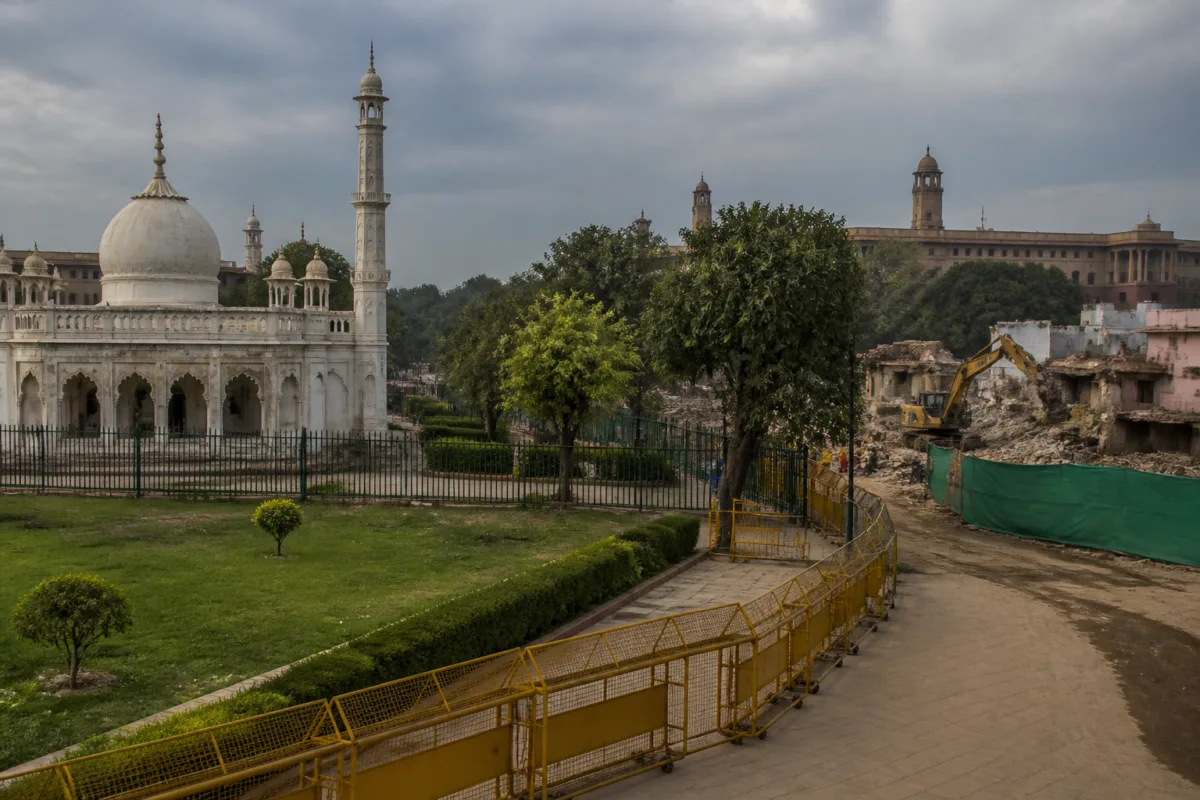
The Delhi High Court has refused to allow worshippers to enter the Race Course Masjid in Lutyens’ Delhi for prayers while demolition work continues around the structure, even as the Centre assured the court that no forcible action would be taken against the mosque for now.
A bench led by Justice Anish Dayal was hearing a petition filed by Syed Ahmed Saud seeking protection for the mosque and restoration of access to its premises. The petitioner has also sought the restoration of the entrance to the structure, which is located on land in the Jaipur Polo Ground area.
The Centre told the court that the land had been taken into possession for a public purpose. Its standing counsel, Ashish Dixit, said officials would decide on a representation made by the Delhi Waqf Board within four weeks. He also assured the court that no forcible action would be taken against the religious structure during this period.
The court’s restriction on access was linked to safety concerns around demolition activity. The bench took note of the work taking place near the structure and asked who would be responsible for compensation if anyone were injured. In response to the request to allow people to enter and leave the mosque, the Centre said such movement was not safe while demolition work was under way.
The Centre’s counsel also told the court that access had not been permitted to worshippers at the temple located on the same site. The authorities had earlier stopped electricity and water supplies to the mosque, according to the report, with the stated aim of protecting the public while other structures on the premises were being demolished.
The Race Course Masjid has been described in the petition as a notified waqf property since 1977. The dispute is unfolding alongside changes in control over the surrounding land. The Centre took possession of the Jaipur Polo Ground in June and the nearby Delhi Race Club in August.
The case therefore involves more than immediate access to a place of worship. It also concerns how public-purpose land is taken over, how notified religious properties are treated during redevelopment or clearance activity, and how authorities manage safety when demolition takes place around occupied or publicly used structures. The court, however, did not permit access for prayers at this stage and told the petitioner’s counsel to leave the issue for further consideration.
The Centre is expected to decide on the Delhi Waqf Board’s representation within four weeks. The High Court will then consider the matter further, while the current restriction on entry remains in place during the demolition work.

