


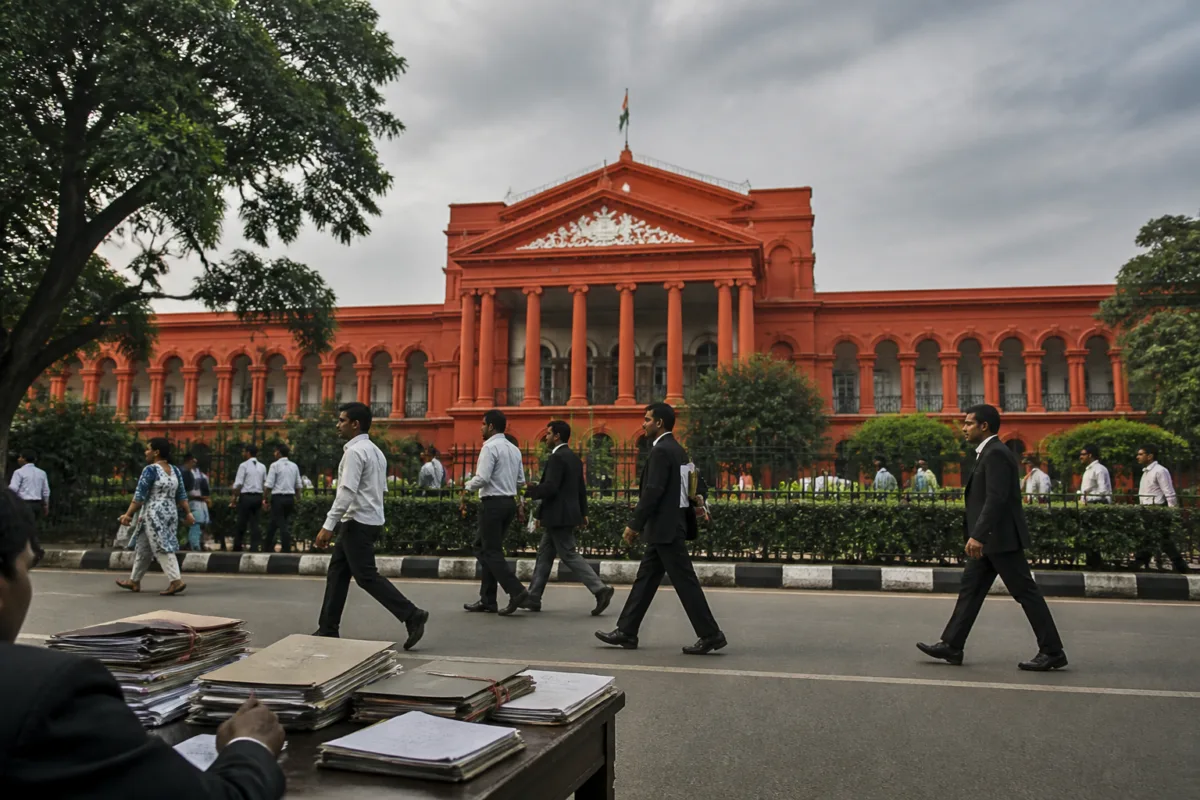
The Karnataka High Court has dismissed four writ appeals filed by the state government and Karnataka State Law University after delays of up to 1,099 days, ruling that the explanations offered for the late filings did not amount to sufficient cause.
A division bench comprising Justices M Nagaprasanna and Hema Kulkarni held that the appeals were barred by limitation. The three appeals filed by the state government were delayed by 626 days, 1,099 days and 466 days, while the Law University’s appeal was filed 548 days late.
The appeals challenged orders passed by a single judge directing the state government and the university to consider representations submitted by temporary full-time employees seeking regularisation of service. The single bench had directed that their claims be considered in the same manner as those of similarly placed persons.
The state government and the university attributed the delays to administrative processes involved in filing the appeals. After examining the materials on record, however, the division bench said the delay-condonation applications did not disclose any exceptional circumstance, compelling impediment or credible explanation for the extraordinary delays.
The court observed that what had been presented as an explanation amounted to “an assortment of administrative excuses”. It added that granting the requests would effectively amount to judicial endorsement of bureaucratic apathy.
The ruling also highlighted the Karnataka Conduct of Government Litigation Act, 2023, enacted by the state itself. The law came into effect on July 27, 2023, and mandates procedures and timelines for government litigation, including the movement of files, obtaining legal opinions and taking decisions on appeals.
The bench noted that the orders challenged in the four appeals were issued after the legislation came into force. Despite this, it said none of the appeals demonstrated adherence to the statutory discipline required under the Act.
According to the court, the time limits prescribed for moving files, securing opinions and taking decisions appeared to have been disregarded. It said the state had enacted the law to bring order and accountability to government litigation but had failed to show fidelity to its own mandate.
The bench further stated that the law could accommodate genuine administrative difficulties, but not administrative indifference presented as sufficient cause. The court dismissed all four writ appeals on the ground that they were barred by limitation.
The case places the functioning of government litigation within a broader accountability framework. Delayed appeals can prevent court orders from being tested within prescribed timelines and can prolong uncertainty for employees and other parties dealing with the state. In this matter, the dispute concerned temporary university employees seeking consideration for regularisation, while the court’s immediate decision turned on whether the state and the university had acted within the legally permitted period.
The dismissal leaves the single bench’s directions in place, subject to any further legal steps available to the parties under applicable law.

