


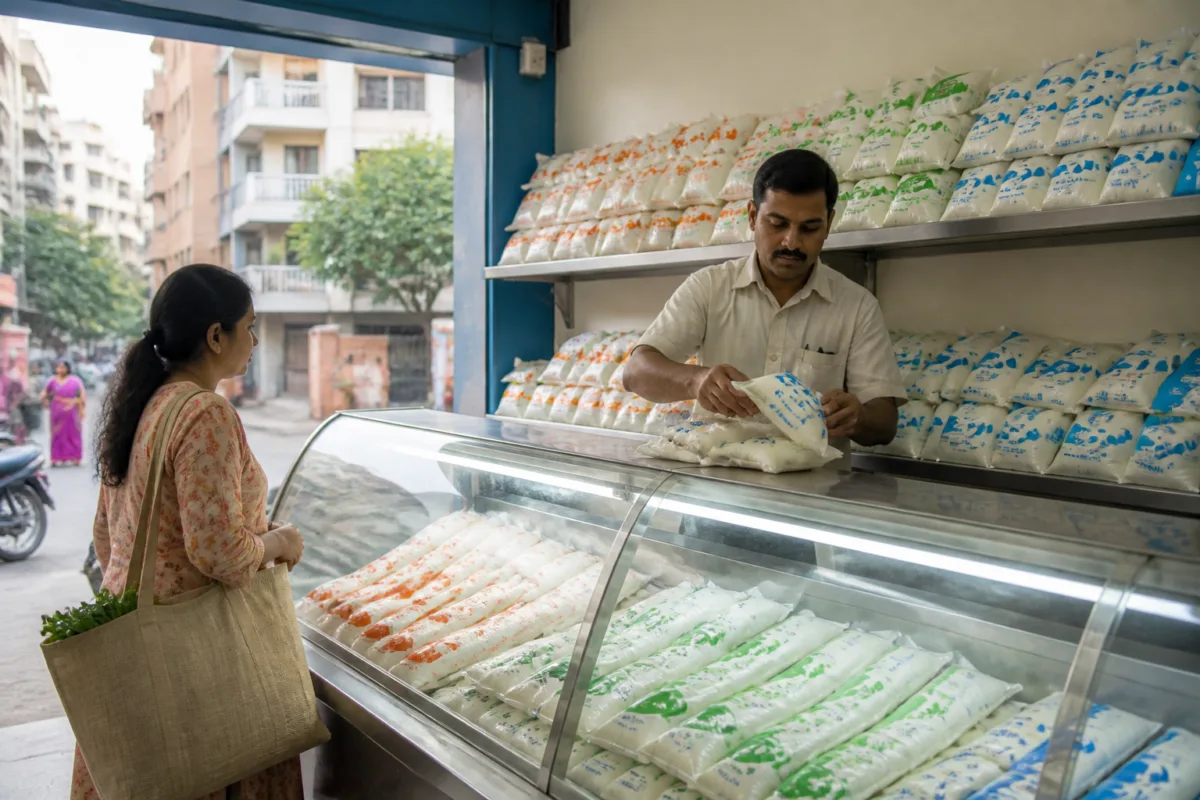
Karnataka’s Nandini milk price will rise by ₹8 per litre from November 1 after the state cabinet approved the increase at a meeting chaired by Chief Minister D.K. Shivakumar on Thursday. Of the additional amount, ₹7 will be paid to milk producers and ₹1 will go to the Karnataka Milk Federation (KMF), Minister for Rural Development and Panchayat Raj Krishna Byre Gowda said after the meeting.
The increase will affect consumers across Karnataka through the state’s cooperative milk distribution network. The cabinet decision comes a day after the Karnataka Legislative Council election process concluded, following a delay caused by the model code of conduct.
According to Prajavani, the cabinet had agreed in principle to the price increase earlier this month, but its implementation was postponed while the election code was in force. Thursday’s meeting provided the final approval for the revised rates, which will take effect on November 1.
The Karnataka State Cooperative Milk Producers’ Federation and other district milk unions had sought an increase of between ₹8 and ₹10 per litre from the chief minister last month. The request covered both the price paid to farmers for milk and the sale price to consumers.
The government subsequently asked officials to prepare a detailed report before taking a decision. The review was to examine the rise in cattle-feed prices over the previous 10 years, the cost of producing a litre of milk, the quantity of milk produced in different districts and the volume sold through channels outside the cooperative unions.
Officials were also asked to assess how much milk the cooperative system purchases and to provide information on milk procurement and sale prices in neighbouring states. The report was submitted to the government before the cabinet finalised the increase.
The decision links the consumer-facing price revision to the financial pressures faced by dairy producers and the cooperative network. The government’s stated allocation means that most of the increase will be directed to producers, while the remaining ₹1 will be retained by KMF. The supplied report does not specify the revised retail prices of individual Nandini milk variants.
The new rates are scheduled to come into force on November 1. Further implementation will depend on the revised prices being applied across Nandini’s product network following the cabinet’s approval.

