


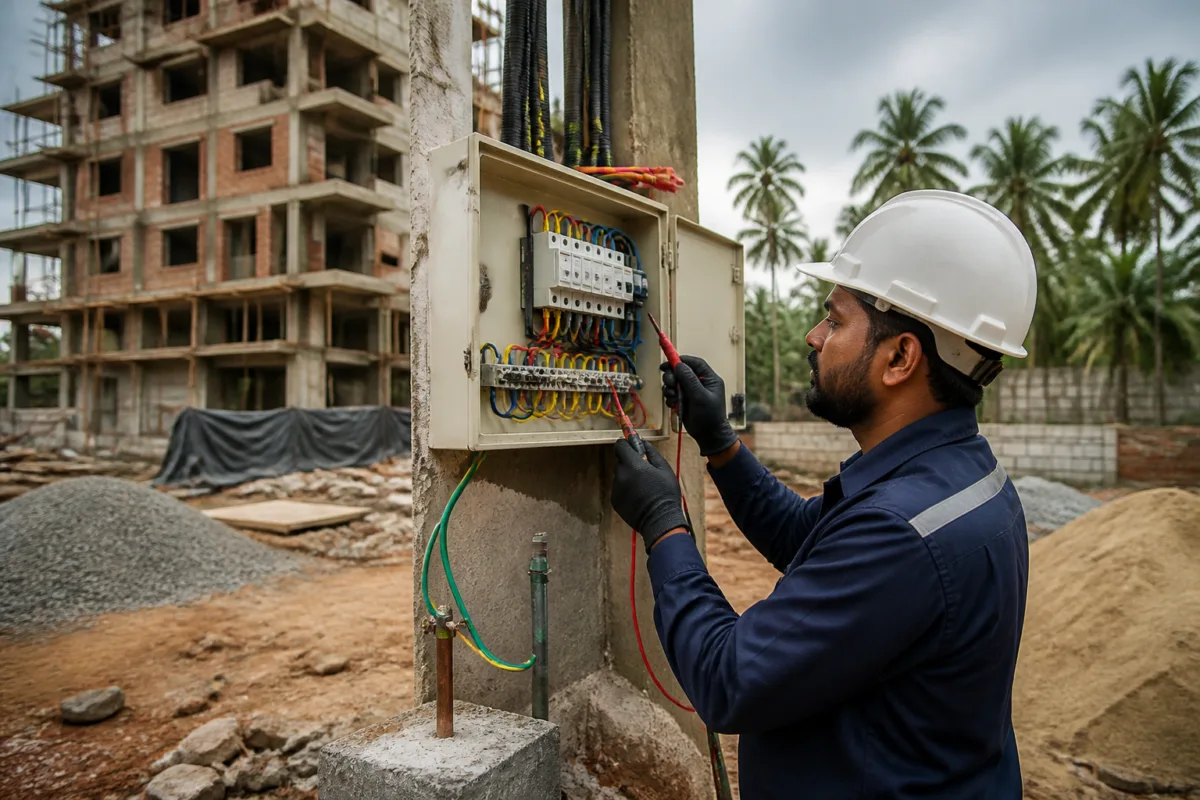
The Karnataka Electricity Supply Regulations 2026 draft has faced coordinated opposition from electrical contractors over a proposal allowing consumers to self-certify low-tension electricity connections up to 150 kilowatts, with concerns that the change could weaken safety checks for new connections.
Contractors from Dakshina Kannada, Udupi, Chikkamagaluru and Shivamogga raised the objection at a public hearing held in Mangaluru under the chairmanship of Karnataka Electricity Regulatory Commission (KERC) president P. Ravikumar. They unanimously urged the commission to remove the self-certification provision from the draft regulations.
Under the existing process described at the hearing, licensed electrical contractors certify that prescribed safety standards have been followed while providing a new electricity connection and submit a completion report. Contractors told the commission that they have the technical knowledge and equipment required to check earthing, amperage, voltage and other safety parameters.
They argued that consumers generally do not possess the same technical expertise and that allowing people without electrical knowledge to participate in safety certification could increase the risk of electrical accidents. The contractors also said the proposed provision could affect their livelihoods and the families dependent on the profession. They opposed simplifying the electricity connection process at the cost of safety and quality standards.
Consumers and contractors also sought clarity on documents required for electricity connections to buildings. They said Mangaluru Electricity Supply Company officials were asking applicants to submit an occupancy certificate or commencement certificate issued by the local authority. The KERC was told that other building or land records, including registered sale deeds and Record of Rights, should also be accepted. Participants asked the commission to resolve the difference in practice.
The hearing also included demands for greater transparency in applications. Participants sought the option to apply for electricity connections both online and offline, along with a system allowing applicants to track the progress of online applications. Sathyanaarayana Udupa suggested that help desks be established at the sub-division level to assist consumers with online applications.
Ravikumar said the draft included a proposal to remove the requirement for vendor approval when purchasing electrical equipment. He said the regulations would instead include a provision allowing only ISI-certified equipment to be purchased. Participants welcomed this proposal.
Farmers raised separate concerns about irrigation pump sets. They said gram panchayat no-objection certificates should not be required when land records or Record of Rights documents are available. They also urged MESCOM, rather than farmers, to bear the cost of installing electricity transformers. Farmers said a development charge of ₹10,000 for irrigation pump sets and an additional ₹5,000 charge for increasing transformer capacity were increasing the financial burden on rural consumers.
Representatives of the Kanara Chamber of Commerce and Industry also raised concerns about provisions affecting MSMEs. B.A. Nazeer sought exemption from mandatory electric vehicle charging requirements for industrial buildings, industrial layouts, MSME sheds, warehouses and plastic park units covered under LT-5 and HT-2A categories.
The KCCI representative also urged that consumers who pay their bills on time for 12 consecutive months should not be asked to provide an additional security deposit. The commission was asked not to pressure MSMEs to install prepaid meters and to refund the security deposits of MSMEs that install such meters within 30 days, along with interest. Another demand was that interest on security deposits be credited automatically to consumers’ bills every year.
The public consultation on the Electricity Supply Regulations 2026 draft is scheduled to conclude on November 4. Ravikumar said the final regulations would be published after the process and that at least one month would be required for their notification.

