


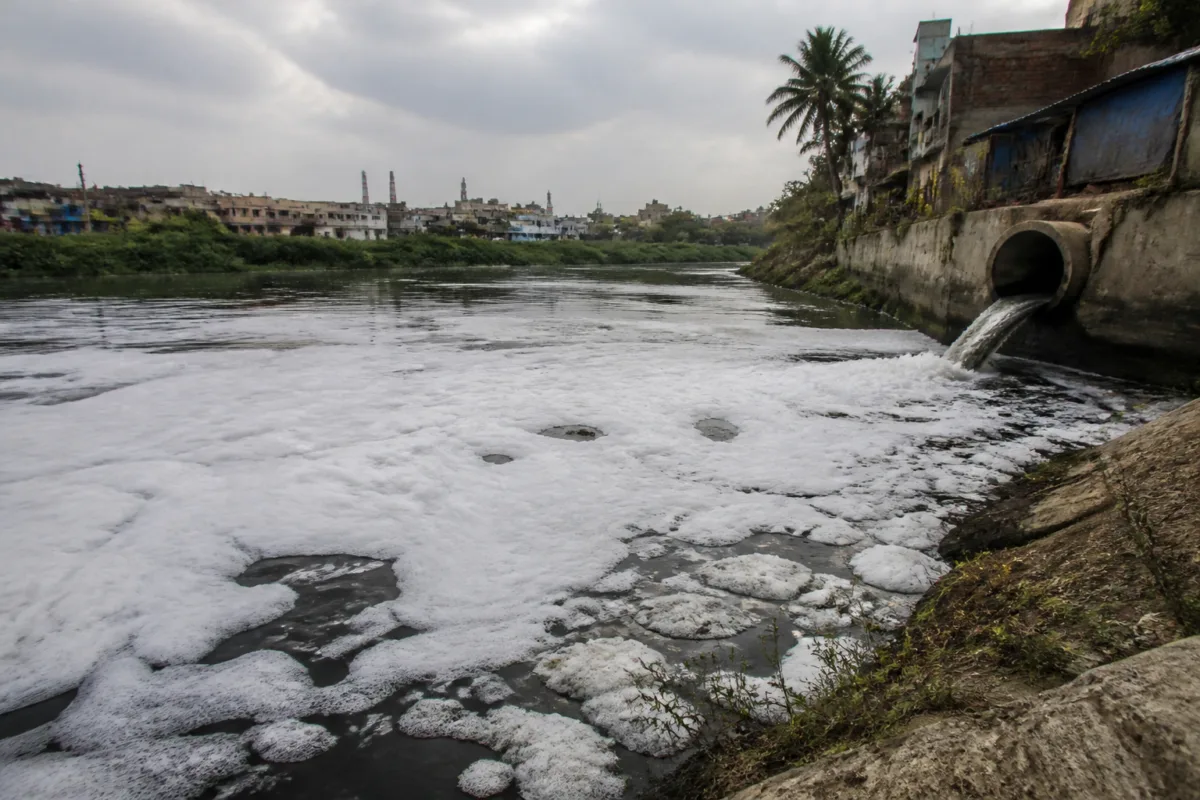
Tamil Nadu’s river pollution debate intensified after Environment and Climate Change Minister Dr V K Rajiv attributed river foam primarily to household wastewater containing soaps and shampoos, prompting a sharp political response from AMMK general secretary T T V Dhinakaran.
The controversy began during Rajiv’s visit to Tirupur, where he said domestic soaps and shampoos were the primary causes of frothing in rivers. The minister later issued a clarification at the Chennai Secretariat following widespread online criticism of the remarks.
Defending his position, Rajiv said household greywater can contain high levels of phosphorus from soaps and shampoos. According to the minister, when this wastewater mixes with river water, it can naturally produce foam. He also said recent statewide water studies had confirmed that industrial effluents were not responsible for the pollution.
Rajiv referred to his medical background while responding to the criticism and said the chief minister had appointed him to the environment portfolio because of his credentials. He also highlighted efforts to modernise the department, according to the report.
The minister’s explanation has put the spotlight on two separate but connected sources of urban water pollution: domestic wastewater and industrial discharge. Household greywater, which includes wastewater from bathing, washing and other domestic activities, can enter drains and water bodies when sewage networks and treatment systems are incomplete. Industrial effluent, meanwhile, requires monitoring and treatment before it is released into waterways.
Dhinakaran rejected the minister’s explanation and accused the state government of shifting responsibility for severe river pollution onto ordinary citizens. In a post on X, he described the attribution of the problem to everyday household soap use as absurd and said it reflected a lack of accountability in the Environment Department.
Dhinakaran further alleged that the government was shielding industrial offenders while failing to address systemic weaknesses in waste management. He called for stricter regulation of industrial effluent discharge and for robust sewage treatment infrastructure to protect Tamil Nadu’s rivers.
The competing claims have not been accompanied in the supplied report by details of the statewide water studies cited by Rajiv, including their sampling locations, methodology or findings. The report also does not identify the river affected by the foam or provide laboratory measurements that would establish the relative contribution of household wastewater and industrial discharge.
The immediate issue for Tamil Nadu’s urban authorities is therefore not only the source of visible river foam but also how pollution sources are identified, measured and regulated. The minister’s clarification places domestic greywater at the centre of the explanation, while the opposition demand focuses on industrial enforcement and sewage treatment capacity.
The state government’s next steps, including any further publication of water-quality findings, enforcement action against industrial discharge or plans to expand sewage treatment infrastructure, will determine how the dispute develops.

