


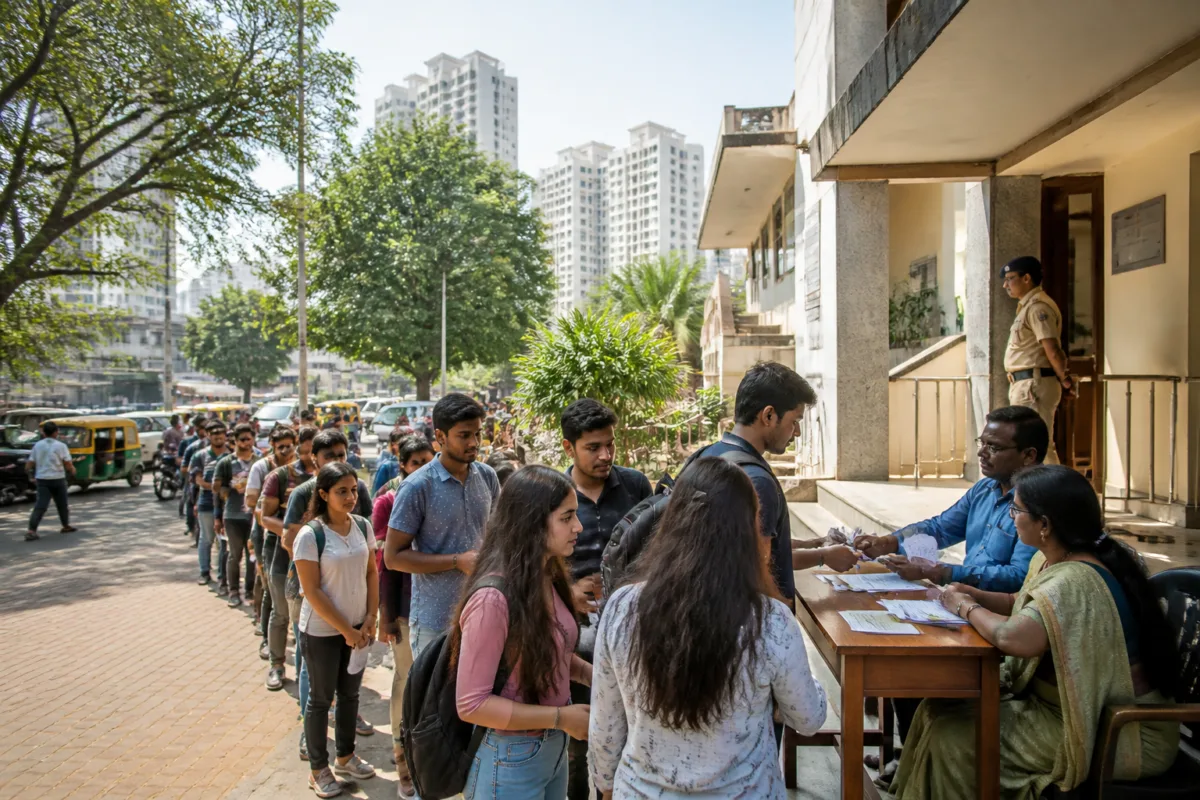
Karnataka’s Gen Z electorate has crossed 93.4 lakh after the final electoral rolls added 6.83 lakh first-time voters, giving younger residents nearly one-fifth of the state’s voter base ahead of the 2028 Assembly and 2029 Lok Sabha elections.
The figures were released by the Karnataka Chief Electoral Officer’s office after the special intensive revision of electoral rolls, which removed 99 lakh voters from the lists. The final roll records 86,56,838 voters aged between 20 and 29, while the newly added first-time voters take the total number of electors aged 18 to 29 to 93,40,202.
The younger electorate is concentrated largely in urban centres, according to the data reported by the Times of India. Bengaluru Urban district has the largest 20-29 voter population at 10.5 lakh, followed by Belagavi with 7.9 lakh, Mysuru with 4.4 lakh and Kalaburagi with 4.2 lakh.
The distribution gives Karnataka’s cities a particularly important role in the state’s changing electoral profile. Bengaluru Urban alone accounts for more than a tenth of the state’s voters aged 20 to 29, making the city a central constituency for parties seeking to understand the priorities and participation of younger electors.
The figures are expected to influence electoral strategies before the next Assembly and Lok Sabha elections. The emergence of a large younger voter base comes amid protests against the Chief Election Commissioner and demonstrations led by Gen Z groups, although the electoral roll data itself does not establish a direct link between those developments and voting preferences.
Younger voters do not, however, constitute the state’s largest demographic group. Electors aged between 40 and 59 remain the biggest and most influential age category, numbering around 1.7 crore, according to the report.
The accuracy of the age data remains an issue in interpreting the figures. Voters have reported discrepancies in recorded ages across different categories, and the Election Commission of India did not rectify all such errors during the revision exercise, the report said. That limitation means the age-group totals should be read alongside the continuing concerns about the quality of electoral-roll records.
The final roll provides the current official basis for assessing Karnataka’s younger electorate. Its next administrative test will be whether reported errors in age records are identified and corrected as voters and election authorities continue to update the rolls.

