


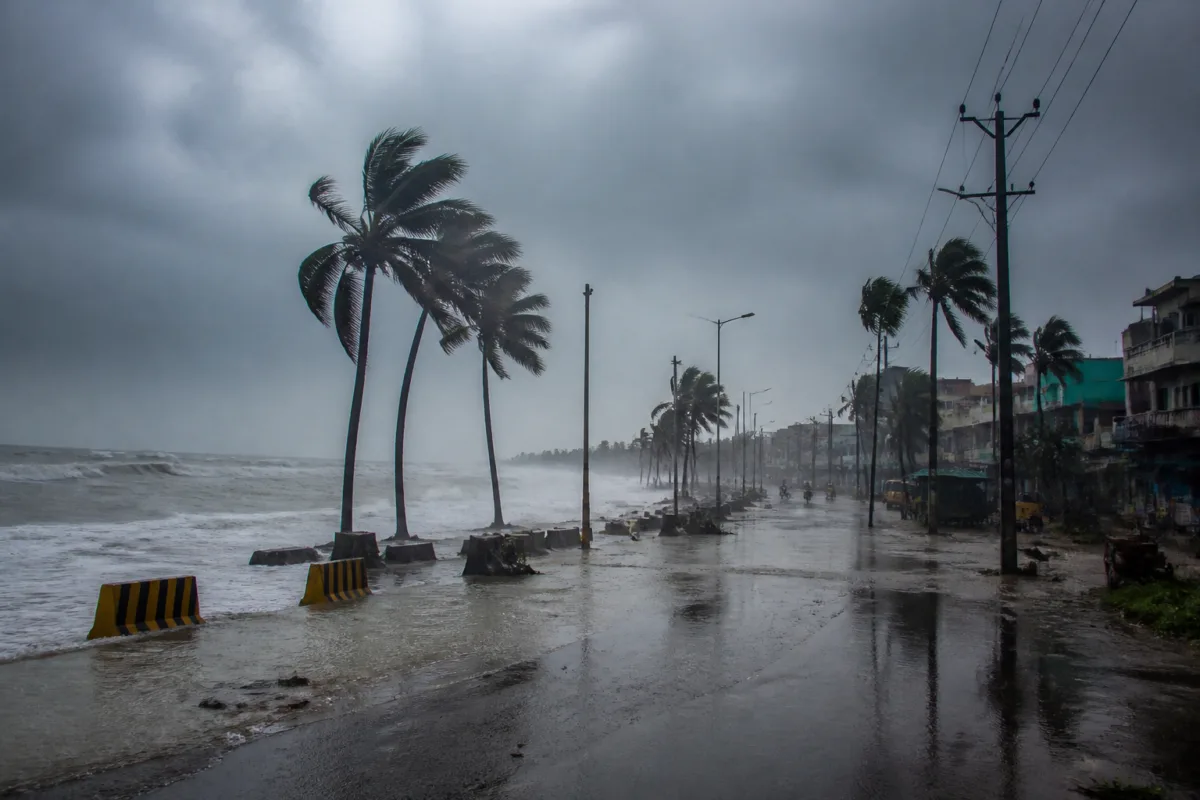
Cyclone Arnab intensified over the Bay of Bengal on Monday and is expected to strengthen before making landfall on the Andhra Pradesh coast on Wednesday, prompting a wide-ranging disaster response across coastal districts. The India Meteorological Department has forecast heavy to extremely heavy rainfall on Tuesday and Wednesday and warned that sea levels could rise in low-lying areas.
The approaching storm has already triggered preparations across the state, including the issuance of state and district emergency control room numbers. Authorities have also moved to limit exposure in vulnerable coastal areas, with beaches in Bapatla district temporarily closed and a high alert issued along the Kakinada-Yanam coast.
The cyclone is also disrupting transport planning. South Coast Railway has cancelled 53 trains, while select MEMU services have been cancelled as the storm moves towards the Andhra Pradesh coastline. The cancellations are part of the immediate response to expected heavy rain and strong winds, although the report did not provide a route-wise list or the duration of the suspensions.
Air travel is also facing possible disruption. Air India flights serving Visakhapatnam and Vijayawada may be affected by the deteriorating weather conditions. The report did not specify which flights had been cancelled or delayed, leaving passengers dependent on airline and airport updates before travelling.
The weather system has already produced heavy rain and strong winds in parts of Srikakulam district. The developments indicate that the cyclone’s effects are being felt before landfall, particularly in districts exposed to the Bay of Bengal and in areas where transport, coastal access and public movement can be affected by wind and rainfall.
The IMD’s warning about a possible rise in sea levels adds a specific risk for low-lying settlements and infrastructure along the coast. Such conditions can affect roads, rail links, beaches, local access routes and other public facilities, while heavy rainfall can place additional pressure on drainage and emergency response systems. The supplied report did not identify specific evacuation orders, shelter locations or the number of people expected to be affected.
The state and district emergency control rooms are the central public-facing mechanism identified in the report for responding to the storm. Their numbers have been issued as authorities prepare for the expected intensification and landfall. The report also records the closure of Bapatla beaches and the high alert for the Kakinada-Yanam coast as immediate precautionary measures.
Cyclone Arnab’s movement is therefore being managed through parallel measures: weather warnings from the IMD, transport cancellations by South Coast Railway, possible flight disruptions, coastal access restrictions and district-level emergency coordination. The next key milestone is the storm’s expected landfall on the Andhra Pradesh coast on Wednesday, alongside the IMD’s forecast period for heavy to extremely heavy rainfall.

