


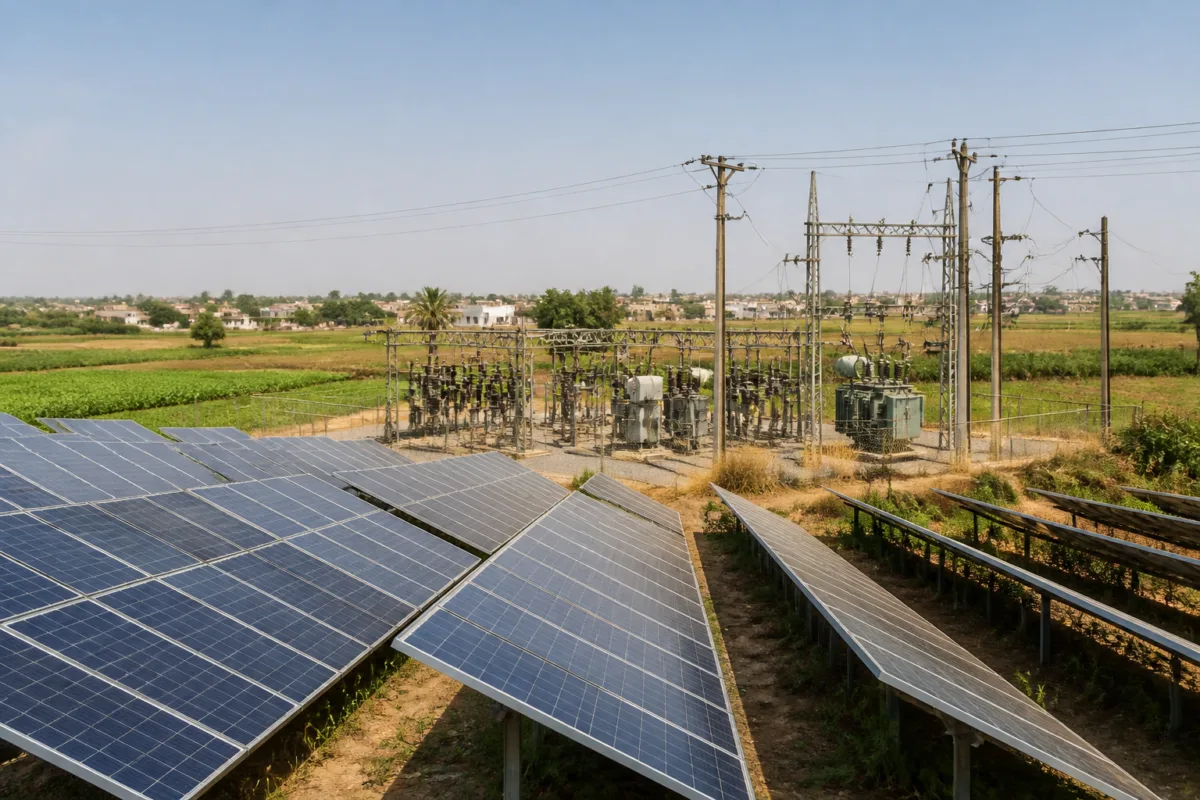
Maharashtra’s record electricity demand has exposed a pressure point that is becoming central to the state’s urban and rural infrastructure: the grid is not only required to generate more power, but also to manage when and where that power is consumed. On October 10, total demand reached 38,021 MW, while decentralised solar generation and rooftop systems supplied 5,100 MW outside the grid’s recorded peak demand.
The figures, reported by the Times of India and attributed to the Maharashtra State Electricity Distribution Company Limited (MSEDCL), show how solar capacity is beginning to function as a grid-management tool rather than merely an alternative source of electricity. MSEDCL recorded a peak grid demand of 32,921 MW on the day. The additional 5,100 MW was generated through projects linked to the Mukhyamantri Saur Krushi Vahini Yojana 2.0 and rooftop installations under government schemes, and was consumed locally or supplied directly to substations.
That distinction matters because electricity demand is not only a question of total consumption. It is also a question of whether power has to travel through the wider transmission and distribution network during the most stressed hours. Local generation can reduce that burden by placing supply closer to agricultural consumers, homes and substations. In Maharashtra’s case, the reported solar contribution helped prevent the full requirement from appearing as demand on the state grid during a period of unusually high temperatures and drought.
The episode also shows why the timing of electricity use has become an important part of distribution planning. MSEDCL chairperson and managing director Lokesh Chandra said the solar initiatives helped meet daytime demand and reduce dependence on expensive power purchases. The statement connects renewable generation to two operational priorities: maintaining supply during demand spikes and limiting the cost of procuring additional electricity when the system is under pressure.
The largest institutional component in the reported figures is MSKVY 2.0, which aims to provide daytime electricity to all 48 lakh agricultural pumps in Maharashtra. The scheme is planned around solar projects with a combined capacity of 16,000 MW. Projects representing 7,000 MW had already been commissioned, according to the report, while about 80% of agricultural pumps were receiving daytime electricity through the scheme and other technical measures.
This is a significant change in the way agricultural electricity demand is organised. Agricultural pumps have historically formed part of the distribution system’s difficult scheduling problem because irrigation needs do not always match the hours when the grid has its strongest or cheapest supply. By shifting a substantial share of farm consumption to daylight hours, MSKVY 2.0 links the availability of solar power with the operational needs of rural electricity distribution.
The reported shift is not marginal. About 2,500 MW of agricultural electricity demand was moved from nighttime to daytime, generating savings of Rs 384 crore for MSEDCL, officials said. In September alone, the scheme supplied 878 million units of electricity. The reported average rate for electricity generated under MSKVY was Rs 3.09 per unit, which reduced the utility’s dependence on more costly purchases during periods of peak demand.
These figures indicate that decentralised solar is being used to address three connected problems at once. First, it supplies farmers during the day. Second, it reduces the amount of electricity that must be moved through the wider grid at stressed times. Third, it lowers the distribution company’s exposure to expensive short-term power procurement. The value of the model therefore lies not only in installed renewable capacity, but in how that capacity is integrated with demand patterns.
Rooftop solar adds a second layer to this system. Approximately 11 lakh consumers across Maharashtra had installed rooftop solar systems under various government schemes, taking the combined installed capacity to 7,175 MW, according to the report. Rooftop installations are different from large centralised power plants because they generate electricity closer to the point of consumption. When that generation is available during the day, it can reduce the electricity drawn from the distribution network by participating households and institutions.
The reported numbers should not be read as a simple replacement of conventional generation. Solar output depends on daylight and therefore cannot, by itself, meet nighttime demand. The significance of the October peak lies instead in the way daytime renewable generation reduced the amount of demand directly visible on the grid. The state still requires a system capable of meeting demand outside solar-generating hours, but the daytime requirement can be moderated when local generation is available.
This is particularly relevant in a state where electricity demand is influenced by both urban consumption and agricultural operations. High temperatures can increase cooling demand in cities and towns, while drought conditions can intensify reliance on irrigation pumps. Those pressures occur across different parts of the distribution network and are not necessarily concentrated in the same locations. Decentralised generation can provide a response that is geographically closer to the affected load, although the supplied report does not provide a district-level breakdown of generation, demand or savings.
MSEDCL’s role is central to the institutional structure described in the report. As the distribution utility, it must procure electricity, operate the distribution network and maintain supply for different consumer groups. The figures on peak demand, solar contribution, procurement rates and savings all show that renewable energy deployment is being evaluated through the utility’s operating balance, not only through a generation-capacity target.
The policy framework combines state and central programmes. MSKVY 2.0 is focused on daytime electricity for agricultural pumps through decentralised solar projects, while the Pradhan Mantri Surya Ghar Muft Bijli Yojana is associated in the report with rooftop solar installations. Together, the schemes place renewable generation at two different points in the electricity system: near agricultural demand in the first case and at consumer premises in the second.
Their implementation, however, depends on more than installing panels. The solar projects must be connected to substations or local distribution networks, and their output must align with the timing of demand. The report’s reference to electricity being consumed locally or supplied directly to substations is important because it explains why the 5,100 MW solar contribution did not appear in the 32,921 MW grid-demand figure. The state’s total requirement and the demand recorded by the grid are therefore not identical measures.
That measurement issue is essential for understanding the scale of the intervention. A headline grid-demand number can make the electricity system appear to be carrying a lower load than the state is actually consuming if local generation is not included in the grid figure. Conversely, the difference between total demand and recorded grid demand can reveal the extent to which distributed generation is meeting demand outside the conventional network. In this case, the reported difference was 5,100 MW.
The financial data adds another dimension. MSEDCL’s reported savings of Rs 384 crore came from shifting approximately 2,500 MW of agricultural demand from nighttime to daytime, while the reported average MSKVY generation rate was Rs 3.09 per unit. The figures suggest that demand scheduling can have a financial effect even before considering the longer-term benefits of renewable capacity. The available material does not specify the comparison rate for the power that would otherwise have been purchased, so the precise unit-level saving cannot be calculated from the report alone.
The evidence also points to a broader transition in how electricity infrastructure is planned. Earlier approaches often treated demand growth primarily as a requirement for additional centralised generation, transmission lines and substations. The Maharashtra figures present a more distributed model in which generation capacity, consumer location, agricultural schedules and utility procurement costs are considered together. This does not remove the need for conventional grid investment, but it changes the role that distribution networks and local substations play in managing demand.
For urban residents, the direct benefit is not limited to rooftop-solar adopters. If distributed generation reduces pressure on the grid during daytime peaks, it can support more stable system operations across cities, towns and rural areas connected to the same state network. The report does not establish that the solar contribution prevented a particular outage or improved reliability for a specific city. It does establish that officials viewed the generation as providing relief during a record-demand episode.
For farmers, the reported benefit is more specific: daytime electricity for irrigation pumps. The stated target of covering all 48 lakh agricultural pumps gives the programme a large implementation scale. With 7,000 MW of projects commissioned against a planned 16,000 MW and about 80% of pumps receiving daytime electricity through the scheme and other technical measures, the programme is substantial but not yet fully complete on the figures supplied.
The bigger urban question is whether Maharashtra can turn distributed solar from a capacity-creation programme into a dependable operating layer of the electricity system. The October demand episode provides evidence that the model can reduce recorded grid pressure and utility procurement costs during the day. It also leaves important questions that the supplied report does not answer, including how output varies across locations, how the system manages evening demand, and whether the financial gains are sustained across different weather and demand conditions.
What is established is that Maharashtra’s record demand was met through a combination of grid supply and locally generated solar power, with decentralised and rooftop systems accounting for a reported 5,100 MW. MSKVY 2.0, rooftop installations and demand shifting are therefore no longer peripheral elements of the state’s electricity strategy. Their continuing significance will depend on the completion of planned capacity, the expansion of daytime agricultural supply and the distribution utility’s ability to integrate local generation while maintaining service beyond solar hours.

