


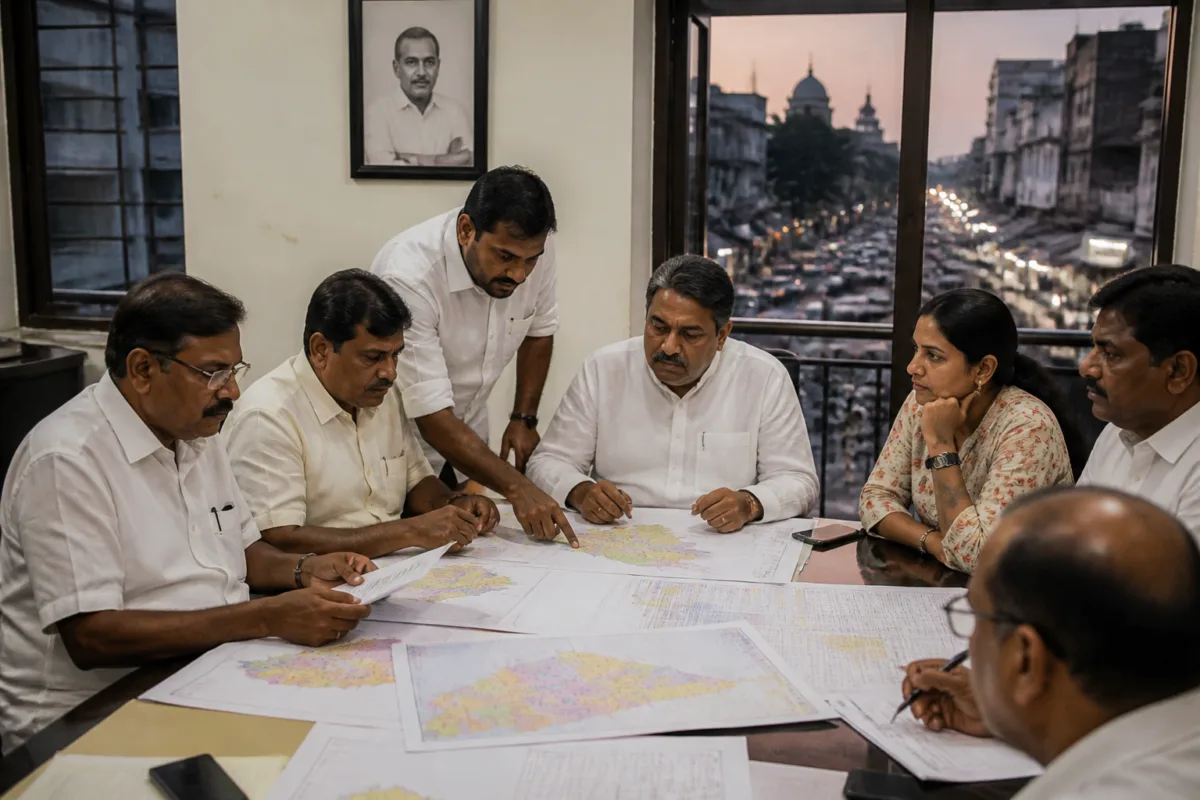
Karnataka Congress’s reported decision to reactivate poll strategist Sunil Kanugolu and survey agencies ahead of the 2028 Assembly elections is not merely an early campaign move. It is an acknowledgement that electoral strategy cannot compensate for weaknesses in governance perception, internal coordination and party organisation unless those problems are addressed together.
The Times of India reported that Kanugolu, chief adviser to Chief Minister DK Shivakumar, has begun building a team in Karnataka. The team is expected to launch an extensive campaign as early as January 2027. Kanugolu and Thiruvallur Congress MP Sasikant Senthil, a former IAS officer, were identified as key contributors to the party’s 2023 victory. Two other agencies believed to be close to Shivakumar have also reportedly been activated to prepare for a challenge from the BJP-JD(S) NDA alliance.
The timing is important. The reported mobilisation comes well before the 2028 election, but the account describes a government whose 2023 electoral momentum has weakened amid governance concerns, a sting operation controversy and prolonged internal factionalism. These pressures have reportedly affected cadre morale. The party’s response, therefore, is being framed as an image-revival exercise, but the underlying task is broader: rebuilding the connection between the government, its organisation and voters on the ground.
That distinction matters because a political strategist can assess public sentiment, shape messaging and identify weaknesses in an opponent’s campaign. A strategist cannot, by themselves, appoint local office-bearers, resolve factional disputes or create a functioning district-level organisation. Those responsibilities remain within the party’s institutional structure. The comments of a senior Congress legislator quoted by TOI make this limitation explicit. The legislator said strategists could operate effectively only after the party had the necessary cadre strength and completed the appointment of district Congress committee presidents and other office-bearers.
The organisational gap described in the report gives the revival exercise its most important dimension. Karnataka is not being treated simply as a communications problem. The party is still working to put the local apparatus in place before a larger campaign begins. That sequence suggests that the Congress’s internal assessment is not limited to whether voters are satisfied with the government’s public image. It also concerns whether the party can carry its message through district and constituency structures.
The reported plan also reveals how closely governance and electoral preparation are connected. The Congress government faces criticism over financial concerns, the sting operation controversy and internal factionalism, according to the report. Party sources said the strategists would help improve the government’s image and reshape the political narrative. Deputy Chief Minister G Parameshwara, however, said the party was not worried about current projections and that there was sufficient time to prepare. “We will strive to work harder for the welfare of the people. What is the point of talking about today’s situation?” he said.
The contrast between these positions is significant without necessarily indicating a formal disagreement. Party strategists and legislators are focusing on the conditions that could shape the next campaign, while Parameshwara’s response places greater emphasis on the government’s future performance rather than present projections. Together, the statements show two parallel requirements: the administration must address public concerns, and the party must rebuild the machinery through which its work is communicated and judged.
A private survey cited in the report projected that Congress would win 79 seats in 2028, compared with 145 for the BJP-JD(S) alliance if elections were held under prevailing circumstances. The survey is presented as a projection, not an election result or an official assessment. Its value within the party’s current debate lies in the warning it conveys: the 2023 victory cannot automatically be carried into the next Assembly election.
The numbers also demonstrate the gap between electoral memory and current political conditions. Congress’s 2023 success created the governing mandate, but the report indicates that the party is now concerned about whether that mandate remains politically durable. The projected figures are therefore being used as a measure of present vulnerability, even as Parameshwara argues that the election remains distant and that the government has time to work.
For the urban electorate, this preparation will matter through the way governance issues are converted into political priorities. The source report does not provide a sector-by-sector assessment of Bengaluru or other cities, nor does it identify specific urban projects affected by the government’s image problems. It does, however, show that questions about administration, financial pressure and public confidence are already part of the political planning process. In a state where the government’s credibility is assessed through everyday public services as well as political messaging, the party’s organisational response will shape how those concerns are heard and represented.
The institutional mechanics are equally important. Survey agencies can produce information about voter sentiment, while political strategists can organise campaigns around that information. District committees and local office-bearers provide the channels through which the party can interpret constituency-level concerns and mobilise workers. The sequence described by the Congress legislator suggests that the party is still strengthening the third component. Without that apparatus, the data gathered by surveys may not translate into sustained local engagement.
This is why the reported plan should not be read only as a campaign launch. It is also an internal test of whether the party can convert electoral expertise into an administrative and organisational system. The Congress appears to be preparing on several tracks: assessing ground realities, improving the government’s image, reshaping its political narrative and completing the structure required to operate at constituency level. The effectiveness of one track will depend on the others, but the supplied report does not establish how these teams will be coordinated or what authority they will have inside the party and government.
The decision to begin preparations early also creates a longer period in which the party’s performance can be evaluated. The expected campaign launch in January 2027 leaves time for organisational appointments and for the government to respond to the concerns cited in the report. It also means that the current political assessment remains provisional. The private survey reflects prevailing circumstances, while the election is scheduled for 2028 and the deputy chief minister has argued that there is enough time to change those circumstances.
The larger urban governance question is whether political image management follows improvements in administration or attempts to substitute for them. The source material records both pressures: party sources speak of the need to improve the government’s image, while legislators stress cadre strength and Parameshwara speaks of working harder for public welfare. These are not interchangeable tasks. A revised narrative may clarify government action, but the report provides no evidence that narrative work alone will resolve the financial concerns, controversy or factionalism facing the party.
What the evidence confirms is that Karnataka Congress has begun preparing earlier than the formal election cycle, with Kanugolu and survey agencies reportedly being activated and a larger campaign expected from January 2027. It also confirms that the party’s own legislators see organisational reconstruction as a prerequisite for that effort. What remains unclear is how the strategy teams will be structured, what findings their surveys will produce and whether the government’s performance will change the political conditions reflected in the cited projection. The next milestones are the appointment of district-level office-bearers, the formation of the strategist-led team and the expected campaign mobilisation in 2027.

