


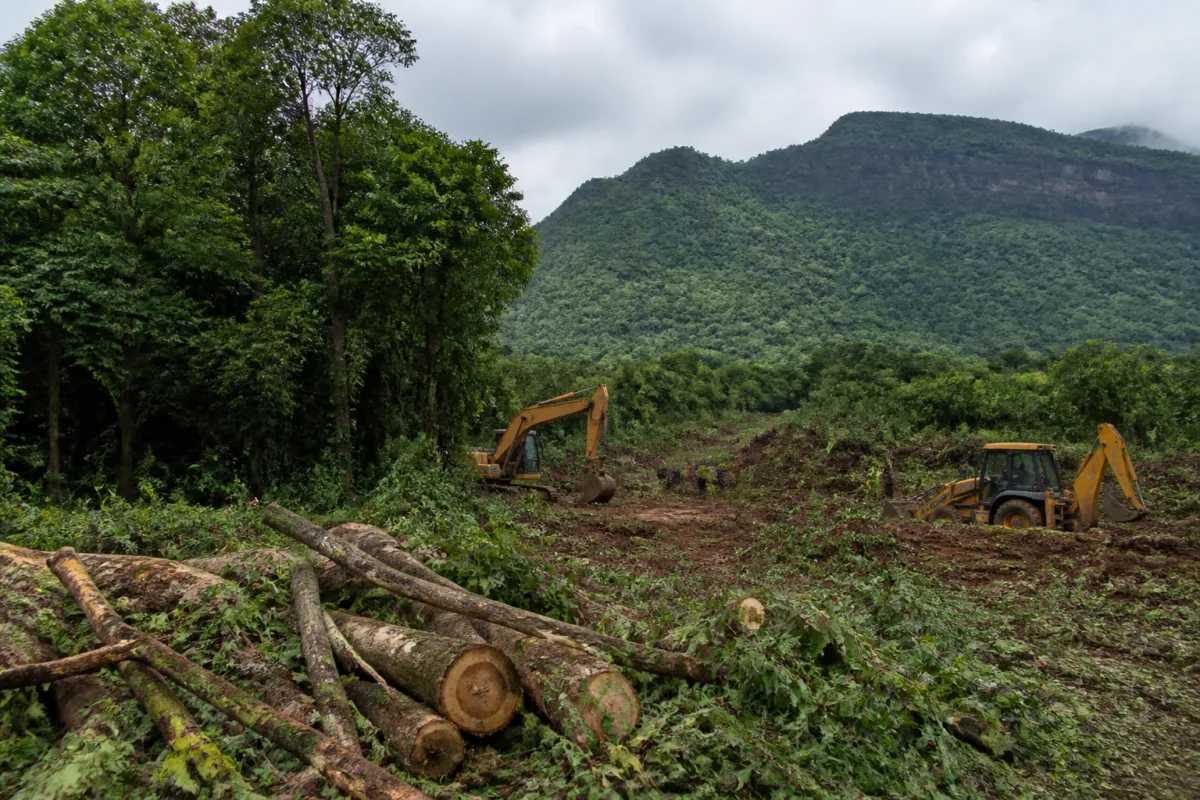
Tree felling has begun in Maharashtra’s Karjat taluka for the proposed 3,000 MW Saidongar I Karjat Off-Stream Open Loop Pumped Storage Project, with official documents cited by Mid-Day indicating that 32,490 trees are to be cut across a forest landscape spanning several villages.
The project covers Pali Kotal, Khalati, Saidongar and Dhak villages. A letter issued by the Range Forest Officer, Karjat East, on October 14 directed the immediate felling of the trees for the project. The proposed development requires the diversion of 233 hectares of forest land, according to official documents cited in the report.
The land requirement includes 197.0272 hectares of reserved forest, 26.066 hectares of private forest and 9.9068 hectares of protected forest. Forest department officials told Mid-Day that the project has received clearances from both central and state authorities. The report did not specify the dates or conditions attached to those clearances.
The felling has triggered opposition from local environmental groups and political leaders, who have raised concerns over the effect on biodiversity and wildlife habitats in the Karjat region. Advocate Kailash More, associated with the Karjat Taluka Paryavaran Bachao Sangharsh Samiti, said the group had been opposing the project and claimed that felling was taking place in a biodiversity-rich area.
More said the loss of forest could affect birds, wild animals and reptiles that depend on the landscape. Environmentalists cited in the report also warned that the removal of tree cover could fragment forest areas and disrupt ecological systems. These concerns have emerged alongside the project’s stated purpose as a large-scale pumped storage facility, a form of hydropower infrastructure designed to store and generate electricity.
Shiv Sena UBT leader Aaditya Thackeray criticised the project in a post on X, describing it as a hydroelectric project of Gujarat-based Torrent Power and questioning the felling of trees in the Saidongar area. NCP leader and Karjat MLA Rohit Pawar also criticised the tree cutting, saying the forest supported the barking deer, Maharashtra’s state animal, as well as medicinal plants, insects and other species.
Pawar further alleged that tunnelling-related blasting could weaken sections of the hills and referred to the risks associated with past disasters at Malin and Irshalwadi. The report presented these as concerns raised by Pawar; it did not cite an official assessment confirming that the project’s construction would create such risks.
The project has therefore brought into focus the regulatory balance between expanding electricity-storage infrastructure and diverting forest land. The immediate issue is the implementation of the tree-felling order and the conditions under which the approved forest diversion is being carried out. Forest department officials have confirmed the project’s central and state-level clearances, while local environmental groups continue to oppose the work.

