


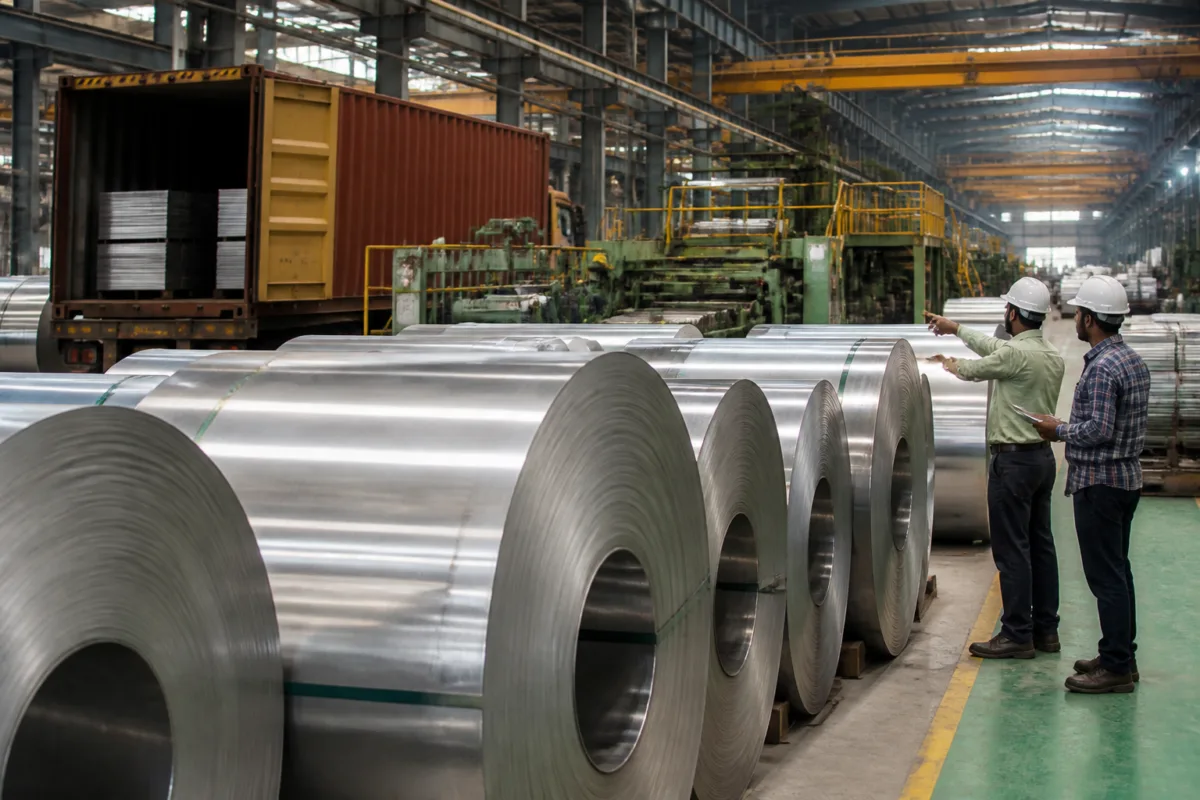
Stainless steel costs could rise in the coming months after the European Union reduced India’s scrap import quota to roughly one-third of its earlier allocation, Jindal Stainless CEO Tarun Khulbe said, while warning that proposed restrictions on European scrap exports could add further pressure on the company’s raw-material bill.
Jindal Stainless is attempting to offset the risk through diversified scrap sourcing and by gradually passing higher energy, raw-material and freight costs on to customers. Khulbe said the company was also exploring quota available under the India-EU free trade agreement to reduce the impact of the revised allocation.
India relies significantly on imported scrap because domestic generation remains limited, with Europe among the major sources, according to the company’s assessment. Any restriction on European exports could therefore increase procurement costs for stainless steel producers that depend on overseas supplies. The cost pressure is relevant to downstream users of stainless steel, including construction, infrastructure, engineering and industrial projects.
Khulbe said fluctuations in fuel prices, container availability and ocean freight rates continued to affect both imports and exports, although fuel supplies had improved from the first quarter. Jindal Stainless imports raw materials and exports finished products, allowing it to use shipping requirements across both operations to some extent.
The company has not faced restrictions on gas allocations so far, even though it said some suppliers in western India had reportedly capped allocations to long-term customers. Gas availability has improved since the first quarter, but price volatility remains a concern for energy-intensive stainless steel production.
Jindal Stainless reported that exports accounted for 11 per cent of total sales in the September quarter, compared with 9 per cent in the same period a year earlier. The company said exports increased by around 36 per cent year on year, although it did not disclose the absolute value of exports.
Despite the stronger export contribution, the company reduced its sales volume growth forecast to 4-6 per cent from an earlier estimate of 7-9 per cent. It attributed the revision to disruptions in the first quarter and continuing uncertainty over energy prices and logistics.
The company raised its financial year 2028 EBITDA-per-tonne guidance to ₹20,000-22,000 from ₹18,000-20,000. Khulbe said the outlook for the second half would depend on global market conditions and the company’s ability to sustain export momentum.
Jindal Stainless intends to protect its position in developed markets while expanding into other geographies. The company’s immediate response to the EU quota revision will depend on its alternative sourcing arrangements, use of India-EU trade provisions and its ability to pass higher operating costs on to customers.

