


Transmission constraints at Gujarat’s Khavda renewable energy park reduced Adani Green Energy Ltd’s potential earnings before interest, tax, depreciation and amortisation by about ₹724 crore in the first half of FY27, the company said during its earnings call on Thursday.
Adani Green Energy’s actual EBITDA for the six months was ₹8,276 crore. Managing Director and Chief Executive Officer Ashish Khanna said it could have been close to ₹9,000 crore without the power curtailment caused by delays in a key transmission corridor.
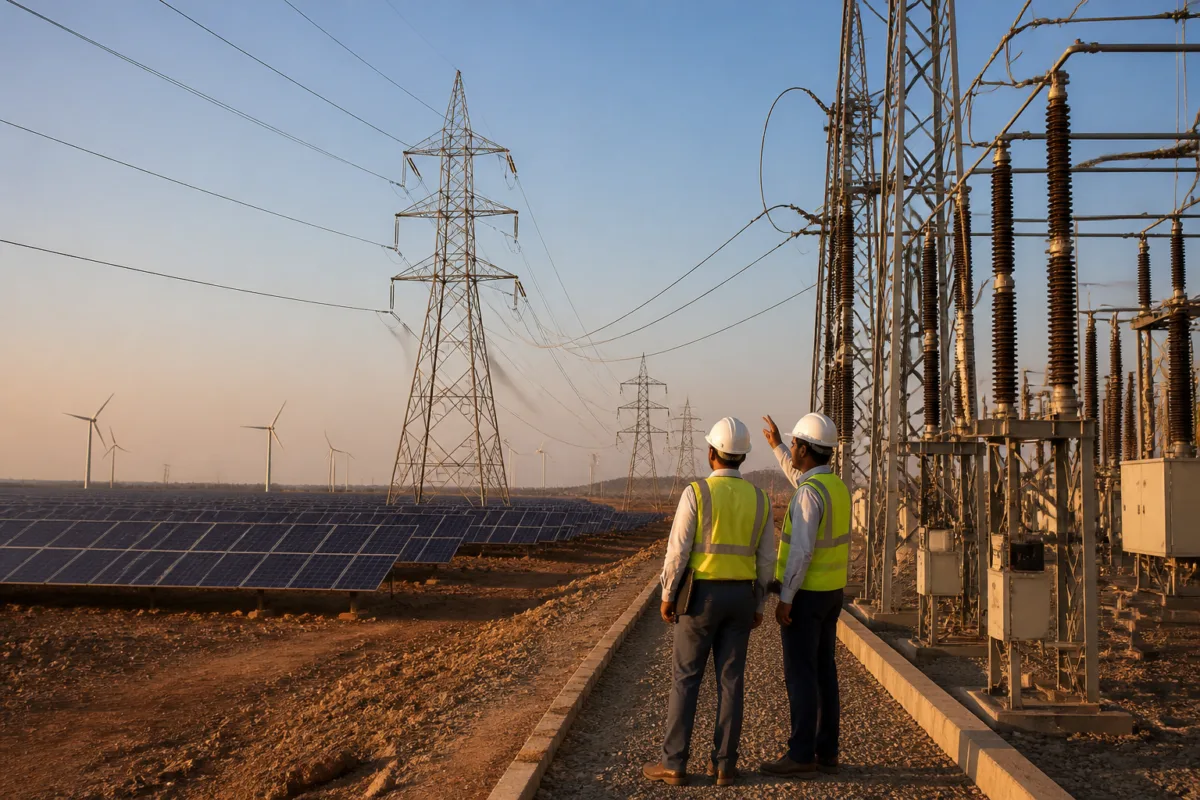
The delayed project is the Phase III, Part A transmission system being developed by Adani Energy Solutions Ltd through Halvad Transmission Ltd. The corridor is designed to evacuate an additional 7 gigawatts of renewable power from Khavda into the national grid and provide the General Network Access capacity required to inject that electricity into the interstate transmission network.
The project was initially scheduled for commissioning in December 2025. A Western Region Power Committee report issued in March 2026 revised the expected completion date to June 2026, citing construction delays and right-of-way issues. Such disputes can arise when transmission developers face difficulties obtaining permissions to build towers and string power lines across private or other land.
Khanna said the company was working to ensure that the full 7 GW corridor capacity would be available to it. Once commissioned, the transmission system is expected to remove existing curtailment and allow Adani Green Energy to execute additional renewable capacity connected to the corridor.
The delay has also affected the company’s capacity-addition schedule. Adani Green Energy had initially targeted adding 4.5 GW to 5 GW of renewable capacity by the end of the calendar year. Khanna said the timetable was now linked to the availability of the Phase III transmission corridor, although the company remained confident of meeting the target if the line was ready by the end of the fourth quarter.
The company said it was completing the balance of infrastructure at its own project sites so that new capacity could be commissioned quickly after transmission access becomes available. The episode highlights the operational dependence of large renewable-energy projects on transmission infrastructure, even after generation assets are ready.
Adani Green Energy is also accelerating battery energy storage deployment to reduce the amount of renewable electricity that remains unused during periods of high generation or constrained evacuation. It had installed 6,632 megawatt-hours of battery storage capacity by the end of September, including 3,081 MWh commissioned during the September quarter.
The company is targeting 10 gigawatt-hours of installed battery storage capacity by the end of FY27 and expects to exceed that target. Khanna said battery energy storage systems were providing greater flexibility in managing renewable generation and helping utilise electricity that might otherwise be wasted. Storage can absorb surplus power and release it later, but it cannot fully substitute for transmission capacity when the grid is unable to carry electricity out of the project location.
Adani Green Energy had 20.76 GW of operational renewable energy capacity as of September 30, 2026, representing a 24 per cent year-on-year increase. Its longer-term target is to reach 50 GW of operational capacity by 2030. The immediate commissioning pace will depend on the completion and availability of the Phase III transmission corridor.

