


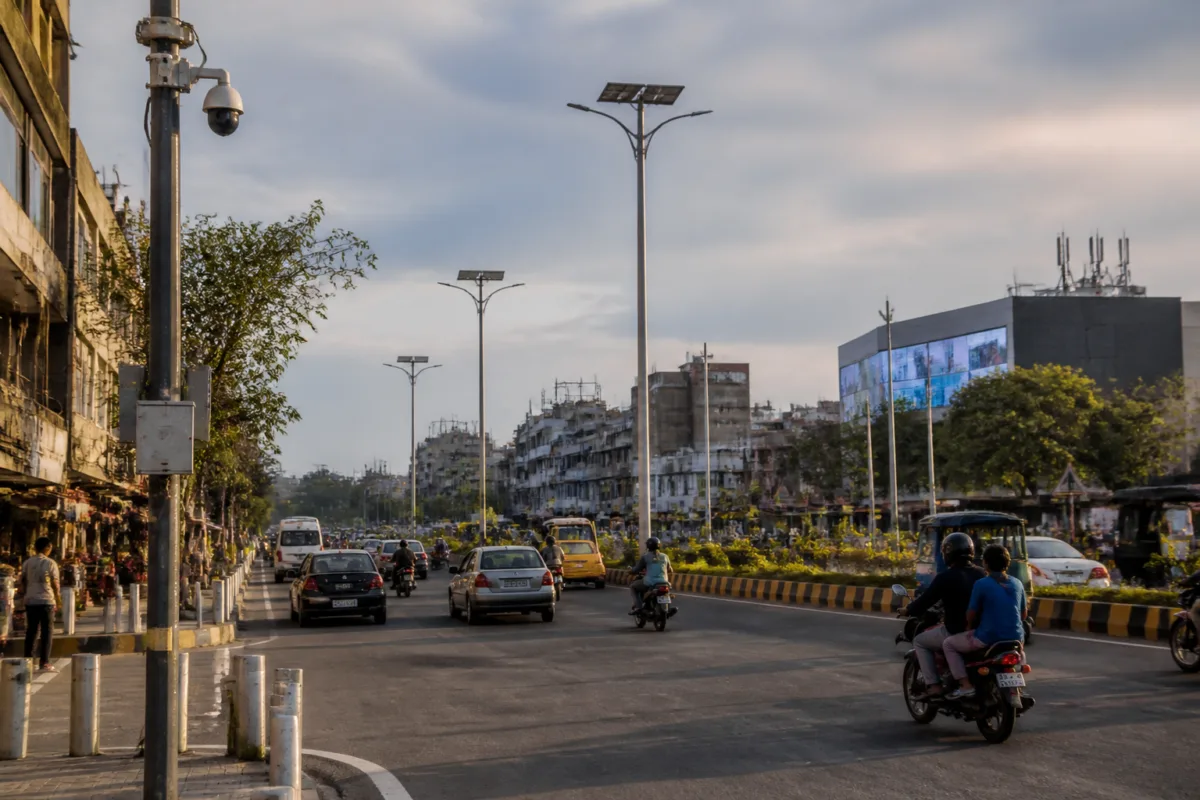
Saharanpur Smart City is reshaping an old commercial centre through a combination of roads, digital governance, public amenities and support for traditional industry. The change is visible in the project numbers: as of March 1, 2026, 113 of the city’s 115 Smart City projects had been completed, representing investment of Rs 1,235 crore, while two projects worth Rs 57 crore remained under implementation. But the more important shift is institutional. Saharanpur is moving from a model centred on conventional civic works towards one that combines physical infrastructure with data, surveillance, digital services and economic modernisation.
That transition matters because Saharanpur’s urban identity was not created by a single planned expansion. The city developed as a historic commercial centre in western Uttar Pradesh, supported by traditional markets, agricultural trade and its globally recognised wood-carving industry. Its established economic base also brought familiar pressures: congestion, demand for parking, stressed sanitation systems, inadequate drainage and rising expectations for public services. The Smart City intervention has therefore been applied to an already active urban economy rather than to a blank site.
The available project data indicates that the programme has operated at significant scale. In November 2024, 96 completed projects worth Rs 880 crore had been reported. By March 2026, the completed project count had risen to 113 and the value of those projects to Rs 1,235 crore. The increase shows the pace of implementation, but it also raises a more consequential question for the city: whether a large collection of completed works can function as one integrated urban system after the construction phase ends.
## From civic works to urban management
Before the Smart City intervention, Saharanpur’s development was largely associated with conventional civic infrastructure. Roads, drainage, sanitation and public amenities were dealt with as separate components of municipal administration. The newer approach places greater emphasis on coordination. Smart roads and internal roads have been planned alongside water supply, sewerage and electrical infrastructure, while improvements to important intersections and commercial stretches have been combined with other infrastructure and city-beautification measures.
This is a significant change in how an established city is managed. A road resurfacing project can improve movement temporarily, but its long-term value depends on whether underground utilities, drainage, electricity and pedestrian requirements are addressed at the same time. The reported project mix suggests that Saharanpur’s infrastructure programme has attempted this more integrated approach. Bridges across the Paondhoi River, underground electrification and improvements to commercial areas form part of a wider effort to connect mobility and civic services rather than treat them as isolated works.
The proposed multi-level car parking and convention hall also reflects the pressure created by the city’s commercial role. Rising vehicle ownership and business activity intensify competition for limited urban space. Parking infrastructure can address one visible symptom, but the project also indicates how a traditional market city is being required to accommodate new patterns of commerce, mobility and public activity within an established urban fabric.
The city’s technology systems represent another layer of this transformation. The Integrated Command and Control Centre and associated smart components provide a platform for monitoring city facilities, traffic and surveillance. An Integrated Traffic Management System, city surveillance, e-governance and a GIS portal extend the city’s administrative capacity beyond physical construction. The Smart City platform also provides digital access to several civic services.
This does not mean that technology automatically resolves urban problems. It changes the way the administration can observe and respond to them. The shift is from managing complaints and infrastructure separately towards using real-time information and mapped systems to coordinate services. The effectiveness of that model will depend on how consistently the systems are operated, updated and connected to routine municipal decision-making. The supplied project account establishes the creation of these systems, but does not provide performance data on response times, service improvements or citizen usage.
## Public space, sanitation and liveability
Saharanpur’s transformation is also being measured through interventions that are less prominent than roads or command centres but more directly experienced in daily life. Smart City projects have included solid-waste-management vehicles and equipment, bio-composting machines in parks and other sanitation-related works. Nine parks in the Area Based Development zone were taken up for rejuvenation, while solar high-mast and solar street-lighting projects were introduced in different parks and areas.
These projects point to a broader definition of infrastructure. A city’s competitiveness is not determined only by the speed at which vehicles move or the number of digital services available. It also depends on whether residents have access to maintained public spaces, cleaner surroundings, adequate lighting and civic facilities that support everyday use. In a commercial city, these functions also affect how markets, streets and public areas are experienced by workers, visitors and businesses.
The environmental significance of the interventions is more limited than the language of transformation might suggest, at least on the evidence provided. Solar lighting and bio-composting introduce resource-efficient elements, but the supplied material does not quantify energy savings, waste diversion or emissions reductions. What can be established is that sanitation, park improvement and solar infrastructure have become part of the city’s urban development agenda alongside roads and surveillance.
Education, healthcare and sports projects extend the same logic. Smart classrooms and smart schools, along with the Gandhi Digital Library, seek to provide technology-enabled educational resources. Smart Health ATMs and medical equipment for government hospitals add a technology component to public healthcare access. At Dr B. R. Ambedkar Sports Stadium, works have included a judo hall, weight-training centre, entrance infrastructure and renovation of basketball, badminton and yoga facilities.
These projects broaden the meaning of a Smart City beyond traffic systems and digital dashboards. They place public amenities within the same development framework as infrastructure. However, the project list alone cannot establish how many residents use these facilities, whether access is evenly distributed across the city or whether operating budgets are sufficient for long-term maintenance. Those questions will determine whether the infrastructure becomes a durable public asset or remains primarily a record of capital expenditure.
## Connecting traditional industry to modern markets
Saharanpur’s economic transition cannot be separated from its wood-carving industry. The craft has a history of around 400 years and remains the district’s principal handicraft identity. Its products are sold in domestic and international markets, giving the city an economic base that predates current urban programmes.
The One District, One Product programme, launched in 2018, gave traditional industries such as Saharanpur’s wood carving a formal policy platform. The programme focuses on preserving local skills, product development, marketing, training, finance and employment generation. Invest UP identifies Saharanpur as one of Uttar Pradesh’s traditional manufacturing centres and notes the global recognition of its woodcraft. The same account points to e-commerce, branding and export-oriented production as opportunities for connecting traditional manufacturing with wider markets.
This connection between urban infrastructure and local industry is central to understanding the city’s current transformation. Artisans and small enterprises require more than heritage recognition. They need transport links, market access, digital connectivity, finance, branding and reliable civic services. Better roads and utilities can reduce logistical constraints, while digital systems can support access to customers and services. The relationship is not automatic, but the policy direction is clear: Saharanpur’s traditional economy is being placed within a more modern commercial framework rather than treated as separate from urban development.
The district’s economic scale reinforces that point. Invest UP’s current district-wise economic data puts Saharanpur’s GSDP at around Rs 20,831 crore. The economy extends beyond handicrafts to agriculture, agro-based activity, manufacturing, trade, services and MSMEs. Urban infrastructure is therefore supporting a diversified economic base, not only a single craft cluster. The available material does not establish how much of the district’s GSDP is directly attributable to Smart City works or ODOP support, so the connection should be understood as an enabling relationship rather than a measured causal outcome.
## The unfinished work begins after completion
The completion of 113 projects is an important administrative milestone, but it is not the same as completing urban transformation. Smart roads, surveillance systems, parks, health equipment and public facilities all require regular operations and maintenance. Digital platforms require updated data, functioning equipment and trained staff. Public spaces require upkeep. Waste-management systems require dependable collection and processing arrangements.
The next phase will therefore test whether Saharanpur can convert project delivery into service quality. The source material identifies maintenance, expansion and integration with the city’s industrial, commercial and cultural strengths as the central issues ahead, but it does not provide detailed operating indicators. There is no supplied data on the performance of the traffic system, usage of the GIS portal, utilisation of health facilities, waste-processing volumes or the financial arrangements for maintaining completed assets.
That gap is important because the city’s transformation is being presented through both physical and institutional change. A completed bridge or renovated park can be assessed through visible construction, while an Integrated Command and Control Centre is valuable only if information improves administrative action. Similarly, a smart classroom or health ATM adds public value only when it remains accessible, functional and connected to regular service delivery.
Saharanpur’s experience illustrates the opportunity and complexity of upgrading established commercial cities. Its traditional markets, wood-carving sector and MSMEs provide an economic identity that new infrastructure is intended to strengthen, not replace. The Smart City programme has created a broad portfolio covering mobility, utilities, sanitation, public space, digital governance, education, healthcare and sports. The evidence confirms the scale of implementation and the shift towards integrated urban management. What remains to be established is how these systems perform over time, how widely citizens use them and whether the city can sustain the assets after the project cycle ends.

