


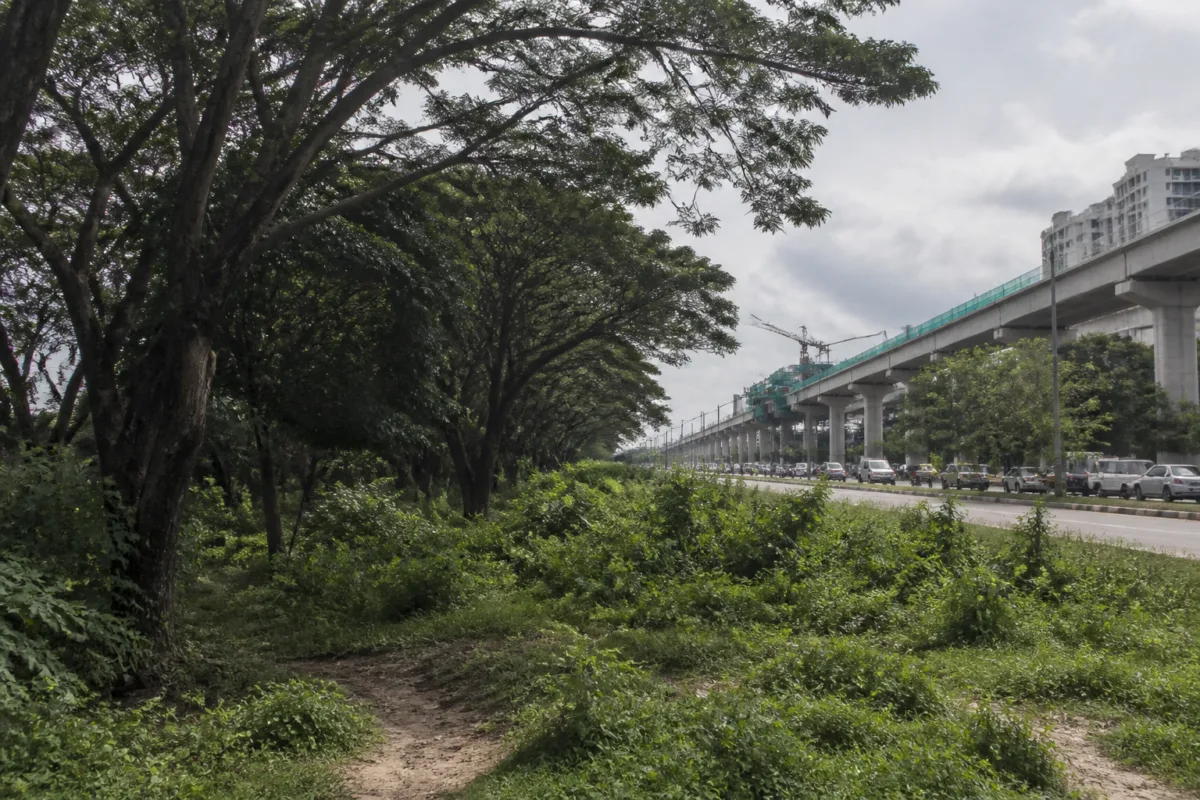
More than 1,500 objections to tree felling for Bengaluru’s Hebbal Short Tunnel Project have turned a routine statutory consultation into a wider test of how the city weighs transport infrastructure against ecological systems. The objections concern not only the number of trees proposed for removal, but also species diversity, biodiversity, microclimate, hydrology and the project’s proximity to Hebbal Lake.
The Greater Bengaluru Authority received the objections after inviting public responses on September 20 to a proposal involving 1,128 trees. The consultation was given a 10-day deadline. Activists, however, objected that the authority had not uploaded the list of tree species, and demanded more time to assess the proposal. According to the GBA, more than 700 objections arrived during the first window, with the rest submitted before the deadline.
The volume and detail of the responses matter because they indicate that the dispute is not limited to a general opposition to road construction. The objections reportedly include independent assessments of tree sizes, lists of species, concerns about impacts on other forms of life, and questions about water movement around Hebbal Lake. Some respondents have also raised the possibility that clearing the area could intensify heat-island conditions in a landscape described as an important lung space for the city.
The institutional process is now paused by the National Green Tribunal. The NGT has restrained the Bangalore Development Authority from felling trees until the hearing in the case challenging the proposed tree removal is completed. The next hearing is scheduled for December 15, and the BDA cannot proceed with felling before then.
This pause changes the immediate character of the project. The question is no longer simply whether a road tunnel can be delivered, or how quickly construction can begin. It is whether the project’s environmental and engineering justification can withstand a review that considers the trees as part of a larger urban system rather than as isolated obstacles along an alignment.
That distinction is important in Bengaluru, where transport projects frequently pass through landscapes that perform several functions at once. A tree can occupy land required for a road, but it can also provide shade, support biodiversity, influence local temperatures and interact with soil and stormwater systems. The objections submitted to the GBA reflect precisely this layered understanding of urban infrastructure.
The Hebbal project’s proximity to the lake adds another dimension. The supplied objections raise hydrological concerns because of the alignment’s location near Hebbal Lake. The material does not establish the precise nature or scale of those risks, but it shows that citizens are asking the authorities to examine how road construction and tree removal could affect the area’s water environment. That makes the tree-felling decision part of a broader question about how transport infrastructure is planned around urban ecological assets.
The consultation process itself has become part of the controversy. When the GBA invited objections without uploading the list of tree species, activists argued that the public did not have the information needed to evaluate the proposal properly. The later responses, including species lists and references to biodiversity, suggest that the quality of a consultation depends not only on whether a deadline is provided, but also on whether citizens receive sufficiently detailed project information before that deadline expires.
The GBA says it is filtering and grouping the objections under different themes. It plans to send the submissions to the tree expert committee and the implementing agency, the BDA. The BDA is expected to review the concerns and explain why the trees need to be felled. A joint site inspection by the tree expert committee and the BDA is also proposed.
This arrangement places the tree expert committee at the centre of the next decision. The committee is expected to examine the objections, inspect the site with the BDA and determine the position on the trees. That process will also have to reconcile differing descriptions of the project’s tree impact. BDA Chairperson N.A. Haris recently told The Hindu that only 56 trees would be felled and that the remaining trees would be translocated. A GBA official subsequently clarified that the final decision on felling or translocation would have to be taken by the tree expert committee.
The difference between 1,128 trees in the public consultation and the stated possibility of felling 56 trees with the remaining trees translocated is therefore central to public understanding. These figures describe different treatment categories, but the supplied material does not provide the project’s complete tree-by-tree classification or explain how the translocation figure was calculated. Until that information is made clear, the public debate will continue to revolve around different interpretations of the project’s actual ecological footprint.
Translocation also cannot be treated as an automatic equivalent of retaining mature trees in place. The source material records that the BDA has proposed translocation for most of the trees, but it does not provide details on the species, age, health, destination sites, survival monitoring or implementation method. Those details would be necessary for citizens and the expert committee to assess what the proposal means in practical terms.
The GBA official said that, regardless of whether trees are translocated or felled, the BDA would have to plant 10 trees for every tree cleared. The stated replacement ratio offers a formal mitigation measure, but the supplied information does not establish where the new trees would be planted, how long they would take to mature, whether they would be ecologically comparable to the existing trees or how their survival would be monitored.
That gap points to a recurring difficulty in urban environmental decisions: numerical replacement can be easier to administer than ecological equivalence. A mature tree and a newly planted sapling may both be counted in a compliance framework, while providing very different levels of shade, habitat and climate moderation. The current process has not yet established how the proposed ten-for-one planting condition will be translated into measurable outcomes around the Hebbal project.
The NGT’s intervention gives the consultation and review process additional importance. With felling halted until the December 15 hearing, the authorities have time to consolidate the objections, conduct the proposed inspection and place the BDA’s explanation before the tree expert committee. The legal pause does not decide the project’s final environmental outcome, but it prevents tree removal from moving ahead before the challenge is heard.
For the GBA, the case is also a test of its role in coordinating Bengaluru’s fragmented urban administration. The authority is collecting and organising objections, while the BDA remains the implementing agency and the tree expert committee is responsible for the technical decision on the trees. The process therefore involves public consultation, project implementation, technical review and judicial oversight. How these institutions share information and respond to the objections will be as important as the final decision on the alignment.
The immediate evidence confirms three things. First, the proposed tree intervention has generated substantial public scrutiny, with more than 1,500 objections. Second, the concerns extend beyond tree numbers to biodiversity, microclimate, hydrology and the relationship between the project and Hebbal Lake. Third, no felling can take place before the NGT hearing scheduled for December 15.
What remains unresolved is the final tree-wise plan, the technical response to the objections, the outcome of the joint inspection and the committee’s decision on felling or translocation. The next stage will show whether the consultation becomes a meaningful review of the project’s ecological consequences or remains primarily a procedural step before implementation. For Bengaluru, the Hebbal Short Tunnel is consequently not only a transport project; it is a test of whether the city can make infrastructure decisions using the full environmental systems through which its roads are built.

