


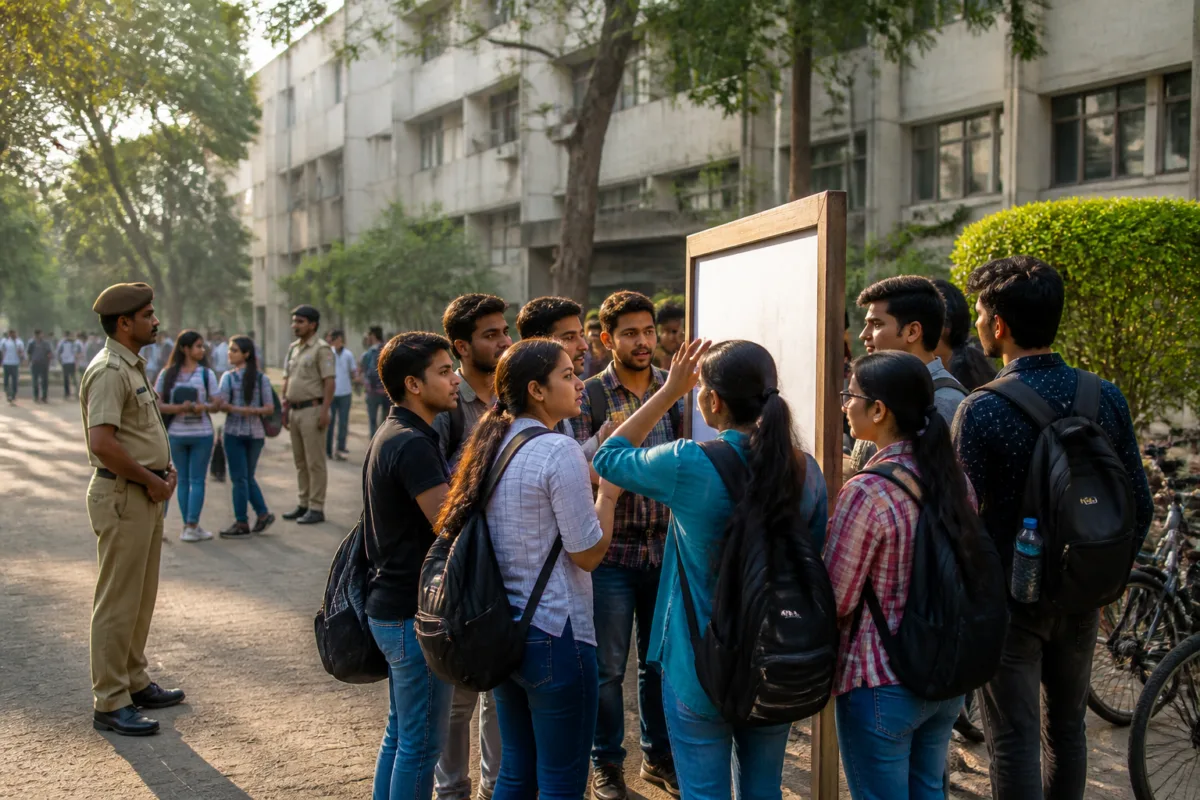
Maharashtra has begun the process of reviving direct college student council elections after a 33-year suspension, with the state government issuing a government resolution to develop a safer and more regulated election system for higher education institutions.
The move follows a decision to establish a 12-member expert committee chaired by former Mumbai University vice-chancellor Suhas Pednekar. The committee has been asked to consult students, education institutions, university officials and the police administration before submitting comprehensive recommendations within one month.
The proposed system is intended to restore student representation while limiting the political influence and violence that led to the elections being suspended in the early 1990s. The government resolution was issued by the Higher and Technical Education Department under the guidance of minister Chandrakant Patil.
According to the report, direct student elections were suspended in 1993 after concerns over political interference, the growing use of muscle power and law-and-order problems on campuses. The decision followed the 1989 murder of NSUI student leader Owen D’Souza on the premises of a Mumbai college. Direct and competitive elections were subsequently formally prohibited under the Maharashtra Universities Act, 1994, and nominated student councils replaced elected bodies.
The latest proposal includes restrictions on external political intervention. These are expected to cover outside funding, campaigning by political parties and the use of non-students for election activity on college campuses. The government is also considering a digital portal for filing nominations, verifying documents and handling complaints, with the stated aim of reducing direct confrontations during the election process.
The proposed framework would also include regular audits of student council funds, ethics and governance training for elected representatives, and provisions to improve representation for women, reserved categories and students involved in the National Service Scheme, National Cadet Corps, sports and cultural activities.
The revival is also connected to earlier efforts to implement provisions of the Maharashtra Public Universities Act, 2016. Elections planned around 2019 were reportedly deferred because of law-and-order concerns related to assembly elections and were subsequently delayed further by the Covid-19 pandemic.
Supporters of the proposal say elected councils could give students a formal and peaceful platform to raise concerns about college infrastructure, fees, hostels and other aspects of campus administration. They also argue that direct participation could provide students with an early understanding of democratic processes and create opportunities for leadership beyond established political networks.
The proposal has, however, triggered concerns over campus safety and the return of partisan politics to educational institutions. Congress youth leader Vikram Gaikwad opposed the move, warning that political violence, money power and outside influence could re-enter campuses. Pune NSUI president Abhijit Gore-Deshmukh supported elections subject to transparent rules and a strict code of conduct, while representatives of the Shiv Sena’s Uddhav Balasaheb Thackeray faction and the Akhil Bharatiya Vidyarthi Parishad also backed the proposal with safeguards.
The expert committee’s report, due within a month, is expected to determine how Maharashtra can balance elected student representation with campus security, institutional autonomy and protection from external political intervention.

