


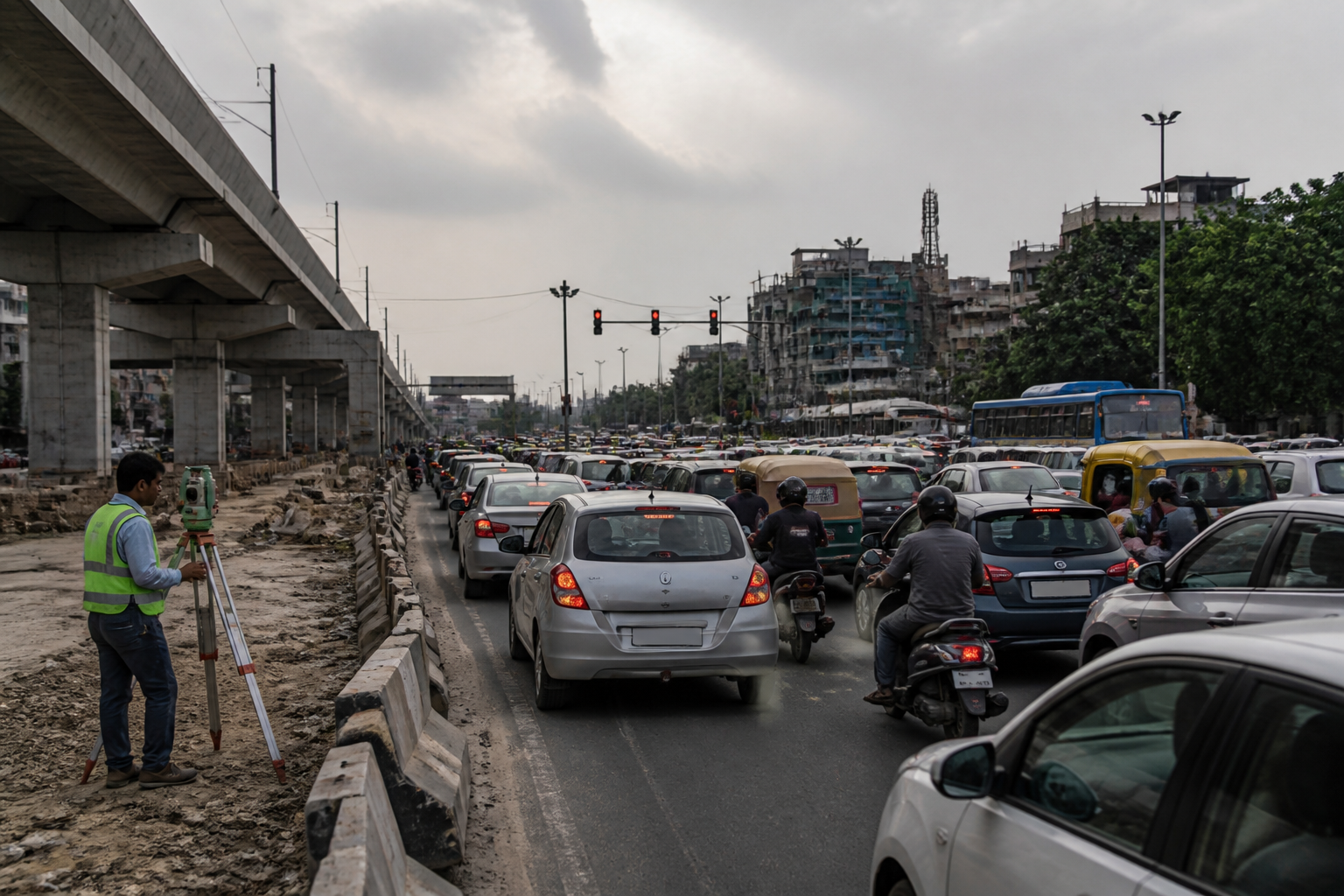
The Ashram-Badarpur corridor is set to receive four new flyovers under a ₹378.87-crore National Highways Authority of India (NHAI) plan to make the 7.977-kilometre stretch of Mathura Road signal-free, according to a report by Jagran – New Delhi. Construction is expected to begin in January 2027 and take about two years.
The project covers the section between Ashram Chowk and the Badarpur border, a key link between Delhi and Faridabad that experiences regular congestion at signalised intersections. The plan is intended to allow through-traffic to bypass major red lights while retaining arrangements for vehicles making local movements along the corridor.
According to the report, the proposed flyovers, described as elevated structures or viaducts in the technical plan, will carry long-distance traffic travelling between Delhi and Faridabad above the existing junctions. Local traffic will continue to use the road below, with U-turn underpasses planned to support movements that do not need to enter the main through lanes.
The scheme also includes closing illegal cuts and unauthorised median openings. Existing facilities near Jasola and Apollo Hospital, including a U-turn underpass and left-in and left-out arrangements, will be used to help local vehicles change direction without blocking the main carriageway.
The proposed signal-free design is based on separating through-traffic from local traffic. Vehicles travelling the full corridor will be able to avoid repeated stops at intersections, while local access will be managed through designated turning points and underpasses. The report said the arrangement is intended to address the bottlenecks that currently contribute to congestion on the Delhi-Faridabad route.
The construction phase will itself require traffic-management measures because the work will take place along a busy urban road. NHAI plans to deploy trained traffic marshals and robotic flagmen at congested junctions to support diversions and safety controls during construction. The report described the use of robotic flagmen at busy intersections as a first for Delhi during such works.
The contractor appointed for the project will also be responsible for maintaining the completed corridor for 10 years, according to the report. This provision places construction and post-completion upkeep within the same project framework, although the report did not provide details of the tendering process, the selected contractor or the final traffic-diversion plan.
The Ashram-Badarpur stretch carries a mix of regional and local traffic, including vehicles travelling towards Faridabad and traffic accessing residential, commercial and healthcare destinations along Mathura Road. The project’s stated objective is to reduce delays by removing signal stops for through-traffic while preserving controlled access for local movements.
NHAI is expected to begin work in January 2027, with completion targeted in approximately two years. Further details on the construction schedule, lane closures and traffic diversions will be important for commuters before work starts.

