


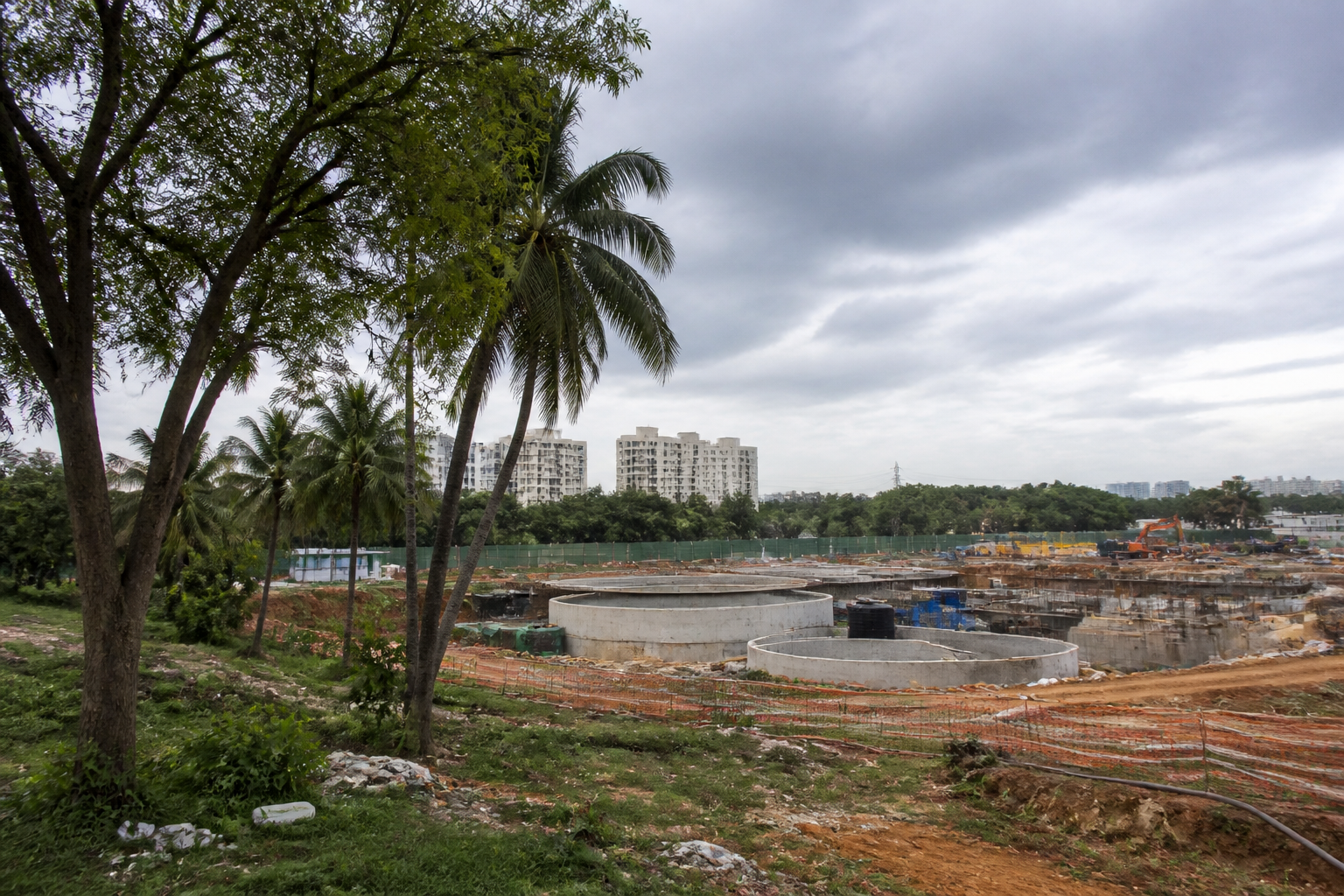
The Greater Bengaluru Authority has cleared the removal of 267 trees and the translocation of 18 others for the Bangalore Water Supply and Sewerage Board’s proposed 100 million litres per day sewage treatment plant at Doddabele village near Kengeri, despite 28 objections from citizens.
In an official memorandum issued recently, the authority said the Tree Expert Committee had assessed 355 trees on BWSSB premises within the project area. Of these, 70 trees were found to be outside the construction zone and allowed to remain. The remaining trees were classified according to their location, condition, species and the feasibility of retaining or relocating them.
The proposed Doddabele plant is part of BWSSB’s plans to expand sewage treatment capacity in the Vrushabhavathi Valley. The department has said existing and planned capacity will not be sufficient to meet future requirements as Bengaluru’s population grows. Additional treatment plants have also been planned at Mailasandra and Doddabele.
The Tree Expert Committee conducted field inspections in February before recommending the tree removal plan. According to the memorandum, the 18 trees approved for translocation could not be retained at their existing locations but were considered suitable for movement within the BWSSB premises. The other 267 trees were recommended for felling because they could neither be retained nor translocated without affecting the project.
The trees marked for removal include sapota, coconut, rain tree, neem and other species. Several are located in areas earmarked for the plant’s primary and secondary clarifiers, oxidation tanks, sludge-processing facilities, channels and associated infrastructure.
The authority has imposed conditions on the work. The 18 trees approved for translocation must be moved to a designated area within the BWSSB premises under prescribed procedures and the supervision of forest officials. BWSSB must also plant 10 saplings for every tree felled or translocated and maintain them for at least three years. Regular monitoring and documentation have been made mandatory.
The public notice issued by BWSSB seeking permission to remove the 355 trees attracted 28 objections. Citizens asked authorities to examine alternative sites, redesign the project, translocate mature trees and undertake compensatory afforestation. The objections did not stop the approval.
Authorities said alternative locations had been examined before the site was finalised and maintained that the treatment plant was essential for meeting sewage-treatment requirements and reducing pollution in the Vrushabhavathi river ecosystem. A Bengaluru-based tree activist, however, said objections to development projects were routinely answered with standard responses and called for a threshold number of objections to trigger public consultations beyond the Tree Expert Committee’s inspection and order.
The memorandum requires the tree-related work to proceed under official supervision, with compensatory planting, maintenance, monitoring and documentation forming part of the implementation conditions.
