


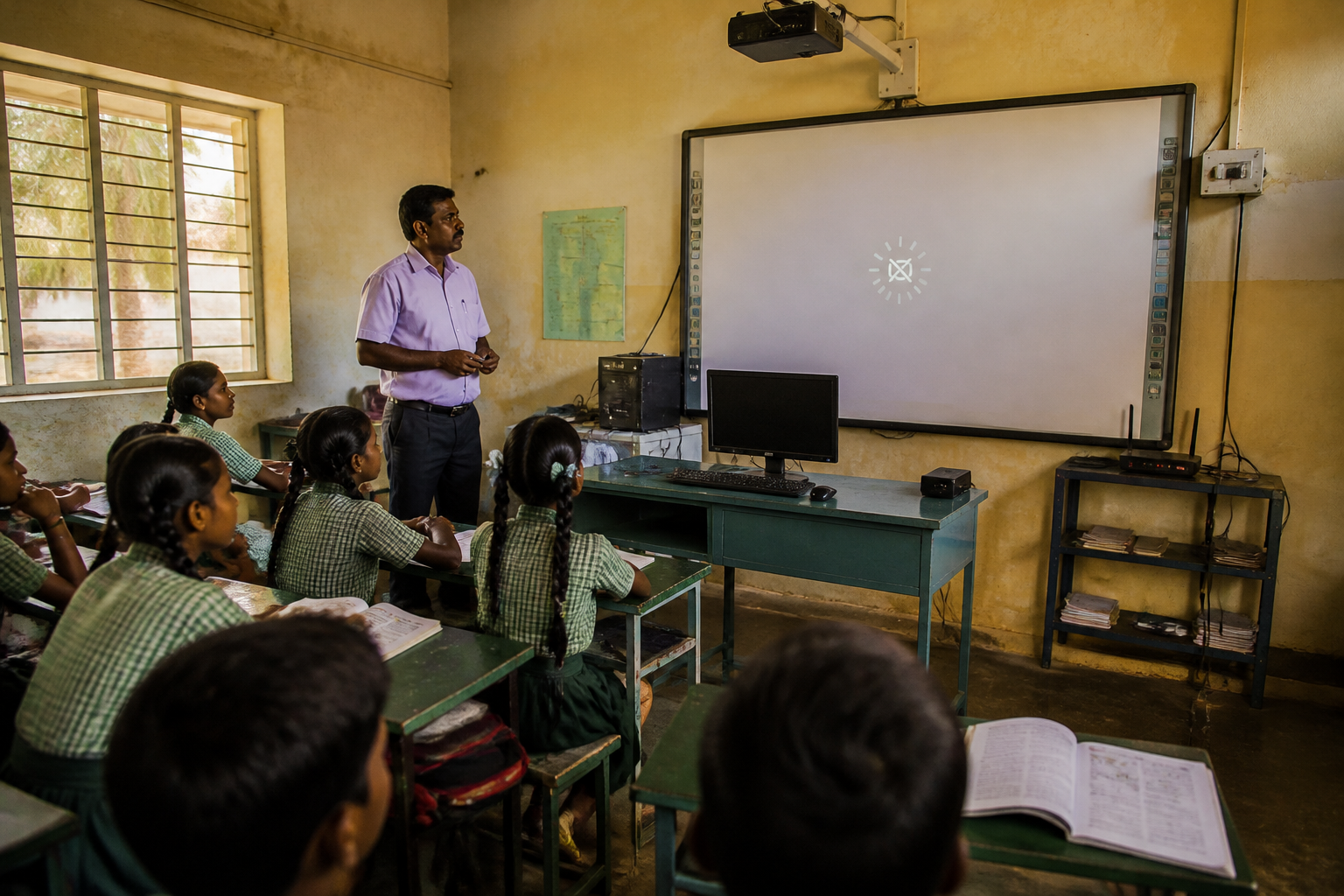
More than 4,700 government schools in Tamil Nadu are reportedly unable to access the internet reliably after being directed to use BSNL connections, disrupting digital lessons, online assessments and technology-based teacher training, according to a report by Dinamalar.
The affected schools are largely in rural areas, where teachers have said BSNL network coverage is unavailable or inadequate. The report also states that the government continues to pay for the connection service even at schools where it is not functioning, raising questions about how connectivity contracts are being monitored and whether public funds are being spent on unusable services.
Tamil Nadu has expanded digital infrastructure across its government-school network to support technology-led teaching. The report says more than 40,000 schools have facilities such as high-tech laboratories and smart boards. These systems are intended to support online training classes, artificial intelligence and robotics lessons, online tools, assessment tests, film screenings and teacher training.
Digital content linked through QR codes in textbooks is also used to support lessons with video and other visual material. The state’s TN-SPARK programme is among the activities requiring internet access. When a school cannot connect to the network, these facilities may remain physically available but become difficult to use for classroom instruction.
According to headmasters quoted in the report, schools were initially allowed to obtain internet service from whichever provider was available in their locality. This arrangement enabled several schools to use private network providers where those connections offered better coverage.
The reported policy changed in January 2025, when schools were instructed to use BSNL internet services. Headmasters said the public-sector provider did not have adequate network availability in many village-based locations. As a result, online teaching and other technology-dependent activities have been disrupted at more than 4,700 schools, the report said.
The issue highlights a practical gap in the state’s digital education infrastructure: installing smart boards, laboratories and connected learning systems does not ensure access unless the supporting network works consistently at school level. Rural connectivity also depends on local coverage, last-mile infrastructure and the ability of institutions to switch providers when a contracted service is unavailable.
The reported arrangement creates a further administrative concern. A fixed monthly allocation of Rs 750 is provided per school for internet service, according to Dinamalar. If schools cannot access the contracted connection, the education system faces both a learning disruption and the possibility of paying for service that is not being delivered in practice.
The headmasters quoted by the report have asked the government to restore the earlier system, under which schools could use any network available in their area. The report does not state that the government has issued a response or announced a revised connectivity policy. The next step will be whether the education authorities review the affected schools individually and permit alternative providers where BSNL coverage remains unavailable.
