


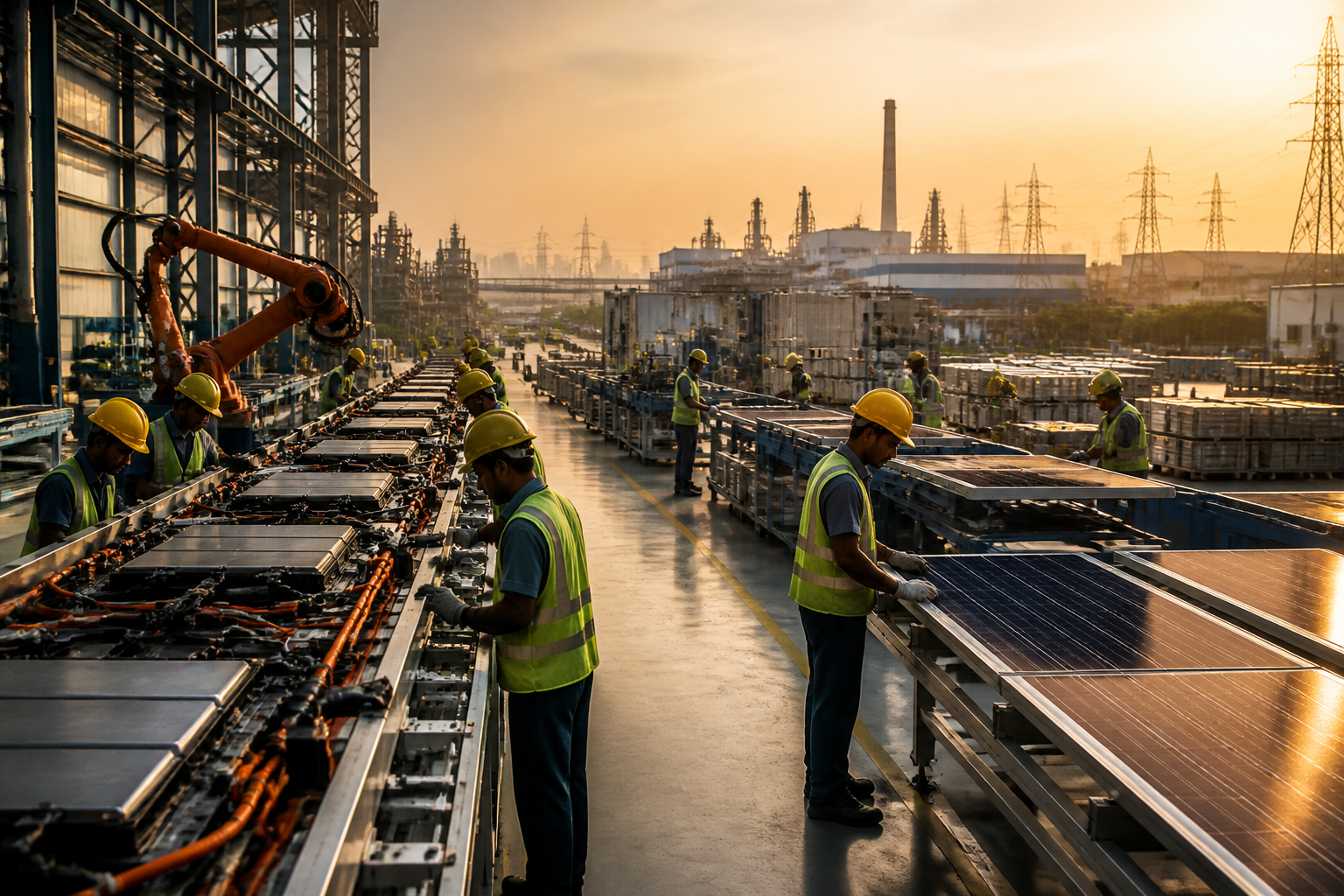
India has joined the United States and a group of major economies to coordinate action against structural excess capacity in autos and electric vehicles, batteries, chemicals, foundational semiconductors and solar panels, sectors in which China is described as globally dominant.
The coalition includes the United States, Canada, the European Union, Japan, South Korea, Mexico, France, Germany and the United Kingdom, among other economies. Its formation follows a meeting of G20 trade ministers during the US presidency of the grouping, with Washington taking the lead on the issue.
A joint statement said the participating countries were concerned that structural excess capacity and production could damage domestic industries, displace local production, destroy jobs, undermine economies and hinder efforts to develop and industrialise. The statement said the issue could ultimately lower living standards if timely and effective action was not taken.
The countries have called for an end to non-market policies and practices that distort markets and contribute to excess capacity. China has long been accused by countries around the world of using subsidies and dumping goods, although the joint statement framed the coalition’s position around market distortions and the need for coordinated action.
The group will establish dedicated sectoral platforms to examine structural excess capacity and production in the identified areas. It will also assess the effects on the sectors and identify measures to address the damage created by excess production and its impact on trade and workers.
The participating economies have committed to meeting at the technical level before December 2026 to develop terms of reference, share non-confidential information and data, and identify gaps in the available evidence. The work will draw on research by the Organisation for Economic Co-operation and Development and other sources, according to the statement.
The coalition’s work comes as the US trade representative separately investigates several countries, including India, for structural excess capacity under Section 301. The development also follows a meeting between US President Donald Trump and Chinese President Xi Jinping, adding a trade-policy dimension to India’s participation in the new group.
The joint statement said members were taking individual action and would explore effective and, where possible, complementary measures to protect their economies from the effects of excess capacity and production. It said the objective was to create conditions in which market-oriented competition in the affected sectors could develop again.
The concern is not new. In 2016, G20 trade ministers meeting in Shanghai expressed concern about excess capacity in certain industries and its negative effects on trade and workers. The position was endorsed by G20 leaders later that year at Hangzhou. The new coalition is now expected to convert that earlier concern into sector-specific coordination and information sharing, with its first technical work due before the end of 2026.
