


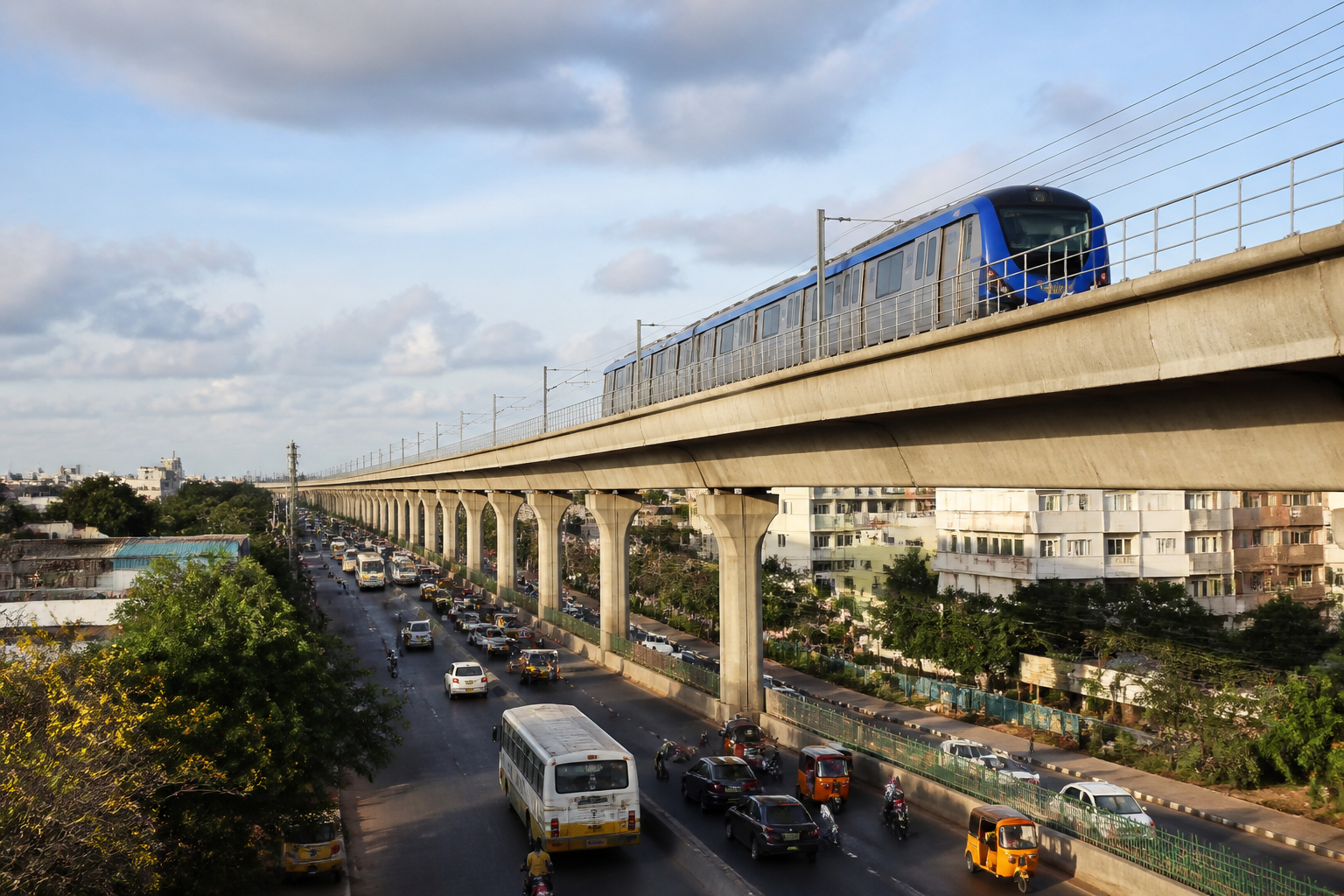
The Poonamallee–Porur–Vadapalani Chennai Metro corridor is scheduled to open for public use on October 11, Tamil Nadu Chief Minister M.K. Stalin said in a statement reported by Dinamalar, bringing a delayed section of Chennai Metro Phase II closer to passenger operations.
Stalin said Prime Minister Narendra Modi would inaugurate the corridor. The statement did not provide details on the inauguration venue, passenger fares, service frequency or the number of stations that will open on the route.
According to Stalin, the corridor could not be opened by the end of 2025 because approval for the signalling system from the Railway Board was delayed. He also said that the announcement of the Assembly election and the subsequent enforcement of the model code of conduct prevented the then government from inaugurating the project as planned.
The corridor links Poonamallee in western Chennai with Porur and Vadapalani, connecting major residential, commercial and transport catchments across the city. Its opening will be significant for commuters in the western suburbs, although the statement did not specify the expected daily ridership or the extent to which the corridor will reduce road traffic.
Stalin said the Chennai Metro project was initiated during the tenure of former Chief Minister M. Karunanidhi, when he was serving as Deputy Chief Minister. He also said he had inspected the work on different occasions during the construction of Chennai Metro’s second phase.
The statement framed the corridor’s opening within the broader record of infrastructure development under successive governments led by the Dravida Munnetra Kazhagam. Stalin said visible infrastructure projects across Chennai and other districts demonstrated the role of DMK governments in building what he described as a modern Tamil Nadu.
The reference to signalling approval highlights the administrative dependencies that can determine when a completed or substantially completed urban rail project can begin passenger service. Civil works alone do not establish operational readiness; signalling, safety clearances, testing and other approvals must also be completed before a corridor can be opened.
The reported October 11 opening is therefore the next formal milestone for the corridor. Further operational details, including the final passenger timetable, fare structure and service arrangements, will determine how quickly commuters can incorporate the new section into daily travel.
