


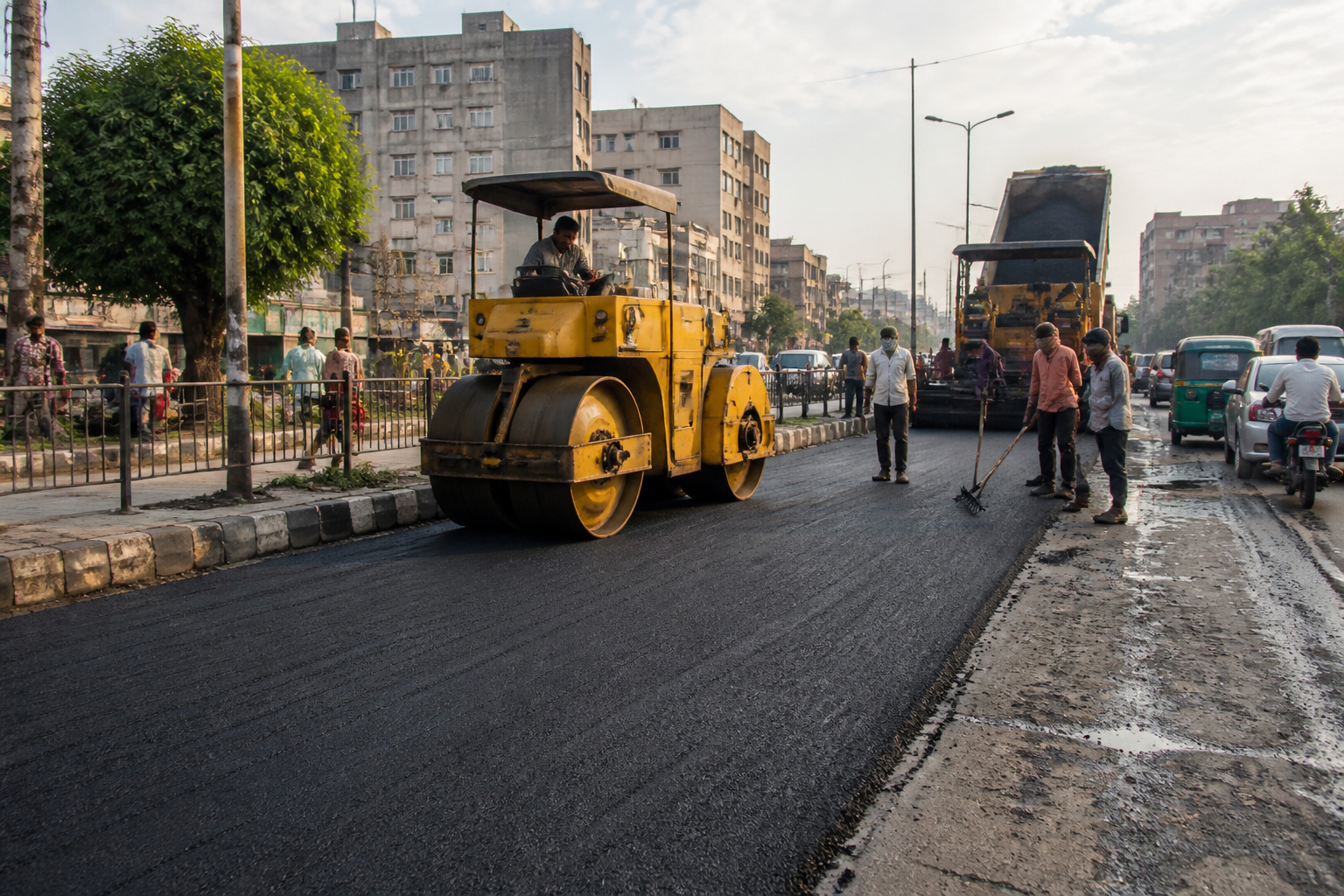
Ahmedabad Municipal Commissioner Banchhanidhi Pani has directed civic engineers to report how many kilometres of road have been resurfaced in each area, rather than focusing primarily on hotmix production or the volume of material used, as the city accelerates road repairs before Diwali.
According to a report by Nav Gujarat Samay, the direction came as pressure mounted on the Ahmedabad Municipal Corporation’s engineering department to complete resurfacing work after the monsoon. Municipal sources said road resurfacing had begun at an accelerated pace after the rains subsided.
During a review, engineering officials reportedly presented information on production levels and the number of metric tonnes of hotmix material used. The commissioner questioned the usefulness of those figures to residents and asked officials to provide area-wise details of the roads and kilometres completed instead.
The focus on completed road length comes after complaints over pothole-ridden roads had recently intensified in the city. The report did not provide the total length of roads scheduled for resurfacing, the number of roads already completed or a deadline for finishing the current work.
Pani also directed officials to speed up the opening of roads in new areas developed under town planning schemes. Before constructing new roads, departments must ensure that water, sewage and stormwater lines are installed, the report said.
The commissioner further ordered the departments concerned to issue integrated tenders for this coordinated work. He warned that files for work carried out without issuing such tenders would be rejected. The direction places road construction within a wider sequence of underground utility planning, rather than treating the road surface as a standalone project.
The review also covered complaints related to the municipal garden department registered through the civic complaint redressal system. An official reportedly told the commissioner that residents of some private housing societies were leaving tree-cutting waste and other green waste on roads and footpaths instead of paying the applicable charge for its removal. Complaints were then being filed about the waste left in public areas.
Pani instructed officials to investigate such cases and impose penalties on housing societies found responsible for the practice. The report did not specify the amount of the proposed penalties or the number of societies under investigation.
The immediate municipal review therefore links three operational issues: the measurable completion of road resurfacing, coordination of utility work before new roads are built, and enforcement against the dumping of green waste on public spaces. Further details on area-wise resurfacing progress and the implementation of the integrated tender directions are expected from the civic administration’s ongoing work programme.
